Dynamic Ads Explained: Boosting Results for Aussie Businesses
. By Ads Daddy.

Over 90 percent of australian consumers engage with personalised ads every week. This shift matters because dynamic ads have completely changed how brands reach people online. For anyone curious about smarter digital marketing, learning how dynamic ads adapt to each viewer’s interests reveals why they are quickly becoming a must-have tool for australian businesses seeking real results.
Table of Contents
- What Are Dynamic Ads And How They Work
- Types Of Dynamic Ads On Major Platforms
- Benefits Of Dynamic Ads For Australian Businesses
- How Dynamic Targeting Maximises Campaign ROI
- Common Pitfalls And How To Avoid Them
Key Takeaways
| Point | Details |
|---|---|
| Dynamic Ads Personalisation | Dynamic ads customise their content in real-time based on user behaviour and preferences, offering a tailored advertising experience. |
| Cost Efficiency | By targeting specific users with relevant ads, businesses can reduce wasted advertising spend and improve conversion rates. |
| Real-time Data Utilisation | These ads leverage behavioural and demographic data to optimise campaigns, ensuring ads remain relevant to potential customers. |
| Awareness of Common Pitfalls | Maintaining accurate product feeds and regularly optimising ad content are crucial to avoid wasted budget and ineffective campaigns. |
What Are Dynamic Ads And How They Work
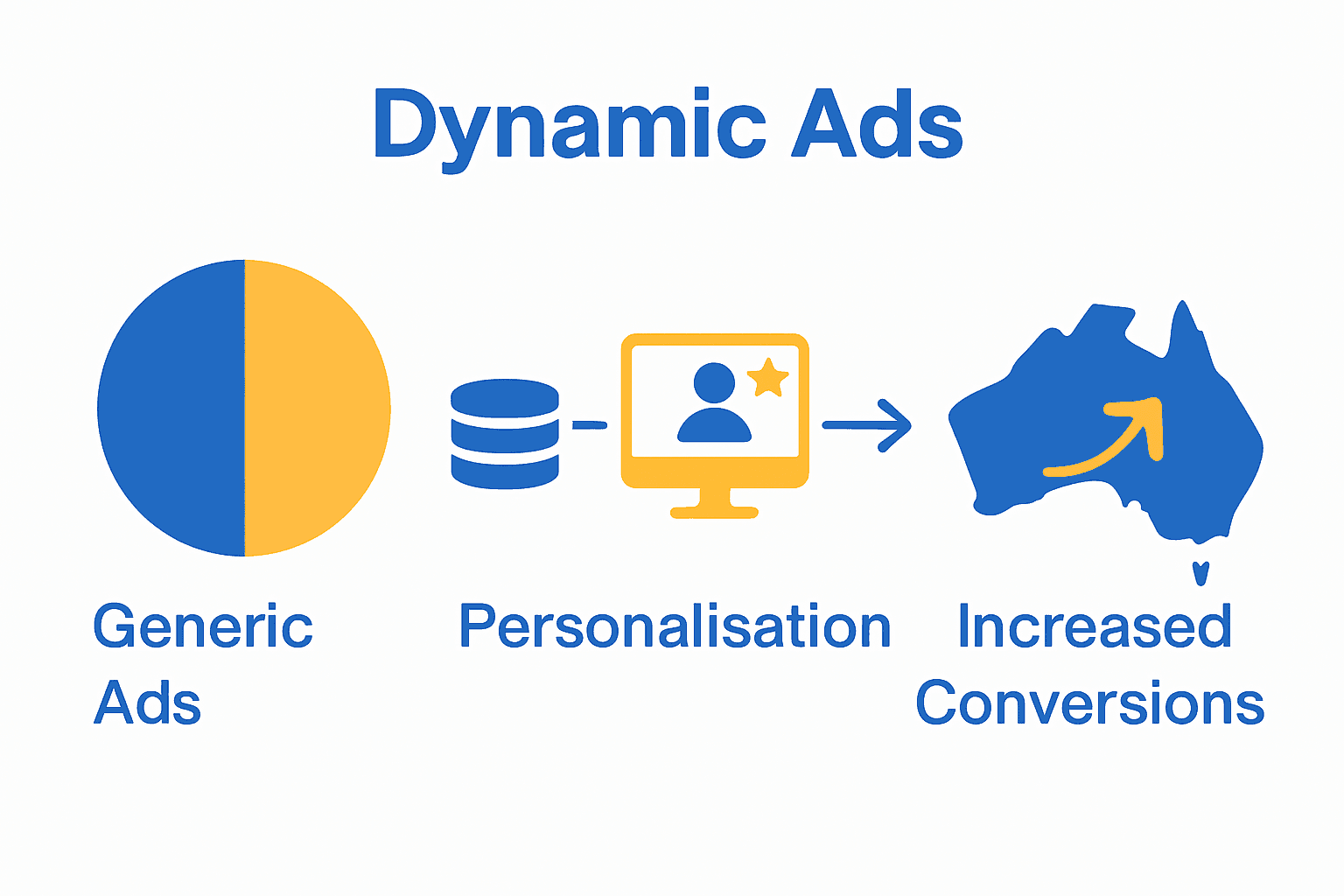
Dynamic ads are the digital marketing equivalent of a chameleon: constantly adapting and personalising their appearance to match exactly what a potential customer wants to see. According to Adjust, these are personalised, automatically generated advertisements that transform their content based on user data and real-time factors.
At their core, dynamic ads work like an intelligent marketing robot. They automatically scan a user's browsing history, previous interactions, and specific interests to craft a hyper-personalised advertisement. Imagine walking into a shop where every product display instantly rearranges itself to show exactly what you might want - that's essentially how dynamic ads function in the digital world.
The mechanism behind dynamic ads is surprisingly sophisticated. They pull data from various sources like:
- User's past website visits
- Previous product interactions
- Search history
- Demographic information
- Browsing behaviour
This means a potential customer searching for running shoes might suddenly see ads featuring the exact brand and style they were previously browsing, creating a remarkably targeted marketing experience. Display Ad Best Practices can further help businesses understand how to leverage these intelligent advertising techniques effectively.
Types Of Dynamic Ads On Major Platforms
Dynamic ads have evolved to become incredibly sophisticated across different digital advertising platforms, each offering unique targeting capabilities for businesses looking to maximise their marketing reach. From social media giants to search engine networks, these intelligent ad formats are transforming how brands connect with potential customers.
On Facebook and Instagram, dynamic product ads are particularly powerful. They automatically showcase products from a business's catalogue that align precisely with a user's previous browsing behaviour or expressed interests. A clothing retailer, for instance, could have ads dynamically displaying the exact shoe styles a potential customer has recently viewed, creating a personalised shopping experience.
Google's platforms offer equally impressive dynamic ad options:
- Google Search Network: Dynamically generated text ads that adapt keywords based on user search queries
- Google Display Network: Responsive display ads that automatically adjust size, appearance, and format to fit available ad spaces
- YouTube: Personalised video ads that change content based on viewer demographics and interests
LinkedIn provides professional-focused dynamic ads targeting specific industry segments, allowing B2B businesses to create hyper-targeted advertising experiences. Cross-platform advertising strategies can help businesses effectively leverage these diverse dynamic ad opportunities across multiple digital platforms.
Benefits Of Dynamic Ads For Australian Businesses
Australian businesses are discovering that dynamic ads offer a game-changing approach to digital marketing, delivering unprecedented precision and efficiency in reaching potential customers. These intelligent advertising tools are not just a technological novelty, but a strategic weapon for companies looking to cut through the digital noise and connect meaningfully with their target audience.
The financial advantages of dynamic ads are particularly compelling for small and medium enterprises across Australia.
 By automatically personalising ad content, businesses can dramatically reduce wasted advertising spend. Imagine a local Brisbane café that can now show personalised coffee machine ads to customers who have previously browsed similar products, instead of broadcasting generic marketing messages to everyone.
Key benefits for Australian businesses include:
- Hyper-targeted Advertising: Reach exactly the right customers at the right time
- Cost Efficiency: Reduce marketing spend by showing ads to most likely buyers
- Real-time Adaptation: Ads that instantly respond to user behaviour and interests
- Improved Conversion Rates: Higher likelihood of turning viewers into actual customers
- Competitive Edge: Stay ahead of businesses using traditional, non-personalised advertising strategies
For Australian SMEs seeking to maximise their digital marketing potential, understanding and implementing targeted advertising strategies can transform their customer acquisition and retention efforts, making every marketing dollar work harder and smarter.
How Dynamic Targeting Maximises Campaign ROI
Dynamic targeting is the secret weapon for businesses looking to transform their digital advertising from a shotgun approach to a precision-guided missile.
According to Business Reddit, these intelligent ad strategies focus your marketing budget on users who have already demonstrated genuine intent, minimising wasted impressions and dramatically improving return on ad spend (ROAS).
The magic of dynamic targeting lies in its ability to constantly adapt and optimise. Behavioural data becomes the cornerstone of intelligent advertising, allowing businesses to create hyper-personalised experiences. As Dynamic Yield explains, these ads automatically change content and promotions to match each user's unique needs, leveraging insights like product affinities, browsing history, and geo-location.
Key ROI-boosting mechanisms of dynamic targeting include:
- Precision Budget Allocation: Spend money only on high-potential customers
- Real-time Optimization: Continuous A/B testing of ad elements
- Performance Tracking: Instant insights into what works and what doesn't
- Reduced Acquisition Costs: Lower cost per click and conversion
- Enhanced User Experience: Ads that feel personally relevant, not intrusive
For Australian businesses seeking to maximise their digital marketing efficiency, understanding ad targeting strategies can be the difference between burning money and building a predictable, scalable marketing machine.
Common Pitfalls And How To Avoid Them
Dynamic advertising might seem straightforward, but numerous hidden traps can derail even the most well-intentioned campaigns. According to Business Reddit, not all dynamic ads serve the same purpose, and choosing the wrong strategy can quickly burn through your marketing budget.
One of the most critical challenges is maintaining the accuracy and relevance of your product feed. As Adup Tech emphasises, dynamic ads rely on a constantly updated database that outputs appropriate information based on user interactions. An outdated or inaccurate product feed can lead to irrelevant ad displays, instantly losing potential customer interest.
Common dynamic ad pitfalls to watch out for include:
- Incorrect Targeting: Showing ads to the wrong audience segments
- Stale Product Information: Failing to update product feeds regularly
- Oversaturation: Bombarding users with too many similar advertisements
- Lack of Personalization: Generic ads that feel impersonal and disconnected
- Neglecting A/B Testing: Not continuously optimising ad performance
Understanding ad targeting strategies can help Australian businesses navigate these challenges and create more effective, engaging dynamic advertising campaigns that genuinely connect with potential customers.
Take Your Aussie Business to the Next Level with Precision Dynamic Ads
Dynamic ads bring the promise of hyper-targeted marketing that adapts in real time to customer behaviour and preferences. If you are struggling with wasted ad spend or generic campaigns that fail to capture attention, these powerful personalised ads can transform your reach and boost conversions. The key challenge highlighted is keeping your campaigns relevant while avoiding common pitfalls like outdated product feeds and poor targeting.
At AdsDaddy.com, we understand these pain points and specialise in creating and optimising dynamic ad campaigns across platforms like Facebook, Instagram, Google, and LinkedIn. With our data-driven strategies and expert management of formats including image, video, and carousel ads, we help Australian small and medium businesses make every advertising dollar count. Discover how our integrated approach using tools like Meta for Business and Klaviyo can maximise your campaign ROI by delivering personalised ad experiences that truly engage your audience.
Ready to stop guessing and start seeing real results with your digital marketing Spend?

Explore our proven targeted advertising strategies and take control of your ad campaigns today. Visit AdsDaddy to learn how we can help your business stand out with dynamic ads designed for Australian markets. Don't wait to unlock smarter ad targeting that grows your customer base and drives incremental sales now.
Frequently Asked Questions
What are dynamic ads?
Dynamic ads are personalized, automatically generated advertisements that adapt their content based on user data, such as browsing history and interests, to create a tailored marketing experience.
How do dynamic ads work?
Dynamic ads work by utilizing data from various sources, like a user's past website visits and interactions, to display relevant products or services that match their preferences, ensuring a highly targeted advertising approach.
What are the benefits of using dynamic ads for businesses?
Dynamic ads offer several benefits, including hyper-targeted advertising, cost efficiency, real-time adaptation to user behaviours, improved conversion rates, and a competitive edge over traditional advertising strategies.
What common pitfalls should businesses avoid with dynamic ads?
Businesses should ensure their product feeds are accurate and regularly updated, avoid incorrect targeting, manage ad frequency to prevent oversaturation, and continuously optimize ad performance through A/B testing to avoid irrelevant or generic ads.
Recommended
- Role of Video Ads: Complete Guide for Australian SMEs - Ads Daddy. Advertise on All Plattforms.
- Meta Ads (Facebook & Instagram) Archives - Ads Daddy. Advertise on All Plattforms.
- Growth Hacking Archives - Ads Daddy. Advertise on All Plattforms.
- Conversions Rate Optimisation Archives - Ads Daddy. Advertise on All Plattforms.