What Is Programmatic Ads and Why It Matters for Australian E-Commerce
. By Ads Daddy.

Most Australian e-commerce businesses lose thousands each year on ads that never reach their ideal customers. With consumers expecting personalised experiences at every turn, the pressure is on for Australian marketing managers to achieve better results with less spend. This overview breaks down the essentials of programmatic advertising, revealing how automation, data-driven targeting, and the right platform choice can help Australian businesses dramatically improve efficiency and customer engagement. Programmatic technology now accounts for more than 80 percent of digital ad spending worldwide.
Table of Contents
- Defining Programmatic Ads In Digital Marketing
- Types Of Programmatic Advertising Platforms
- How Programmatic Ads Automate Campaign Delivery
- Data-Driven Targeting And Audience Segmentation
- Costs, Compliance, And Common Pitfalls In Australia
Key Takeaways
| Point | Details |
|---|---|
| Programmatic Advertising Enhances Efficiency | Utilising automated ad purchasing and real-time bidding helps Australian e-commerce businesses achieve precise audience targeting and maximise marketing effectiveness. |
| Platform Selection is Key | It is crucial to choose the appropriate programmatic advertising platform based on specific campaign objectives and audience segments for optimal ROI. |
| Continuous Data Monitoring is Essential | Regular analysis of performance metrics and audience insights enables businesses to refine strategies and improve targeting in programmatic campaigns. |
| Compliance and Ethical Considerations are Critical | Adhering to privacy regulations and maintaining transparency in data usage is vital for minimising risks and promoting responsible advertising practices in Australia. |
Defining Programmatic Ads in Digital Marketing
Programmatic advertising represents a revolutionary approach to digital marketing that transforms how Australian e-commerce businesses purchase and display online advertisements. At its core, programmatic ads use sophisticated algorithms and real-time bidding technologies to automate ad purchasing across multiple digital platforms, enabling businesses to reach precise audience segments with unprecedented efficiency.
The mechanics of programmatic advertising work like a lightning-fast digital auction. When a user loads a webpage, an automated process occurs in milliseconds where advertisers bid to display their ad to that specific user based on demographic data, browsing history, and behavioural patterns. This means instead of purchasing broad advertising spaces, businesses can target digital advertising strategies that connect with exactly the right potential customer at precisely the right moment.
Key characteristics of programmatic advertising include:
- Automated ad purchasing across multiple digital platforms
- Real-time bidding and placement
- Hyper-targeted audience segmentation
- Data-driven decision making
- Cost-effective marketing spend
Unlike traditional advertising methods that rely on manual negotiations and broad targeting, programmatic ads leverage machine learning and artificial intelligence to optimise ad placements. This technology analyses vast amounts of user data in real-time, allowing marketers to create highly personalised advertising experiences that significantly increase conversion potential.
Pro Tip: Precision Targeting: Start by defining your ideal customer persona in granular detail before launching programmatic campaigns. The more specific your audience definition, the more effectively programmatic technologies can match your ads to interested viewers.
Types of Programmatic Advertising Platforms
Programmatic advertising encompasses several distinct platform types that enable Australian e-commerce businesses to reach their target audiences with precision and efficiency. These platforms differentiate themselves through unique targeting capabilities, auction mechanisms, and inventory access, providing marketers with flexible tools to optimise their digital advertising strategies.
The primary types of programmatic advertising platforms include:
- Real-Time Bidding (RTB) Platforms: Open marketplace exchanges where ad impressions are bought and sold through instantaneous auctions
- Private Marketplace (PMP) Platforms: Invitation-only marketplaces where select advertisers can purchase premium ad inventory from specific publishers
- Programmatic Direct Platforms: Automated guaranteed ad purchasing that allows direct negotiations between advertisers and publishers
- Preferred Deal Platforms: Semi-private marketplaces offering pre-negotiated pricing and first-look opportunities for specific ad inventory
Understanding how cross-platform advertising strategies work helps businesses leverage these platforms effectively. Each platform type offers unique advantages, allowing marketers to select the most appropriate approach based on their campaign objectives, budget constraints, and target audience characteristics.

The following table compares the key features and benefits of different programmatic advertising platform types for Australian e-commerce marketers:
| Platform Type | Auction Model | Inventory Access | Typical Use Case |
|---|---|---|---|
| Real-Time Bidding (RTB) | Open, real-time auction | Broad, multiple sites | Large reach, diverse targeting |
| Private Marketplace (PMP) | Invitation-only auction | Premium, selected | Brand safety, premium placements |
| Programmatic Direct | Guaranteed, automated | Specific publishers | Secured inventory, predictability |
| Preferred Deals | Pre-negotiated pricing | Curated, high-value | Early access, negotiated pricing |
Moreover, modern programmatic platforms integrate advanced machine learning algorithms that continuously analyse user behaviour, enabling more sophisticated audience targeting. These intelligent systems can predict user intent, adjust bidding strategies in real-time, and optimise ad placements across multiple digital channels, transforming how Australian businesses approach online marketing.
Pro Tip: Platform Selection: Carefully evaluate your campaign goals and audience targeting requirements before selecting a programmatic advertising platform. Each platform type offers different strengths, so matching the platform to your specific marketing objectives is crucial for maximising return on investment.
How Programmatic Ads Automate Campaign Delivery
Programmatic advertising transforms digital marketing through sophisticated automation technologies that streamline the entire ad campaign delivery process. Unlike traditional advertising methods requiring manual intervention, these automated systems enable Australian e-commerce businesses to execute complex marketing strategies with unprecedented speed and precision.
The automation process unfolds through several interconnected stages:
- Data Collection: Gathering real-time user behaviour, demographic, and contextual information
- Audience Segmentation: Categorising potential customers based on detailed behavioural profiles
- Ad Placement: Instantaneously matching appropriate ad creative with most relevant audience segments
- Bidding Optimization: Dynamically adjusting bid prices based on predicted conversion potential
- Performance Tracking: Continuously monitoring and adjusting campaign parameters in milliseconds
Understanding the intricacies of ad campaign management helps businesses appreciate how programmatic platforms eliminate human bottlenecks. Machine learning algorithms analyse thousands of data points per second, making split-second decisions about which ads to display, to whom, and at what price point. This computational power allows for hyper-personalised advertising experiences that traditional methods could never achieve.
The automation extends beyond simple ad placement. Advanced programmatic systems now incorporate predictive analytics that can anticipate user intent, adjust targeting strategies in real-time, and allocate marketing budgets with surgical precision. For Australian e-commerce businesses, this means dramatically improved campaign efficiency, reduced wastage, and significantly higher potential return on advertising investment.
Pro Tip: Automation Strategy: Start with clear campaign objectives and let programmatic platforms do the heavy lifting. Configure your initial parameters carefully, but remain flexible enough to let machine learning algorithms optimise your targeting and bidding strategies.
Data-Driven Targeting and Audience Segmentation
Data-driven targeting represents the cornerstone of modern programmatic advertising, transforming how Australian e-commerce businesses connect with potential customers. By leveraging sophisticated algorithms and massive datasets, programmatic platforms can dissect audience characteristics with surgical precision, enabling unprecedented levels of marketing personalisation and efficiency.
The audience segmentation process involves multiple sophisticated techniques:
- Demographic Segmentation: Categorising audiences by age, gender, income, education
- Behavioural Segmentation: Analyzing online interactions, purchase history, browsing patterns
- Psychographic Segmentation: Understanding attitudes, interests, lifestyle choices
- Geographic Segmentation: Targeting based on location, regional preferences
- Contextual Targeting: Matching ads with relevant content environments
Understanding why target specific audiences reveals the transformative power of data-driven marketing. Machine learning algorithms continuously analyse complex user signals, creating dynamic audience profiles that adapt in real-time. This means Australian businesses can now reach potential customers with laser-focused precision, dramatically improving conversion rates and marketing efficiency.
Advanced programmatic platforms go beyond simple audience division. They create intricate audience personas by synthesising multiple data points, predicting consumer behaviour with remarkable accuracy. These intelligent systems can identify subtle purchasing intent signals, allowing marketers to deliver personalised messaging at precisely the right moment in the customer journey.
Pro Tip: Audience Intelligence: Continuously refine your audience segments by tracking performance metrics and allowing machine learning algorithms to adapt and optimize your targeting strategy.
Costs, Compliance, and Common Pitfalls in Australia
Programmatic advertising in Australia presents a complex landscape of opportunities and challenges for e-commerce businesses, requiring careful navigation of financial, regulatory, and environmental considerations. While the technology offers unprecedented marketing capabilities, organisations must remain vigilant about potential pitfalls that could undermine their digital advertising investments.
Key compliance and cost considerations include:
- Privacy Regulations: Strict adherence to Australian Data Protection guidelines
- Transparency Requirements: Clear disclosure of data collection and usage practices
- Budget Allocation: Careful management of programmatic advertising expenditure
- Performance Tracking: Continuous monitoring of campaign efficiency and return on investment
- Ethical Data Usage: Responsible handling of consumer information
Australian programmatic advertising's environmental impact represents a critical emerging concern. Research indicates the industry is the second most carbon-emitting across major economies, highlighting the need for sustainable digital marketing practices. This environmental dimension adds complexity to programmatic advertising strategies, requiring businesses to balance technological efficiency with ecological responsibility.
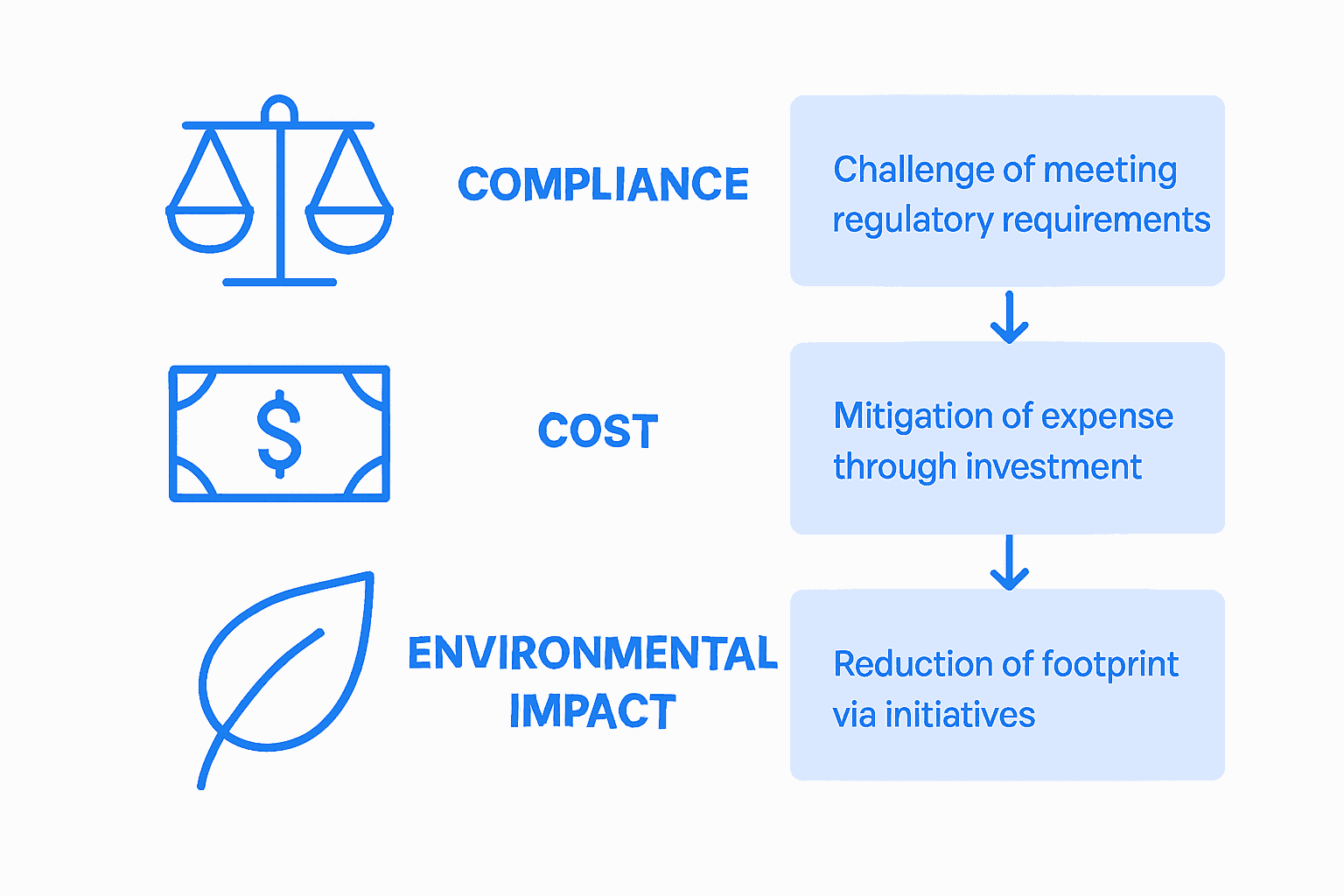
Here is a summary of major compliance, cost, and environmental challenges in Australian programmatic advertising, alongside recommended risk mitigation strategies:
| Challenge Area | Example Issue | Impact on Business | Mitigation Strategy |
|---|---|---|---|
| Privacy Compliance | Data misuse penalties | Legal, financial risk | Regular policy reviews and staff training |
| Budget Allocation | Overspending due to inefficient bids | Reduced ROI, wasted funds | Automated monitoring and optimisation |
| Environmental | High carbon emissions | Negative public image | Select sustainable ad networks |
| Knowledge Gaps | Poor platform understanding | Suboptimal campaign setup | Invest in ongoing team education |
Moreover, agencies continue to face significant barriers in programmatic adoption. Recent industry research suggests that approximately 36% of marketing teams struggle with understanding the nuanced cost-benefit dynamics of advanced programmatic platforms. This knowledge gap can lead to suboptimal implementation, wasted resources, and reduced marketing effectiveness. Australian businesses must invest in comprehensive training and strategic planning to overcome these challenges and maximise their programmatic advertising potential.
Pro Tip: Risk Mitigation: Develop a robust compliance framework that includes regular audits of your programmatic advertising practices, focusing on data protection, transparency, and sustainable technology usage.
Unlock the Full Potential of Programmatic Ads for Your Australian E-Commerce Business
Navigating the complex world of programmatic advertising can feel overwhelming with challenges like precise audience segmentation, real-time bidding optimisation, and compliance with Australian privacy laws. If you want to boost your ad campaign performance while avoiding costly mistakes and reduce wasted spend, it is crucial to partner with experts who understand the latest technologies and digital marketing strategies. At AdsDaddy.com, we specialise in managing and optimising programmatic and cross-platform advertising campaigns that deliver targeted, data-driven results.

Discover how our team can help you implement automated, cost-effective, and compliant campaigns across platforms like Facebook, Google, and LinkedIn to increase visibility and sales. Get tailored support for hyper-targeted audience definitions and real-time bidding strategies that align with your unique goals. Start scaling your Australian e-commerce business confidently with AdsDaddy.com. Explore our comprehensive services to turn programmatic advertising challenges into growth opportunities today.
Frequently Asked Questions
What are programmatic ads?
Programmatic ads are automated digital advertisements that use algorithms and real-time bidding to purchase ad space across multiple platforms, allowing businesses to target specific audience segments efficiently.
How do programmatic ads benefit e-commerce businesses?
Programmatic ads enable e-commerce businesses to reach their ideal customers with hyper-targeted campaigns, leading to increased conversion rates, efficient spending, and personalized advertising experiences.
What types of programmatic advertising platforms are available?
The main types of programmatic advertising platforms include Real-Time Bidding (RTB) platforms, Private Marketplace (PMP) platforms, Programmatic Direct platforms, and Preferred Deal platforms, each offering unique features for specific marketing goals.
How can Australian businesses navigate compliance and costs in programmatic advertising?
Australian businesses should adhere to privacy regulations, manage budget allocations carefully, and implement strategies to monitor performance to ensure compliance and optimize advertising costs.
Recommended
- Why Use Targeted Ads: Complete Guide for Australia 2026 - Ads Daddy. Advertise on All Plattforms.
- Role of Video Ads: Complete Guide for Australian SMEs - Ads Daddy. Advertise on All Plattforms.
- What Is Cross-Platform Advertising? Complete Breakdown - Ads Daddy. Advertise on All Plattforms.
- 7 Key Ad Formats Explained for Growing Businesses Online - Ads Daddy. Advertise on All Plattforms.