What Is PPC Advertising: Driving Results for Aussie Businesses
. By Ads Daddy.

Over 94 percent of online searches in Australia happen on Google, making Pay-Per-Click advertising a critical tool for businesses hoping to reach australian customers. As competition in the digital space grows, mastering PPC becomes essential for companies aiming to connect with their audience efficiently. This guide sheds light on how australian organisations can navigate PPC strategies, platform choices, and common pitfalls to achieve measurable results in today’s fast-paced market.
Table of Contents
- Defining Pay-Per-Click Advertising In Australia
- Major PPC Platforms And Ad Formats Compared
- How PPC Campaigns Function And Are Managed
- Costs, Budgeting, And Measuring ROI In PPC
- Common PPC Pitfalls And How To Avoid Them
Key Takeaways
| Point | Details |
|---|---|
| PPC Advertising Defined | PPC advertising allows businesses to pay for clicks on targeted ads based on user behaviour and search queries, primarily using platforms like Google Ads in Australia. |
| Cost Control and Budgeting | PPC offers flexible budgeting options, enabling businesses to manage spending effectively by selecting low-competition keywords to maximise ROI. |
| Platform Comparison | Different PPC platforms such as Google Ads, Facebook Ads, and LinkedIn Ads provide varying audience targeting capabilities and cost structures, necessitating strategic selection. |
| Avoiding Common Mistakes | Businesses should avoid pitfalls like poor landing page quality and inadequate tracking to ensure effective PPC campaigns, focusing on ongoing optimisation and audience engagement. |
Defining Pay-Per-Click Advertising in Australia
Pay-Per-Click (PPC) advertising represents a powerful digital marketing strategy where businesses pay a small fee each time someone clicks on their online advertisement. Unlike traditional advertising models that charge for ad placement, PPC allows precise targeting based on search queries and user behaviour.
In the Australian digital landscape, PPC operates primarily through platforms like Google Ads, which commands an impressive 94% of the search market. This model enables businesses to display targeted advertisements directly to potential customers actively searching for specific products or services. When a user clicks on the ad, the business is charged a predetermined amount, making it a performance-driven advertising approach that prioritises genuine user engagement.
The mechanics of PPC advertising involve complex algorithmic bidding systems where advertisers compete for prime ad placements. Businesses select relevant keywords, create compelling ad copy, and set maximum bid amounts for each click. The placement and cost of ads are determined by factors like keyword relevance, ad quality, landing page experience, and competitive bidding strategies. This means that even smaller businesses can compete effectively by crafting strategic, high-quality advertisements.
Pro Tip: Strategic Keyword Selection: Research and select keywords with high commercial intent but lower competition to maximise your advertising budget and improve overall campaign performance.
Major PPC Platforms and Ad Formats Compared
Australia's digital advertising landscape offers a rich array of Pay-Per-Click (PPC) platforms, each delivering unique opportunities for businesses to connect with potential customers. Platforms like Google Ads, Facebook Ads, Instagram Ads, LinkedIn Ads, and YouTube Ads provide diverse advertising ecosystems tailored to different marketing objectives and audience segments.
Google Ads remains the dominant platform, offering search network advertisements, display network banners, shopping ads, and video advertisements. Facebook and Instagram provide highly granular demographic targeting, enabling businesses to reach specific age groups, interests, and behavioural profiles. LinkedIn specialises in professional and B2B advertising, allowing precise targeting based on job titles, industries, and professional networks. Each platform features distinct ad formats including text ads, image carousels, video content, and interactive rich media experiences.

The competitive landscape of PPC advertising in Australia demands strategic approach and nuanced understanding of platform-specific capabilities. Businesses must carefully analyse targeting options, audience reach, and potential return on investment across different digital advertising channels. Successful campaigns require deep comprehension of each platform's unique strengths, audience engagement metrics, and cost structures.
Pro Tip: Platform Diversification: Experiment with multiple PPC platforms simultaneously, allocating smaller test budgets to understand which channels deliver the most cost-effective results for your specific business niche and target audience.
To help you compare major PPC platforms in Australia, here's a summary of their key features:
| Platform | Main Strength | Audience Targeting | Typical Cost per Click |
|---|---|---|---|
| Google Ads | High intent searches | Keyword and location | $1–$5 in most niches |
| Facebook Ads | Demographic targeting | Age, interests, behaviour | ~$0.97 average |
| Instagram Ads | Visual engagement | Interests, lifestyle | $1–$2 typical range |
| LinkedIn Ads | B2B professionals | Job title, industry | ~$5.26 average |
| YouTube Ads | Video content reach | Interests, demographics | $0.50–$3 widely varies |
How PPC Campaigns Function and Are Managed
Pay-Per-Click (PPC) campaigns operate through a sophisticated digital marketplace where businesses compete for visibility and customer attention. Advertisers bid on specific keywords relevant to their products or services, enabling their ads to appear when users search for those terms. This dynamic auction system allows businesses to target potential customers with precision, paying only when someone actually clicks on their advertisement.
The technical mechanics of PPC campaign management involve multiple intricate components. Advertisers must carefully select keywords, craft compelling ad copy, design high-converting landing pages, and continuously monitor performance metrics. Each platform offers unique bidding strategies, including manual cost-per-click (CPC) bidding, automated bidding algorithms, and target return on ad spend (ROAS) approaches. Successful campaigns require ongoing optimisation, with marketers constantly adjusting keyword selections, refining audience targeting, and testing different ad variations to improve overall performance.
The Australian Competition and Consumer Commission highlights that effective PPC campaign management demands continuous analysis of bid amounts, ad relevance, and strategic adjustments. Businesses must track critical performance indicators such as click-through rates, conversion rates, cost per acquisition, and return on investment. Advanced marketers utilise sophisticated analytics tools to segment data, understand user behaviour, and make data-driven decisions that optimise advertising expenditure and maximise marketing outcomes.
Pro Tip: Campaign Performance Tracking: Implement a weekly review process where you analyse your PPC campaign metrics, identifying underperforming keywords and reallocating budget to high-performing ad groups for continuous improvement.
Costs, Budgeting, and Measuring ROI in PPC
Pay-Per-Click (PPC) advertising represents a flexible digital marketing investment where businesses have granular control over their spending. Costs can range dramatically, from as little as $0.50 to over $10 per click, depending on industry competition and keyword demand. This variability means small businesses can participate effectively by strategically managing their advertising budget.
Different digital platforms offer unique cost structures that demand careful consideration. The Media Federation of Australia highlights significant variations in cost-per-click (CPC) across platforms, with average rates ranging from $0.97 on Facebook to $5.26 on LinkedIn. Businesses must develop sophisticated budgeting approaches that balance platform costs with potential audience reach and conversion potential. Effective PPC management involves allocating funds across multiple channels, continuously monitoring performance, and redistributing budget to maximise return on investment.
Measuring PPC campaign performance goes beyond simple click tracking. Sophisticated marketers employ comprehensive ROI calculation methods that consider customer acquisition cost, lifetime value, conversion rates, and detailed attribution modeling. This means tracking not just immediate sales, but understanding how different touchpoints contribute to the overall customer journey. Advanced analytics tools enable businesses to dissect campaign performance, identifying precise segments and strategies that generate the most valuable customer interactions.
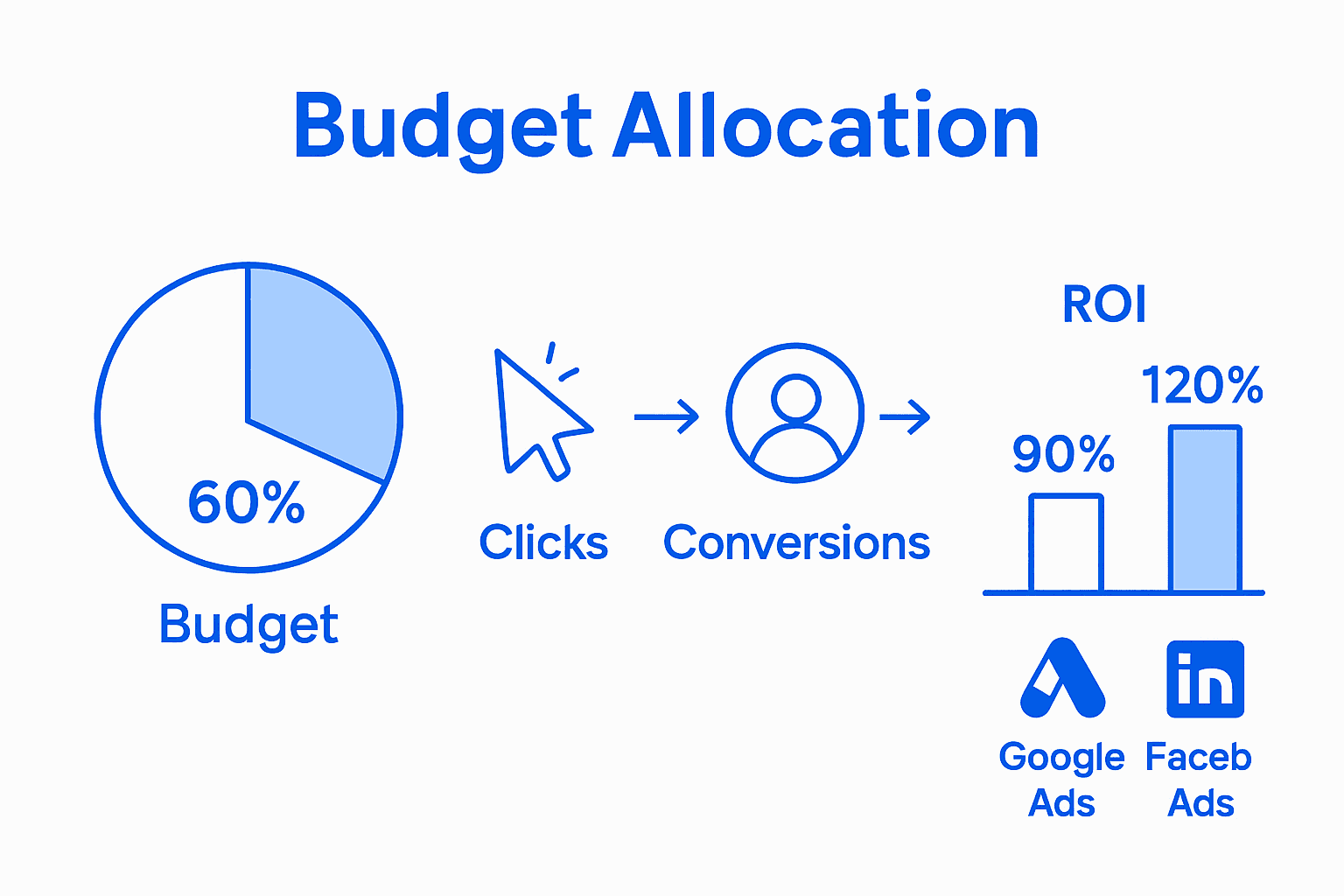
Pro Tip: Budget Allocation Strategy: Start with a conservative daily budget, allocate funds across multiple platforms, and incrementally increase spending on channels demonstrating the highest conversion efficiency.
Common PPC Pitfalls and How to Avoid Them
Pay-Per-Click advertising can become a minefield of potential mistakes that drain marketing budgets and compromise campaign effectiveness. Businesses frequently encounter challenges like lack of transparency, poor landing page quality, and inadequate performance tracking. Recognising these potential pitfalls is the first step towards developing more robust and strategic digital advertising approaches.
One of the most critical challenges involves navigating the complex landscape of ad platform policies and auction mechanics. The Australian Competition and Consumer Commission highlights significant issues like bid inflation and opaque auction processes that can undermine advertising investments. Sophisticated marketers mitigate these risks by maintaining rigorous campaign audits, continuously refining targeting parameters, and developing high-quality, relevant ad content that meets platform quality score requirements. This approach demands ongoing education about platform algorithmic changes and proactive performance management.
Successful PPC campaigns require a holistic approach that goes beyond simple click tracking. Common mistakes include narrow audience targeting, neglecting negative keyword strategies, failing to implement proper conversion tracking, and creating generic landing pages that do not align with ad messaging. Advanced practitioners develop comprehensive strategies that integrate detailed audience segmentation, dynamic ad variations, sophisticated retargeting techniques, and meticulously crafted conversion funnels. By treating PPC as a precision instrument rather than a blunt marketing tool, businesses can transform potential pitfalls into opportunities for growth and customer acquisition.
Below is a summary of common PPC pitfalls and their business impacts, with action tips to avoid them:
| Common Pitfall | Business Impact | How to Avoid |
|---|---|---|
| Poor landing page quality | Lower conversions, wasted spend | Optimise for relevance and user experience |
| Narrow targeting | Missed potential customers | Use a mix of broad and specific targeting |
| Neglecting negative keywords | Higher irrelevant clicks | Regularly update negative keyword lists |
| Inadequate tracking | Unclear ROI, poor decisions | Implement detailed conversion tracking |
| Overlooking trends | Falling behind competitors | Schedule ongoing learning and reviews |
Pro Tip: Continuous Learning Strategy: Dedicate at least two hours weekly to reviewing platform updates, competitor strategies, and emerging digital advertising trends to stay ahead of potential PPC challenges.
Unlock the True Power of PPC Advertising with Expert Campaign Management
Many Australian businesses struggle with common PPC challenges like costly clicks without conversions, poor landing page experiences, and unclear return on investment. This article highlights key pain points such as ineffective keyword targeting, insufficient tracking, and platform-specific optimisation hurdles that can drain your advertising budget and limit growth.
At AdsDaddy.com, we specialise in transforming these exact challenges into opportunities for your business to thrive. With deep expertise across Google Ads, Facebook, Instagram, LinkedIn, YouTube and more, we craft tailored PPC campaigns that maximise your ad spend. Our data-driven approach includes strategic keyword research, continuous performance monitoring, and optimised landing pages designed to convert visitors into loyal customers. Learn how our services help Aussie small and medium businesses gain consistent visibility and measurable results by visiting AdsDaddy.com.

Ready to stop wasting your advertising budget on ineffective PPC campaigns? Discover how expert management can deliver better clicks, higher conversions and lasting growth. Visit AdsDaddy.com now to start your journey toward PPC success and unlock new revenue streams with targeted, optimised advertising.
Frequently Asked Questions
What is Pay-Per-Click (PPC) advertising?
Pay-Per-Click (PPC) advertising is a digital marketing model where businesses pay a fee each time a user clicks on their advertisement. It allows precise targeting based on search queries and user behaviour, making it a performance-driven approach.
How do PPC campaigns work?
PPC campaigns operate through an auction system where advertisers bid on keywords relevant to their offerings. Ads appear in search results when users search for those keywords, and businesses pay only when their ads are clicked.
What are the common pitfalls of PPC advertising?
Common pitfalls include poor landing page quality, narrow audience targeting, neglecting negative keyword strategies, inadequate tracking, and overlooking trends, which can lead to wasted spend and poor campaign performance.
How can I measure the ROI of my PPC campaigns?
Measuring ROI involves analysing customer acquisition costs, conversion rates, and lifetime value. Businesses should track detailed performance metrics and use analytics tools to assess campaign effectiveness and optimise advertising expenditure.
Recommended
- Why Use Targeted Ads: Complete Guide for Australia 2026 - Ads Daddy. Advertise on All Plattforms.
- Role of Video Ads: Complete Guide for Australian SMEs - Ads Daddy. Advertise on All Plattforms.
- Lead Generation - Ads Daddy. Advertise on All Plattforms.
- Facebook Ads Archives - Ads Daddy. Advertise on All Plattforms.