What Is Ad Scheduling and Why It Boosts Sales
. By Ads Daddy.

Most australian retailers waste nearly 30 percent of their ad budgets by showing ads at the wrong times. For small and medium businesses competing online, missed opportunities can add up quickly. Ad scheduling helps retailers cut through the noise and reach shoppers during their highest purchase intent. Discover how strategic timing transforms australian digital advertising, making every dollar work harder for business growth and online visibility.
Table of Contents
- Ad Scheduling Defined for Australian Retailers
- Types of Ad Scheduling and Platform Tools
- How Ad Scheduling Works in Online Campaigns
- Best Practices for Setting Up Ad Timings
- Common Mistakes and How to Avoid Them
Key Takeaways
| Point | Details |
|---|---|
| Ad Scheduling Strategy | Focus ad delivery during peak engagement times to maximise effectiveness and minimise waste in advertising spend. |
| Understanding Audience Behaviour | Regularly analyse customer behaviour to refine ad scheduling and target messages effectively. |
| Utilise Advanced Tools | Leverage social media and digital marketing tools for real-time analytics and multi-platform campaign management. |
| Continuous Improvement | Regularly review performance metrics and be adaptive to make data-driven adjustments to ad timings. |
Ad Scheduling Defined for Australian Retailers
Ad scheduling represents a strategic approach for Australian retailers to maximise advertising effectiveness by targeting specific times when potential customers are most likely to engage. Effective ad scheduling helps businesses optimize their marketing budgets by delivering promotional messages during peak audience interaction periods.
At its core, ad scheduling involves precisely timing digital advertisements to appear during optimal windows when target consumers are most receptive. For retailers, this means understanding customer behaviour patterns and aligning advertising placements with moments of highest purchasing potential. These windows might include early morning before work, lunch breaks, evening commute times, or specific weekend periods when shopping interest peaks.
The strategic importance of ad scheduling extends beyond simple timing. By carefully selecting when advertisements appear, Australian retailers can significantly improve their return on advertising investment. This approach allows businesses to concentrate their marketing resources during periods of maximum potential engagement, reducing wasted spend on low-performing time slots. Government guidelines emphasize the importance of targeted communication strategies that respect audience expectations and deliver meaningful interactions.
Top Tip: Conduct regular audience behaviour analysis to continuously refine your ad scheduling strategy, tracking performance metrics to identify your most profitable engagement windows.
Types of Ad Scheduling and Platform Tools
Australian retailers have access to multiple ad scheduling approaches designed to optimise marketing effectiveness across digital platforms. Social media management tools offer sophisticated scheduling capabilities that enable businesses to automate and strategically time their advertising campaigns across different channels.
The primary types of ad scheduling include time-based, audience-based, and platform-specific scheduling strategies. Time-based scheduling allows advertisers to display ads during specific hours or days when target audiences are most active. Audience-based scheduling uses demographic and behavioural data to determine optimal ad delivery times, ensuring messages reach the most receptive potential customers. Platform-specific scheduling recognises that each digital platform has unique user engagement patterns, requiring tailored approaches for Facebook, Instagram, Google Ads, and other marketing channels.

Advanced scheduling tools provide comprehensive features that go beyond simple timing. These platforms typically offer real-time analytics, cross-platform management, and performance tracking capabilities. Retailers can leverage tools like Sprout Social, HubSpot Marketing Hub, and Hootsuite to coordinate multi-channel campaigns, analyse engagement metrics, and continuously refine their advertising strategies. The ability to automate and schedule ads across different platforms helps businesses maintain consistent messaging while minimising manual intervention.
Here's how major ad scheduling strategies compare for Australian retailers:
| Scheduling Type | Main Focus | Typical Use Case | Business Impact |
|---|---|---|---|
| Time-based | Specific hours or days | Morning rush, lunch breaks, evenings | Maximises reach when active |
| Audience-based | Behavioural segmentation | Targeting by age, habits, preferences | Higher conversion rates |
| Platform-specific | Channel engagement trends | Adapting for Facebook, Google, Instagram | Consistent messaging |
Pro Tip: Experiment with different ad scheduling configurations and use built-in analytics to identify your most effective time slots and audience segments.
How Ad Scheduling Works in Online Campaigns
Ad scheduling operates as a sophisticated digital marketing strategy that enables businesses to strategically control when their online advertisements appear across various digital platforms. By precisely timing ad delivery, businesses can maximise engagement and minimise unnecessary advertising expenditure by targeting audiences during their most receptive moments.
The technical mechanics of ad scheduling involve setting specific parameters within digital advertising platforms. These parameters typically include selecting particular days, hours, and even minutes when advertisements should be displayed. Bid adjustments play a crucial role in this process, allowing marketers to increase or decrease advertisement spending based on predicted audience activity. Google Ads provides advanced scheduling options that enable advertisers to dynamically adjust their campaign visibility, ensuring that marketing budgets are invested most efficiently.
Different online platforms offer varying levels of ad scheduling complexity. Social media platforms like Facebook and Instagram allow granular time-based targeting, while search advertising platforms such as Google Ads provide more extensive scheduling capabilities. Marketers can create intricate scheduling strategies that account for time zones, audience behaviour patterns, and specific business objectives. This approach transforms digital advertising from a scattergun method into a precision instrument of marketing communication.
Pro Tip: Regularly review your ad scheduling performance metrics and be prepared to adjust your timing strategy based on real-world engagement data.
Best Practices for Setting Up Ad Timings
Successful ad scheduling begins with comprehensive audience analysis and strategic timing decisions. Effective ad scheduling requires carefully examining historical audience engagement data to pinpoint peak activity windows, ensuring that marketing efforts are concentrated during moments of maximum potential interaction.
Developing a robust ad timing strategy involves several critical considerations. Time zone alignment is paramount, particularly for businesses targeting multiple geographic regions. Marketers must map their ad schedules precisely to the specific times when their target audience is most likely to be active and receptive. This means understanding not just general browsing patterns, but nuanced behavioural insights specific to different customer segments. Implementing bid adjustments during proven high-performance periods can significantly enhance campaign efficiency, allowing businesses to allocate resources more intelligently.
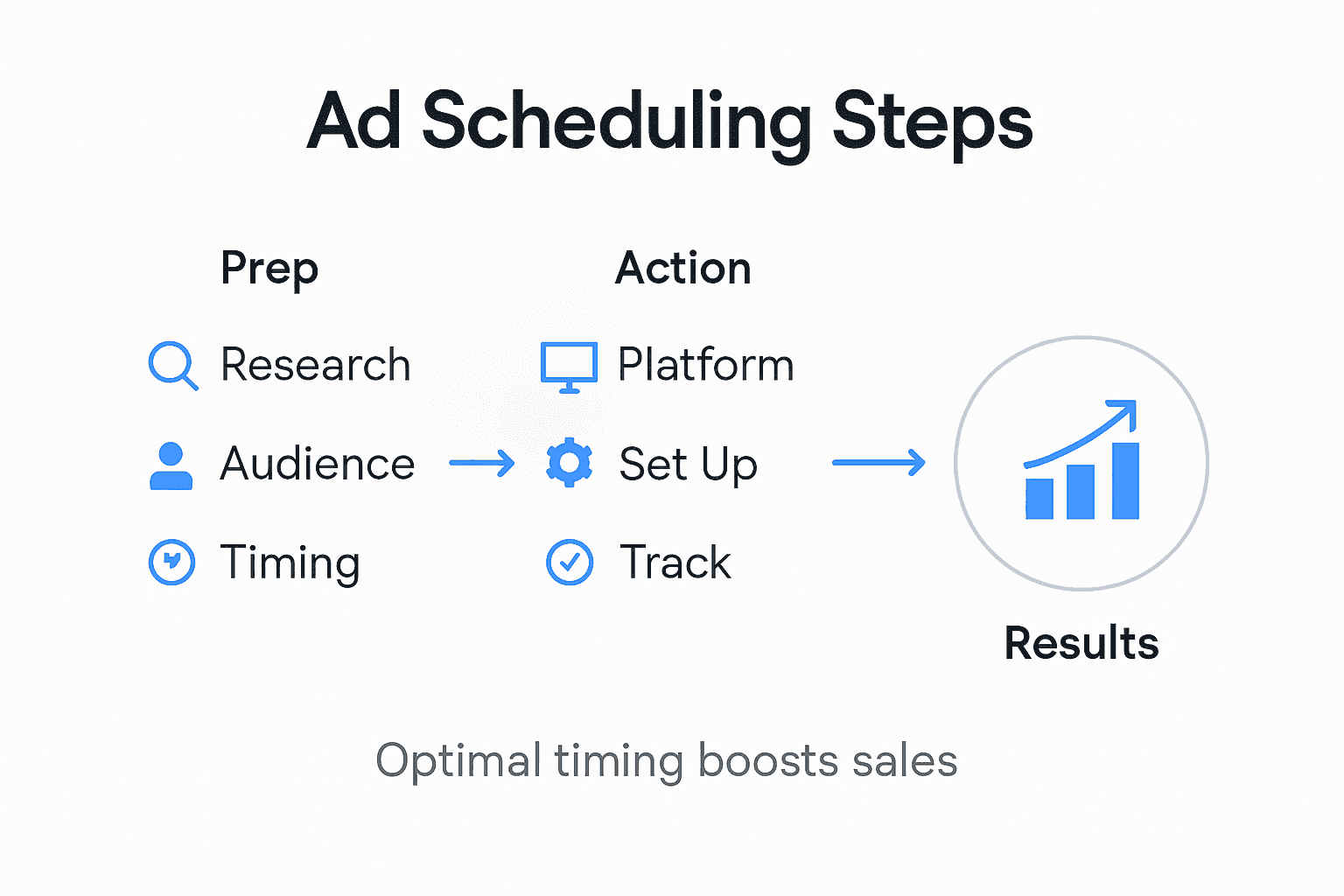
Technical implementation of ad timing requires a methodical, data-driven approach. Advertisers should continuously test and refine their scheduling parameters, tracking performance metrics such as click-through rates, conversion rates, and cost per acquisition. Some digital platforms offer advanced scheduling tools that allow minute-level control over ad displays, enabling marketers to create intricate, dynamic advertising strategies that adapt in real-time to audience behaviours. Regular performance reviews and willingness to adjust scheduling strategies are essential for maintaining campaign effectiveness.
Pro Tip: Create a spreadsheet tracking your ad performance across different time slots, enabling data-driven scheduling refinements that progressively improve your marketing precision.
Common Mistakes and How to Avoid Them
Advertising scheduling can quickly become a minefield of potential errors that drain marketing budgets and reduce campaign effectiveness. Inconsistent timing represents one of the most prevalent mistakes Australian businesses make, where advertisers fail to maintain a strategic and coherent approach to ad delivery across different platforms and audience segments.
One critical error involves neglecting audience-specific behavioural patterns. Many marketers apply a uniform scheduling strategy across all customer groups, ignoring the nuanced differences in browsing and purchasing habits. This approach leads to inefficient ad spend and reduced engagement. Businesses must segment their audience carefully, recognising that professional services might require different ad timings compared to retail consumers or weekend shoppers. Understanding these subtle distinctions allows for more precise targeting and improved conversion rates.
Technical oversights can also significantly undermine ad scheduling strategies. Common pitfalls include failing to adjust bids according to performance data, not accounting for time zone variations, and overlooking platform-specific engagement metrics. Successful marketers continuously monitor and refine their scheduling parameters, treating ad timing as a dynamic process rather than a static setting. This means regularly reviewing performance analytics, testing different time windows, and being willing to make rapid, data-driven adjustments to maximise marketing efficiency.
Use this table to identify common ad scheduling mistakes and their potential impact:
| Mistake | Typical Cause | Resulting Issue | Prevention Tactic |
|---|---|---|---|
| Inconsistent timing | Poor cross-platform planning | Budget inefficiency | Centralised scheduling review |
| Ignoring audience segments | One-size-fits-all strategy | Low engagement, wasted spend | Segmentation and analysis |
| No bid adjustment by time slot | Lack of performance tracking | Missed peak periods, overspend | Regular metric evaluation |
Pro Tip: Develop a flexible scheduling matrix that allows for quick pivot and refinement based on real-time performance data, ensuring your advertising strategy remains agile and responsive.
Harness the Power of Precise Ad Scheduling to Boost Your Sales Today
Struggling to find the right times to display your ads and maximise your marketing budget? This article outlines key ad scheduling strategies that Australian retailers need to target their audience effectively during peak engagement windows. If you want to avoid wasted spend on poorly timed ads and capture high-value customer moments, you need expert support to implement time-based, audience-based and platform-specific scheduling that drives real sales growth.

At AdsDaddy.com, we specialise in creating, managing and optimising campaigns across Facebook, Instagram, Google and more to ensure your ads run exactly when your customers are most receptive. Our data-driven approach includes advanced scheduling tools and performance tracking so you can enjoy consistent engagement and maximised ROI. Ready to transform your digital presence with tailored ad scheduling strategies? Visit AdsDaddy.com now and get started on scaling your business with precision-targeted advertising designed specifically for Australian markets. Learn more about how we can help you boost sales with smart ad campaigns.
Frequently Asked Questions
What is ad scheduling?
Ad scheduling is a strategy used by retailers to time their digital advertisements to appear during optimal periods when potential customers are most likely to engage and make purchases.
How can ad scheduling improve my marketing effectiveness?
By targeting ads to appear during peak audience interaction times, businesses can maximise their return on advertising investment and reduce wasted spend on low-performing periods.
What types of ad scheduling strategies are available?
There are several types of ad scheduling, including time-based scheduling, audience-based scheduling, and platform-specific scheduling, allowing businesses to tailor their approach to different digital platforms and customer behaviours.
What are common mistakes to avoid in ad scheduling?
Common mistakes include inconsistent timing across platforms, ignoring audience-specific behaviours, and failing to adjust bids according to performance, all of which can lead to inefficient ad spend and lower engagement.
Recommended
- Role of Ad Optimization: Complete Guide for 2024 - Ads Daddy. Advertise on All Plattforms.
- Complete Guide to the Role of Ad Placement - Ads Daddy. Advertise on All Plattforms.
- SEO Insights and Strategies for 2025: Ads Daddy.
- Why Test Ad Formats: Complete Guide for 2026 - Ads Daddy. Advertise on All Plattforms.