What Is Ad Reach? Why It Matters For Aussie Businesses
. By Ads Daddy.

Nearly half of all Australian digital marketers confuse ad reach with basic impression counts, risking missed opportunities for genuine growth. As digital advertising becomes more competitive, understanding who actually sees your ads matters more than ever for both local and global campaigns. Get clarity on how ad reach metrics set the foundation for smarter decision-making and strategic expansion in the fast-evolving Australian marketplace.
Table of Contents
- Defining Ad Reach In Digital Advertising
- Key Types Of Ad Reach Metrics
- How Platforms Like Facebook And Google Measure Reach
- Strategic Use Of Reach For Business Growth
- Common Mistakes In Maximising Ad Reach
Key Takeaways
| Point | Details |
|---|---|
| Ad Reach Measurement | Ad reach quantifies the unique individuals exposed to advertising content, offering insights into potential audience size and campaign effectiveness. |
| Key Metrics | Essential metrics like absolute reach, relative reach, frequency, and effective reach help gauge campaign performance and optimise ad strategies. |
| Platform Tracking | Platforms like Facebook and Google utilise advanced methods for measuring reach, ensuring accurate audience metrics and eliminating duplicate views. |
| Common Pitfalls | Marketers often misstep in audience targeting and neglecting platform-specific strategies, leading to inefficient ad spend and diminished reach effectiveness. |
Defining Ad Reach In Digital Advertising
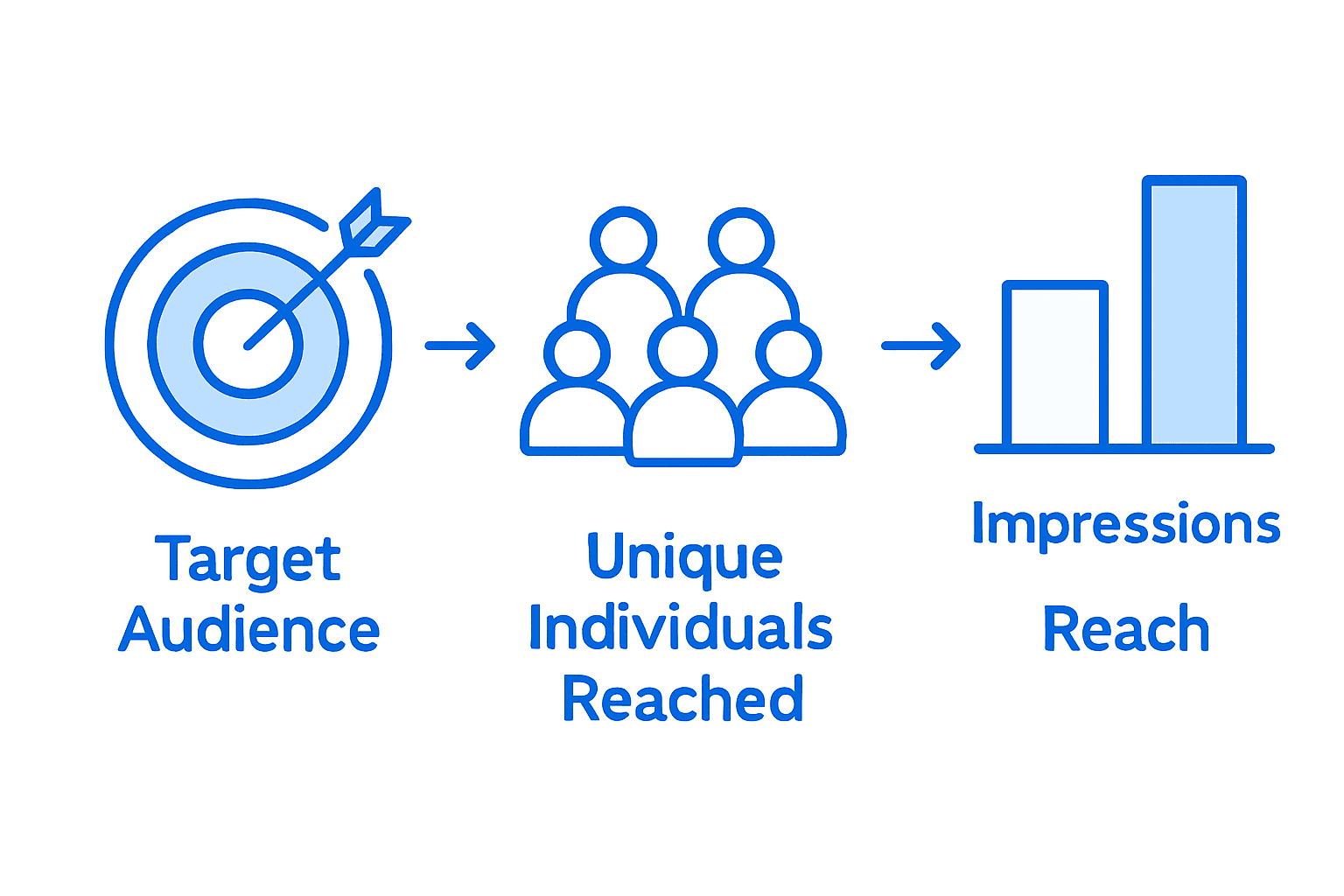
In the world of digital marketing, ad reach represents the total number of unique individuals exposed to your advertising content across various online platforms. Think of it like casting a fishing net: the wider and more strategic your net, the more potential customers you'll capture. Understanding unique viewer counts helps marketers measure the potential impact of their digital campaigns.
Reach differs fundamentally from impressions, which simply track how many times an ad appears on a screen. Instead, ad reach specifically counts how many different people actually see your content. This metric provides crucial insights into your campaign's potential audience size and helps determine whether your marketing efforts are truly connecting with new potential customers. Digital marketing professionals use reach as a key performance indicator to gauge campaign effectiveness and audience penetration.
Most digital advertising platforms calculate reach by tracking unique user interactions across different devices and channels. This means if someone sees your ad on their smartphone, tablet, and desktop computer, they're still counted as a single unique viewer. The goal is understanding how many distinct individuals your message potentially influences, rather than how many times an ad appears.
Pro Tip: Track Actual Reach: Use platform analytics tools to monitor your true unique viewer count and adjust targeting strategies accordingly to maximise audience exposure without unnecessary ad spend.
Key Types Of Ad Reach Metrics
Digital marketers rely on multiple ad reach metrics to understand their campaign's performance and audience engagement. Absolute reach represents the total number of unique individuals exposed to an advertisement, providing a clear snapshot of potential audience size. This fundamental metric helps businesses gauge the potential visibility of their marketing efforts across different digital platforms.

Another critical metric is relative reach, which calculates the percentage of a specific target population that has viewed an advertisement. By comparing the number of people reached against the total potential audience, marketers can assess the effectiveness of their targeting strategies. Frequency metrics complement these insights by tracking how many times an individual user encounters the same advertisement, helping prevent audience fatigue and optimise ad exposure.
Moreover, sophisticated digital advertising platforms now offer advanced metrics like effective reach, which evaluates the quality of ad exposure. This metric considers factors such as the number of times an ad must be viewed to create meaningful audience impact, helping businesses move beyond simple visibility and focus on genuine engagement. Marketers can leverage these insights to refine their cross-platform advertising strategies and maximise their return on investment.
Here is a comparison of key ad reach metrics and their strategic value:
| Metric Type | What It Measures | Business Impact |
|---|---|---|
| Absolute Reach | Total unique individuals exposed | Estimates total potential audience size |
| Relative Reach | Percentage of target population reached | Assesses targeting effectiveness |
| Frequency | Ad exposures per individual | Prevents audience fatigue, maximises value |
| Effective Reach | Quality of ad exposure | Drives meaningful engagement and conversions |
Pro Tip: Metric Mastery: Regularly compare your reach metrics across different platforms and campaigns to identify which strategies generate the most meaningful audience connections and adjust your advertising approach accordingly.
How Platforms Like Facebook And Google Measure Reach
Social media and digital advertising platforms have sophisticated mechanisms for tracking ad reach across their networks. Digital marketing professionals understand that Google calculates reach by identifying unique users who view digital content across multiple platforms, providing marketers with critical insights into audience engagement and campaign effectiveness.
Facebook employs advanced tracking technologies that measure reach through user interactions, device identifications, and cross-platform visibility. The platform tracks unique views by monitoring individual user sessions, ensuring that repeated ad exposures from the same person are not double-counted. This approach allows businesses to understand the genuine breadth of their advertising impact, distinguishing between total impressions and actual unique audience members.
Additional reach measurement techniques include device fingerprinting, IP address tracking, and logged-in user accounts. These methods help platforms like cross-platform advertising systems create more accurate audience profiles, enabling precise reach calculations. Advanced algorithms filter out bot traffic, duplicate views, and non-human interactions, ensuring marketers receive authentic engagement metrics that reflect real human audience exposure.
Below summarises major methods platforms use to track ad reach:
| Tracking Method | How It Works | Benefit for Marketers |
|---|---|---|
| Device Fingerprinting | Identifies unique device characteristics | More precise user identification |
| IP Address Tracking | Tracks based on network location | Helps distinguish unique visitors |
| Logged-in User Accounts | Counts unique registered users | Reliable cross-device measurement |
| Algorithmic Filtering | Removes bots and duplicate views | Ensures data accuracy and integrity |
Pro Tip: Tracking Precision: Regularly cross-reference reach metrics from different platforms to validate your audience data and identify potential discrepancies in measurement methodologies.
Strategic Use Of Reach For Business Growth
Ad reach is a powerful strategic lever for businesses seeking sustainable growth and market expansion. Australian businesses recognise digital advertising's critical role in connecting with potential customers, with digital advertising spending demonstrating significant year-on-year increases across multiple industry sectors.
Strategic reach allows businesses to move beyond traditional geographic limitations. Internet advertising enables brands to transcend local boundaries, reaching international audiences with targeted messaging. By carefully segmenting and understanding audience demographics, businesses can craft precise advertising strategies that maximise engagement and minimise wasted marketing expenditure.
Successful businesses leverage reach metrics to refine their digital marketing growth strategies. This involves continuous analysis of audience interaction, testing different content approaches, and dynamically adjusting targeting parameters. Advanced marketers use reach data to understand not just how many people see their content, but how effectively that content converts viewers into potential customers.
Pro Tip: Reach Optimisation: Regularly audit your advertising reach metrics, focusing on quality over quantity and prioritising engagement rates that translate directly into business growth opportunities.
Common Mistakes In Maximising Ad Reach
Businesses often stumble when attempting to expand their digital advertising reach by making critical strategic errors. Audience targeting represents the most common pitfall, where marketers broadcast messages to overly broad or poorly defined demographic groups. Ad targeting requires precise segmentation, ensuring that advertising resources are allocated efficiently and effectively.
Another significant mistake involves neglecting platform-specific nuances in reach strategies. Each digital advertising platform has unique algorithms and audience interaction patterns, which means a one-size-fits-all approach will dramatically reduce campaign effectiveness. Successful marketers understand the importance of tailoring content, messaging, and visual elements to suit specific platform requirements and audience expectations.
Many businesses also underestimate the importance of continuous performance monitoring and iterative refinement. Ad optimization is not a set-and-forget process but requires constant analysis and adjustment. Display advertising best practices emphasise the need for regular performance reviews, split testing different creative approaches, and dynamically adjusting targeting parameters to maintain and improve reach.
Pro Tip: Reach Refinement: Conduct weekly audits of your advertising performance, focusing on engagement metrics and audience interaction rates to continuously improve your targeting precision and campaign effectiveness.
Unlock the Full Potential of Your Ad Reach with Ads Daddy
Understanding and mastering ad reach is essential for any Australian business looking to expand their audience without wasting budget. The article highlights common challenges such as accurately measuring unique viewers, optimising frequency, and tailoring campaigns to platform nuances. These pain points often leave businesses feeling overwhelmed or unsure if their advertising dollars are truly reaching the right people.
At Ads Daddy, we specialise in solving these exact challenges. Our expert team creates and manages targeted campaigns across Facebook, Google, Instagram, LinkedIn, and more using data-driven strategies designed to maximise absolute and effective reach. We work closely with clients to avoid audience fatigue, refine targeting precision, and leverage advanced analytics so your message connects with genuine prospects.

Ready to move beyond impressions and start capturing real, unique customers? Let Ads Daddy help you translate reach metrics into business growth. Visit AdsDaddy.com today to learn how our customised digital advertising solutions can transform your campaign outcomes and boost your visibility across Australia and beyond.
Frequently Asked Questions
What is ad reach in digital advertising?
Ad reach refers to the total number of unique individuals who are exposed to your advertising content across various online platforms. It measures the potential audience size that your marketing efforts can influence.
How does ad reach differ from impressions?
While ad reach counts the unique individuals who see your ad, impressions track how many times the ad appears on a screen, regardless of whether it is the same person viewing it multiple times.
Why is measuring ad reach important for businesses?
Measuring ad reach helps businesses assess the effectiveness of their marketing strategies, understand audience engagement, and determine the potential impact of their campaigns on new potential customers.
What are some key metrics related to ad reach?
Key metrics include absolute reach (total unique individuals exposed), relative reach (percentage of target population reached), frequency (how often individuals see the ad), and effective reach (quality of ad exposure that leads to meaningful engagement).
Recommended
- Role of Video Ads: Complete Guide for Australian SMEs - Ads Daddy. Advertise on All Plattforms.
- Why Use Targeted Ads: Complete Guide for Australia 2026 - Ads Daddy. Advertise on All Plattforms.
- What Is Cross-Platform Advertising? Complete Breakdown - Ads Daddy. Advertise on All Plattforms.
- business growth Archives - Ads Daddy. Advertise on All Plattforms.
- 7 Key Examples of Cannabis Revenue Streams Explained - Cannabis Business Minds