Multichannel Ads Strategy for E-commerce Success
. By Ads Daddy.

Juggling multiple advertising platforms can feel overwhelming when your goal is to grow sales and attract qualified leads. As online competition intensifies across Australia, understanding how each channel shapes your customer’s journey is vital for e-commerce success. This guide shows you how to create a connected multichannel strategy, uncover crucial audience insights and develop creative campaigns that drive measurable results on platforms such as Facebook and Google.
Table of Contents
- Step 1: Identify Key Channels And Audience Targets
- Step 2: Set Up Integrated Ad Campaigns Across Platforms
- Step 3: Craft Compelling Creatives Tailored For Each Channel
- Step 4: Optimise Budgets And Bids For Maximum Impact
- Step 5: Monitor Results And Refine Strategies Continuously
Quick Summary
| Key Point | Explanation |
|---|---|
| 1. Identify Key Channels | Recognising the right digital channels is essential for creating targeted e-commerce advertising campaigns. Understand audience traits for effective placement. |
| 2. Integrate Campaigns Across Platforms | Develop cohesive ad campaigns that maintain consistent messaging while adapting to the strengths of each platform for maximum impact. |
| 3. Create Tailored Advertising Creatives | Design impactful visuals and messaging that resonate with the unique audience and consumption habits of each digital platform. |
| 4. Optimise Budgets and Bids | Allocate and refine advertising budgets strategically, focusing on performance metrics to ensure effective spending across various channels. |
| 5. Continuously Monitor Campaigns | Regularly track performance metrics and adjust strategies based on data insights to adapt to changing market conditions and improve results. |
Step 1: Identify key channels and audience targets
Pinpointing the right digital channels and understanding your target audience is the foundation of a successful multichannel advertising strategy for e-commerce. By mapping customer preferences and behaviours, you'll create laser-focused campaigns that convert.
To effectively identify your key advertising channels, start by understanding your product's unique selling proposition and the specific customer segments most likely to purchase. Multi-platform marketing strategies require a nuanced approach that matches audience characteristics with platform strengths. Consider these key targeting elements:
- Demographics: Age, income, location, gender
- Psychographics: Interests, lifestyle, values
- Online behaviour: Search patterns, social media engagement
- Purchase history: Previous buying patterns, brand interactions
Different platforms serve different audience roles in the customer journey. Social media platforms like Facebook and Instagram excel at building brand awareness and creating engaging visual narratives. Google Search and shopping platforms capture high-intent buyers ready to make purchases. Marketplace channels like Amazon attract comparison shoppers seeking the best deals.
Here's how major digital channels typically support the e-commerce buyer journey:
| Channel | Main Buyer Stage | Typical Audience Intent | Example Business Impact |
|---|---|---|---|
| Awareness, Engagement | Discovering brands, social proof | Boosts brand visibility | |
| Inspiration, Shopping | Product discovery, lifestyle fit | Drives aspirational purchases | |
| Google Search | Decision, Purchase | High intent to buy, solutions | Increases sales conversions |
| Amazon | Comparison, Purchase | Deal-seeking, comparing offers | Attracts price-focused buyers |
| Consideration, B2B | Professional interests, networking | Nurtures B2B relationships |
Your multichannel strategy should map each platform's unique audience role to maximise campaign effectiveness.
To refine your targeting, leverage platform-specific analytics tools that provide deep insights into audience demographics and engagement metrics. Track performance across channels, continuously adjusting your targeting parameters to improve conversion rates.
Top tip: Create audience personas for each channel to develop more personalised and resonant advertising messages.
Step 2: Set up integrated ad campaigns across platforms
Creating seamless, integrated ad campaigns across multiple digital platforms requires strategic planning and precise execution. Your goal is to develop a cohesive advertising approach that delivers consistent messaging while leveraging each platform's unique strengths.
Multichannel advertising campaigns demand careful coordination of messaging and targeting strategies. Begin by establishing a unified brand narrative that can be adapted to different platform specifications. This means developing core campaign messages that remain consistent while being tailored to each channel's audience expectations.
Consider implementing these key integration strategies:
- Consistent brand messaging: Maintain core narrative across all platforms
- Platform-specific content adaptation: Modify visuals and tone for each channel
- Cross-platform tracking: Use integrated analytics to monitor performance
- Audience segmentation: Create targeted variations for different platform demographics
Your campaign setup should include technical integration points such as:
- Synchronise audience data across platforms
- Establish unified conversion tracking
- Develop platform-specific creative assets
- Configure retargeting pixel installations
Successful multichannel campaigns create a connected customer journey that feels intentional and personalised.
Utilise marketing automation tools that enable seamless data sharing and performance monitoring across different advertising platforms. This approach allows you to quickly adjust strategies based on real-time insights and optimise your ad spend.
Top tip: Develop a centralised campaign dashboard that aggregates performance metrics from all advertising platforms to enable rapid strategic adjustments.
Step 3: Craft compelling creatives tailored for each channel
Designing effective advertising creatives requires a nuanced approach that respects each digital platform's unique audience expectations and consumption patterns. Your mission is to create visually striking and strategically targeted content that resonates across different marketing channels.

Multi-channel content strategies demand a sophisticated understanding of platform-specific communication styles. Each advertising channel represents a distinct ecosystem with its own visual language, audience preferences, and engagement triggers.
Consider these essential creative adaptation strategies:
- Instagram: Visual-first, aesthetically polished imagery
- Facebook: Storytelling-oriented, emotionally engaging content
- Google Search: Direct, solution-focused messaging
- LinkedIn: Professional, data-driven, authoritative visuals
Key creative customisation principles include:
This summary highlights how creative approaches should adapt for each platform:
| Platform | Preferred Creative Style | Key Content Focus | User Expectation |
|---|---|---|---|
| Visually striking imagery | Lifestyle visuals | Aesthetic inspiration | |
| Story-driven, emotional | Brand stories | Relatable, personal | |
| Google Ads | Clear, direct messaging | Solutions, benefits | Fast, relevant answers |
| Professional, authoritative | Industry insights | Credibility, expertise |
- Maintain consistent brand identity
- Adapt visual dimensions for each platform
- Modify tone and language to match audience
- Optimise file sizes and formats
Successful multichannel creatives speak the native language of each platform while preserving your core brand message.
Technical considerations are equally crucial. Ensure your creative assets are optimised for mobile consumption, feature high-resolution graphics, and include compelling calls-to-action that align with platform-specific user behaviours.
Top tip: Create a flexible creative template that can be quickly adapted across multiple platforms without losing its core visual identity.
Step 4: Optimise budgets and bids for maximum impact
Optimising your advertising budget requires strategic allocation and continuous refinement to ensure every dollar delivers maximum return on investment. Your goal is to create a dynamic bidding approach that balances cost-effectiveness with campaign performance across multiple digital platforms.
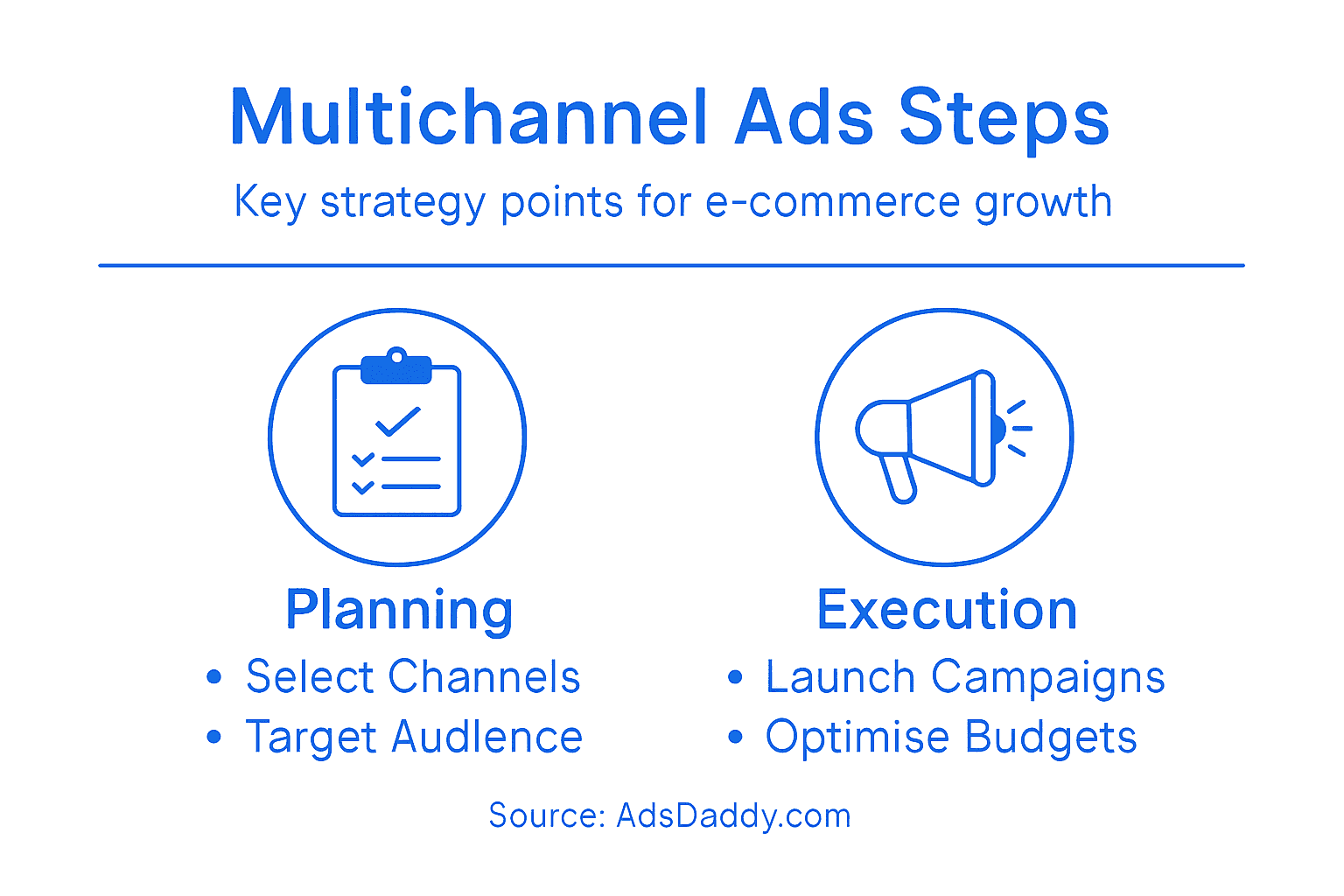
Ad campaign management involves sophisticated budget allocation techniques that go beyond simple spending limits. You'll need to develop a flexible approach that allows real-time adjustments based on platform-specific performance metrics.
Key budget optimisation strategies include:
- Performance tracking: Monitor cost per acquisition (CPA) across channels
- Bid adjustments: Dynamically modify bids based on audience engagement
- Budget reallocation: Shift funds to highest-performing platforms
- Audience segmentation: Optimise spending for most profitable customer segments
Implement these critical budgeting steps:
- Set initial platform-specific budget allocations
- Establish clear performance benchmarks
- Create automated bid adjustment rules
- Develop weekly budget review processes
Successful budget optimisation requires constant monitoring and willingness to pivot quickly based on data insights.
Utilise advanced analytics tools that provide granular insights into campaign performance. These platforms enable you to track return on ad spend (ROAS) in real-time, allowing for immediate strategic adjustments that maximise your marketing investment.
Top tip: Implement a 70-20-10 budget rule: allocate 70% to proven channels, 20% to emerging platforms, and 10% to experimental advertising strategies.
Step 5: Monitor results and refine strategies continuously
Continuous performance monitoring is the heartbeat of successful multichannel advertising, transforming raw data into actionable insights that drive campaign evolution. Your objective is to create a dynamic feedback loop that enables rapid strategic adjustments based on real-time performance metrics.
Cross-channel campaign management demands systematic tracking and comprehensive analysis of campaign metrics across all digital platforms. This process involves more than just collecting numbers - it's about interpreting complex data signals and translating them into meaningful strategic refinements.
Key performance monitoring techniques include:
- Metrics tracking: Monitor critical KPIs like conversion rates, CPA, and ROAS
- Comparative analysis: Compare performance across different channels
- Audience segmentation: Analyse performance within specific demographic groups
- Trend identification: Detect emerging patterns in customer behaviour
Implement these strategic monitoring steps:
- Establish comprehensive reporting dashboards
- Set up automated performance alerts
- Conduct weekly performance reviews
- Create iterative optimization protocols
Effective campaign management requires constant vigilance and a willingness to pivot quickly based on data-driven insights.
Utilise advanced analytics platforms that provide granular insights and predictive modeling capabilities. These tools enable you to move beyond reactive monitoring towards proactive campaign optimization, anticipating market shifts before they impact your advertising performance.
Top tip: Develop a "test and learn" approach where you allocate 10-15% of your budget to experimental strategies that can reveal unexpected performance opportunities.
Unlock Your E-commerce Growth with Expert Multichannel Ads Management
Navigating the complexities of multichannel advertising can feel overwhelming when trying to balance consistent messaging, audience segmentation, and budget optimisation. If your goal is to capture high-intent buyers across Facebook, Instagram, Google, and LinkedIn while crafting compelling creatives tailored to each platform then AdsDaddy.com is your strategic partner. We understand the pain points of synchronising campaigns and real-time bid adjustments so you can focus on scaling your business without the guesswork.
Our data-driven strategies leverage cutting-edge tools like Meta for Business and Klaviyo to deliver personalised ads that truly connect with your customers at every stage of the buyer journey. With proven expertise in managing diverse ad formats and integrated campaign tracking, you gain the advantage of maximising your return on ad spend with confidence.
Ready to transform your multichannel advertising into a seamless growth engine?

Explore how AdsDaddy.com can tailor solutions specifically for your e-commerce goals and maximise your visibility and sales. Visit AdsDaddy.com now to start optimising your campaigns with experts who make every dollar count. Learn more on our landing page and discover personalised strategies at AdsDaddy.com.
Frequently Asked Questions
What are the key channels to consider in a multichannel ads strategy for e-commerce?
To succeed in a multichannel ads strategy, focus on platforms like Facebook, Instagram, Google Search, Amazon, and LinkedIn. Each serves different stages of the customer journey; for instance, Facebook builds awareness while Google Search targets high-intent buyers. Identify which channels align with your audience's behaviour and tailor your strategies accordingly.
How can I refine my audience targeting for digital ads?
Refining your audience targeting involves analysing demographics, psychographics, online behaviour, and purchase history. Create audience personas for each platform to tailor your advertising messages and improve engagement rates. Consider segmenting your audience into specific groups and adjusting your messages based on their preferences within 30 days.
What steps are involved in setting up integrated advertising campaigns?
To create integrated advertising campaigns, start by establishing a consistent brand narrative that can be tailored to each platform. Adapt your messaging and visuals according to each channel's strengths while ensuring cohesive communication. Implement cross-platform tracking to monitor performance and modify strategies as needed.
How do I optimise my advertising budget across multiple platforms?
Optimising your advertising budget requires tracking performance metrics like cost per acquisition (CPA) and reallocating funds to high-performing platforms. Set initial budgets for each channel, review them weekly, and adjust bids based on audience engagement metrics. Aim to improve your return on ad spend (ROAS) by making data-driven decisions.
What are the best practices for creating effective ad creatives?
Effective ad creatives should be tailored to match the communication style of each platform. Focus on maintaining consistent branding while adapting visuals and messaging for the specific audience on each channel. For instance, use visually striking images for Instagram and clear, direct messages for Google Ads. This ensures engagement and relevance across different touchpoints.
How do I monitor and refine my ad strategies over time?
Monitoring and refining your ad strategies involves establishing comprehensive reporting dashboards to track key metrics. Regularly analyse performance data across platforms and adjust your campaigns based on emerging trends or patterns in customer behaviour. Implement a test-and-learn approach, where you allocate a portion of your budget to experiment with new strategies to uncover growth opportunities.
Recommended
- Why Use Multi-Platform Campaigns: Complete Guide 2026 - Ads Daddy. Advertise on All Plattforms.
- Complete Guide to Cross-Platform Advertising - Ads Daddy. Advertise on All Plattforms.
- What Is Cross-Platform Advertising? Complete Breakdown - Ads Daddy. Advertise on All Plattforms.
- 7 Top Ad Platforms for Ecommerce Success Explained - Ads Daddy. Advertise on All Plattforms.
- What Is Multichannel Marketing and Why It Matters - Jarrod Harman