Comprehensive Guide to Audience Targeting for Aussie E-commerce
. By Ads Daddy.

Over 70 percent of australian online shoppers expect brands to deliver personalized offers that match their interests. For small and medium-sized e-commerce owners, understanding and targeting the right customer segments on Facebook and Google makes a real difference between wasted ad spend and higher sales. This guide shows how strategic segmentation, data-driven targeting, and ongoing optimization can help you reach the most valuable australian buyers while boosting return on investment.
Table of Contents
- Step 1: Define Key Customer Segments For Your E-Commerce
- Step 2: Gather Data To Inform Targeting Decisions
- Step 3: Create Targeted Ad Sets On Facebook And Google
- Step 4: Optimise Audience Parameters For Better Reach
- Step 5: Evaluate Performance And Refine Your Targeting
Quick Summary
| Key Point | Explanation |
|---|---|
| 1. Define your customer segments | Segmenting customers helps tailor marketing efforts, improving customer experiences and engagement. |
| 2. Gather comprehensive data | Use multiple data sources for a complete view of consumer behaviour to enhance targeting strategies. |
| 3. Create targeted ad sets | Develop customised ad sets for Facebook and Google based on insights to maximise ad effectiveness. |
| 4. Optimise audience parameters | Continuously refine audience targeting using data and AI tools to improve reach and engagement. |
| 5. Evaluate and refine performance | Regularly track ad performance metrics to identify trends and make data-driven adjustments for success. |
Step 1: Define key customer segments for your e-commerce
Customer segmentation is your secret weapon for creating targeted marketing magic. By breaking down your audience into distinct groups, you can craft personalised experiences that feel like they were designed just for them.
To start segmenting your customers effectively, you'll want to analyse multiple dimensions of customer data. E-commerce customer segmentation involves splitting customers into distinct groups with similar characteristics that help you understand their unique needs and preferences. Focus on key attributes like:
- Demographics (age, location, gender)
- Purchase behaviour (frequency, average order value)
- Customer lifecycle stage
- Product preferences
- Online browsing habits
The goal is to create 3-5 meaningful segments that represent your core customer types. Think of it like creating character profiles for a marketing strategy game where each segment gets a custom playbook. Using data to build segments helps personalize messaging and ensures high-value customers receive focused attention, boosting your overall business efficiency.
Here’s how common customer segments differ in Australian e-commerce:
| Segment Type | Typical Characteristics | Marketing Focus |
|---|---|---|
| High-Value Shoppers | Frequent, high-spend transactions | Loyalty programs, exclusive deals |
| Occasional Buyers | Low purchase frequency, low spend | Special offers, reactivation ads |
| Browsing Enthusiasts | Active on-site, few purchases | Product education, retargeting |
| Discount Seekers | Price sensitive, respond to sales | Promotions, limited-time offers |
| Brand Loyalists | Repeat, consistent brand selection | Early access, brand stories |
Practical Tip: Start by pulling customer data from your e-commerce platform and analyse patterns before getting too complex. Sometimes the simplest segmentation reveals the most powerful insights.
Step 2: Gather data to inform targeting decisions
To create killer targeted marketing campaigns, you need solid data that reveals exactly who your customers are and what makes them tick. Creating a data-driven e-commerce strategy starts with collecting comprehensive customer information that goes beyond basic demographics.
Start by diving into multiple data sources to build a 360-degree view of your audience. Australian e-commerce provides rich insights across various channels. Key data collection methods include:
- Website analytics (Google Analytics)
- Social media insights
- Customer surveys and feedback
- Purchase history and transaction data
- Email marketing engagement metrics
Australian e-commerce consumers represent diverse shopping behaviors across different age groups, so gathering nuanced data helps you understand specific customer segments. Track metrics like average order value, purchase frequency, product preferences, and browsing patterns to create laser focused marketing strategies.

Practical Tip: Invest in a good customer relationship management system that integrates multiple data sources and provides actionable insights without overwhelming you with raw numbers.
This table compares data sources for audience analysis in e-commerce:
| Data Source | Insights Provided | Best Use Case |
|---|---|---|
| Website Analytics | Visitor behaviour, top products | Campaign performance analysis |
| Social Media Stats | Audience demographics, trends | Content strategy adjustments |
| Surveys/Feedback | Customer motivations, opinions | Improving product offerings |
| Transaction Data | Purchase trends, segment value | Personalised recommendations |
| Email Metrics | Engagement rates, preferences | Email campaign improvements |
Step 3: Create targeted ad sets on Facebook and Google
Now that you've gathered your customer insights, it's time to transform those data points into laser-focused ad sets that speak directly to your audience. To create effective Meta ads for e-commerce, start by defining campaign objectives aligned with your specific sales goals, whether that's driving conversions, increasing catalog sales, or building brand awareness.

For Facebook and Google, you'll want to leverage custom audiences and strategic targeting options. Begin by setting up product catalogs for dynamic ads that automatically showcase relevant products to each customer segment. On Facebook, use lookalike audiences to find new potential customers who share characteristics with your best existing customers. For Google Ads, utilise detailed demographic and interest targeting to ensure your ads reach the most promising prospects.
Key steps for creating targeted ad sets include:
- Select precise audience demographics
- Choose relevant interests and behaviors
- Set appropriate budget and bidding strategies
- Create compelling ad creative for each segment
- Implement conversion tracking
Practical Tip: Start with small test budgets for each ad set and monitor performance closely. Adjust and refine your targeting based on real data rather than assumptions.
Step 4: Optimise audience parameters for better reach
Optimising audience targeting involves leveraging first-party data and sophisticated AI tools to refine and expand your marketing reach accurately. Think of audience parameters like a precision instrument that helps you dial in exactly who sees your ads and when.
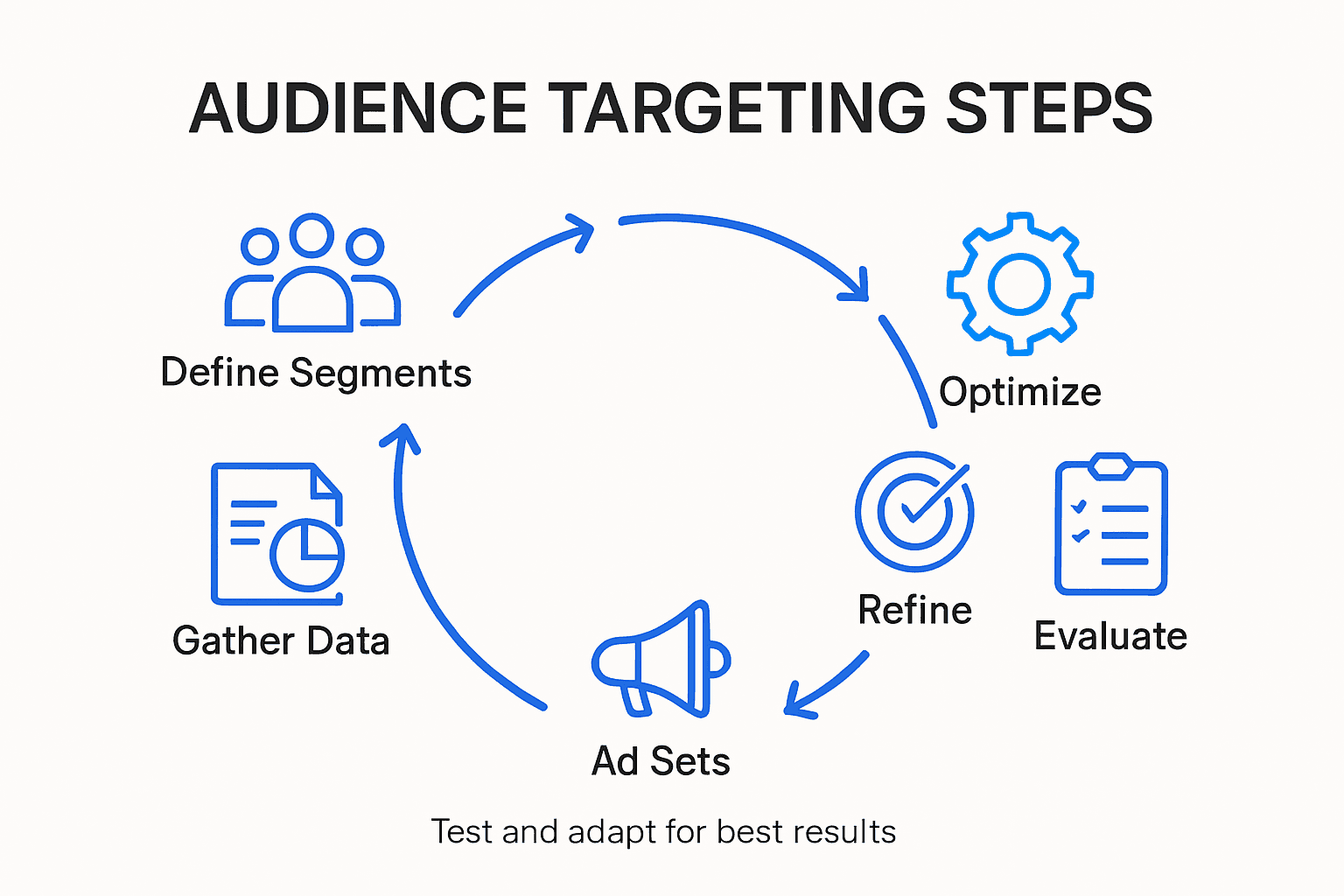
Start by diving deep into your available data sources and creating quality audience segments. Google Ads offers powerful optimization strategies like Enhanced CPC and Target CPA that can help maximise your conversion potential. Your key focus should be on building nuanced audience groups that go beyond basic demographics and tap into specific behaviours, interests, and purchase intentions.
Critical strategies for audience parameter optimization include:
- Analyse customer data from multiple touchpoints
- Create detailed audience personas
- Use exclusion lists to prevent audience overlap
- Test different audience combinations
- Implement smart bidding strategies
- Track and measure audience performance continuously
Practical Tip: Always leave room for experimentation in your targeting approach and be prepared to pivot quickly based on real performance data.
Step 5: Evaluate performance and refine your targeting
Tracking and analysing your ad campaign performance is like being a detective uncovering the secret sauce of your marketing success. Evaluating ad performance involves monitoring detailed statistics like impressions, clicks, and conversions across different ads and placements, giving you a crystal clear picture of what's working and what needs improvement.
Start by setting up comprehensive tracking in your Google Ads and Facebook Ads platforms. Look beyond surface level metrics and dig into the nuanced data that reveals audience behaviour. Pay close attention to key performance indicators such as click through rates, conversion rates, cost per acquisition, and return on ad spend. Your goal is to identify which audience segments are delivering the most value and which might need strategic refinement.
Critical performance evaluation steps include:
- Review audience segment performance weekly
- Compare different audience group conversion rates
- Identify top performing demographics and interests
- Analyse placement effectiveness
- Adjust bid strategies based on data insights
- Remove or modify underperforming audience segments
Practical Tip: Create a performance tracking dashboard that gives you an instant snapshot of your ad campaign metrics, helping you make quick and informed optimization decisions.
Unlock the Power of Precision Audience Targeting for Your Aussie E-commerce Business
Every Australian e-commerce business faces the challenge of cutting through the noise and reaching the right customers with the right message. This guide showed the importance of customer segmentation, data-driven decisions, and optimising ad sets on platforms like Facebook and Google. If you are struggling to transform big data into actionable marketing, or want to sharpen your targeting to boost conversions, you are not alone.
At AdsDaddy.com, we specialise in turning complex audience insights into customised ad campaigns that truly connect with your ideal shoppers. Our expert team uses powerful tools and proven strategies to create highly targeted Facebook, Instagram, Google, and LinkedIn ads that resonate with your specific customer segments. We help you control budgets, refine bids, and refine audience parameters for maximum return on investment.
If you are ready to take your e-commerce marketing to the next level, start with expert support backed by real results.
- Experience tailored ad creation using your unique customer data
- Benefit from ongoing campaign optimisation driven by detailed performance tracking
- Scale efficiently with strategic placements and compelling creatives

Transform your audience targeting strategy today. Visit AdsDaddy.com to discover how our digital marketing specialists can help you dominate online with smarter, data-driven advertising. Check out our range of services and client success stories to take the first step towards higher visibility and stronger sales now.
Frequently Asked Questions
How can I identify my key customer segments for audience targeting in e-commerce?
To identify key customer segments, analyse customer data across demographics, purchase behaviour, and online habits. Start by categorising your audience into 3-5 meaningful segments that reflect their characteristics, which helps in crafting targeted marketing strategies.
What data should I collect to improve my audience targeting decisions?
Collect a variety of data, including website analytics, social media insights, customer surveys, and transaction history. Focus on building a comprehensive view of your audience to understand their needs and preferences, enabling you to tailor your marketing efforts effectively.
How do I create targeted ad sets on platforms like Facebook and Google?
To create targeted ad sets, first define your campaign objectives, then leverage custom audiences and product catalogs for dynamic ads. Start by selecting precise demographics and interests for each ad set, and monitor their performance regularly to ensure they align with your sales goals.
What steps can I take to optimise audience parameters for better ad reach?
Begin by analysing customer data from various sources to create detailed audience personas. Test different audience combinations and implement smart bidding strategies to refine your ad targeting, allowing you to improve reach and conversion rates continuously.
How can I effectively evaluate the performance of my advertising campaigns?
To evaluate performance, monitor detailed metrics like impressions, clicks, and conversions across your ad campaigns. Regularly review audience segment performance and adjust your strategies based on data insights to enhance effectiveness and return on investment.
What practical strategies can I implement to track audience performance?
Set up a comprehensive tracking system in your advertising platforms to capture essential metrics like click-through rates and conversion rates. Create a performance tracking dashboard that provides a quick overview, helping you make informed optimisation decisions swiftly.
Recommended
- Why Use Targeted Ads: Complete Guide for Australia 2026 - Ads Daddy. Advertise on All Plattforms.
- Complete Guide to Why Target Specific Audiences - Ads Daddy. Advertise on All Plattforms.
- Facebook Ads Archives - Ads Daddy. Advertise on All Plattforms.
- business growth Archives - Ads Daddy. Advertise on All Plattforms.
- Education – Eternal Carat