Conversion Tracking: Boosting ROI for Aussie E-commerce
. By Ads Daddy.

Tracking every click and purchase after a campaign can feel overwhelming for any Australian e-commerce manager aiming to maximise returns. With limited budgets and competing channels, the challenge is not just generating traffic but proving which ads drive real sales. Discover how conversion tracking metrics turn scattered user interactions into clear, measurable insights that help pinpoint your most effective strategies and sharpen your ROI.
Table of Contents
- What Is Conversion Tracking in Marketing
- Types of Conversion Events and Tracking Methods
- How Conversion Tracking Works on Ads Platforms
- Essential Tools for Tracking Conversions Effectively
- Common Pitfalls and Legal Considerations in Australia
Key Takeaways
| Point | Details |
|---|---|
| Conversion Tracking Importance | Essential for understanding how marketing efforts translate into measurable outcomes like purchases and sign-ups. |
| Types of Conversion Events | Key events include product purchases, sign-ups, and form completions, crucial for assessing campaign performance. |
| Tracking Methods Comparison | Choosing the right tracking method can enhance marketing effectiveness and improve ROI significantly. |
| Legal Compliance in Australia | Adhere to privacy regulations and obtain explicit user consent to avoid legal pitfalls in conversion tracking. |
What Is Conversion Tracking in Marketing
Conversion tracking is a strategic marketing measurement technique that captures and analyses the specific actions customers take after interacting with digital advertising campaigns. By understanding key performance indicators, businesses can precisely track how marketing efforts translate into measurable outcomes like purchases, sign-ups, or lead generation.
At its core, conversion tracking helps marketers answer critical questions about campaign effectiveness:
- How many potential customers are taking desired actions?
- Which marketing channels generate the most valuable conversions?
- What is the actual return on investment (ROI) for specific ad campaigns?
The process involves monitoring crucial stages within the marketing funnel: awareness, consideration, and decision. By tracking conversions across these stages, Australian businesses can identify bottlenecks, optimise campaign strategies, and allocate resources more intelligently.
Conversion tracking metrics provide granular insights into customer behaviour, revealing:
- Click-through rates
- Purchase completions
- Form submissions
- Email sign-ups
- Product page views
Effective conversion tracking transforms raw data into actionable marketing intelligence.
Pro tip: Set up conversion tracking before launching campaigns to ensure you capture comprehensive performance data from the start.
Types of Conversion Events and Tracking Methods
Digital marketing offers a diverse range of conversion events that provide insights into customer behaviour and campaign performance. Tracking methodologies enable businesses to capture critical interactions across multiple digital platforms, transforming raw data into meaningful marketing intelligence.
Key conversion events in e-commerce typically include:
- Product purchases
- Newsletter sign-ups
- Form completions
- Demo or consultation requests
- Whitepaper downloads
- Free trial registrations
- Added items to cart
Tracking these events requires sophisticated digital measurement techniques:
- Pixel Tracking: Embedding invisible code snippets on web pages to monitor user interactions
- Cookie-Based Tracking: Using browser cookies to track user journeys and behaviour
- Server-Side Tracking: Recording conversions directly through backend systems
- UTM Parameter Tracking: Appending unique campaign identifiers to track traffic sources
Conversion tracking methods vary in complexity and precision, allowing marketers to choose approaches that best suit their specific business objectives. Some techniques offer granular insights, while others provide broader performance overviews.

Here's a comparison of popular conversion tracking methods and their business impact:
| Tracking Method | Key Advantage | Best Use Case |
|---|---|---|
| Pixel Tracking | Real-time behaviour insights | E-commerce purchase monitoring |
| Cookie-Based Tracking | Follows user journey over time | Multi-step funnels and retargeting |
| Server-Side Tracking | Enhanced data accuracy | Privacy-driven or secure environments |
| UTM Parameter Tracking | Identifies traffic sources | Multi-channel campaign attribution |
Selecting the right tracking method can dramatically improve marketing effectiveness and ROI.
Pro tip: Implement multiple tracking methods to cross-validate conversion data and ensure comprehensive performance measurement.
How Conversion Tracking Works on Ads Platforms
Ads platforms employ sophisticated technologies to monitor and analyse user interactions through detailed tracking mechanisms. These systems capture critical data points that help marketers understand precisely how potential customers engage with their digital advertisements.
The core components of conversion tracking on ads platforms include:
- Tracking pixels embedded in advertisement creative
- Unique conversion tracking codes
- Browser and device-level identifier matching
- Advanced algorithmic attribution models
- Cross-platform interaction monitoring
The tracking process typically unfolds through several key stages:
- Ad Exposure: User sees or interacts with an advertisement
- Interaction Capture: Platform records initial engagement
- Conversion Event Tracking: Monitors subsequent user actions
- Data Aggregation: Compiles comprehensive interaction insights
- Performance Analysis: Generates detailed conversion reports
Conversion tracking technologies leverage multiple data collection methods, including cookies, pixel tracking, and server-side recording. These sophisticated approaches enable marketers to trace customer journeys with remarkable precision, understanding exactly how advertising investments translate into tangible business outcomes.
Effective conversion tracking transforms raw interaction data into strategic marketing intelligence.
Pro tip: Regularly audit your conversion tracking setup to ensure accurate data collection and compliance with current privacy regulations.
Essential Tools for Tracking Conversions Effectively
Modern e-commerce businesses require robust data traceability frameworks to effectively monitor and analyse conversion performance. These digital tools transform raw interaction data into actionable marketing insights, enabling precise measurement of advertising effectiveness.
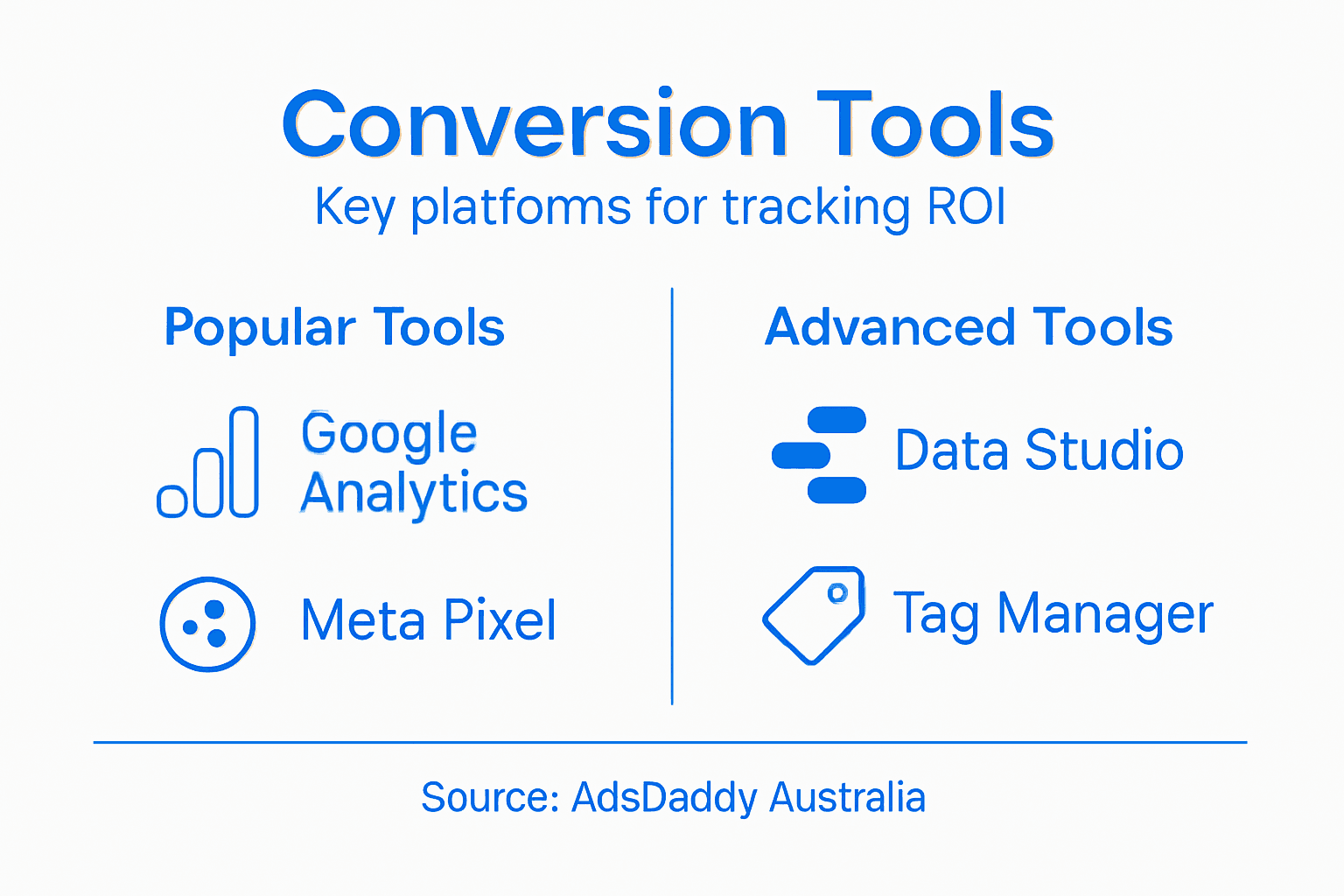
Essential conversion tracking tools include:
- Google Analytics: Comprehensive web analytics platform
- Facebook Pixel: Social media conversion tracking
- Google Tag Manager: Centralised tag management system
- Hotjar: User behaviour and interaction visualisation
- Mixpanel: Advanced product and user analytics
- Amplitude: Customer journey tracking and segmentation
Key features to look for in conversion tracking tools:
- Real-time data reporting
- Cross-platform integration capabilities
- Advanced segmentation options
- Customisable dashboard configurations
- Privacy compliance mechanisms
Conversion tracking technologies help marketers understand complex customer journeys by providing granular insights into user interactions, engagement patterns, and ultimate conversion behaviours. These sophisticated tools bridge the gap between marketing efforts and measurable business outcomes.
Below is a summary of essential conversion tracking tools and their standout features:
| Tool | Core Strength | Ideal Platform or Scenario |
|---|---|---|
| Google Analytics | In-depth website analytics | Website traffic and behaviour analysis |
| Facebook Pixel | Social media conversion linking | Facebook and Instagram ad campaign optimisation |
| Hotjar | Visualises user interaction | Heatmaps and visitor session recordings |
| Mixpanel | Advanced user segmentation | Mobile app and SaaS product analytics |
Selecting the right conversion tracking tools can dramatically improve marketing precision and return on investment.
Pro tip: Implement multiple tracking tools and cross-validate data to ensure comprehensive and accurate conversion insights.
Common Pitfalls and Legal Considerations in Australia
E-commerce businesses must navigate complex legal landscapes when implementing conversion tracking, particularly around data privacy regulations. The Australian privacy framework demands rigorous compliance and transparency in data collection and management strategies.
Common legal pitfalls businesses encounter include:
- Insufficient user consent mechanisms
- Inadequate data protection protocols
- Unclear privacy policy documentation
- Inconsistent record-keeping practices
- Lack of transparent data usage explanations
- Non-compliance with Australian Privacy Principles
Key legal considerations for conversion tracking involve:
- Adhering to Privacy Act 1988 requirements
- Obtaining explicit user consent
- Implementing robust data security measures
- Maintaining transparent tracking practices
- Protecting individual privacy rights
Digital marketing compliance requires a proactive approach to understanding and implementing legal safeguards. Businesses must continuously update their tracking methodologies to align with evolving regulatory standards and protect user data integrity.
Effective conversion tracking balances marketing insights with rigorous privacy protection.
Pro tip: Consult a legal professional specialising in digital privacy to ensure your conversion tracking practices fully comply with Australian regulations.
Maximise Your E-commerce Growth with Expert Conversion Tracking Support
Struggling to turn your digital ad spend into tangible sales and meaningful leads is a common challenge for Australian e-commerce businesses. As highlighted in the article, mastering conversion tracking is critical to understanding customer journeys, optimising campaigns, and ultimately boosting your ROI. Without precise tracking of actions like product purchases or sign-ups your campaigns may waste budget and miss valuable opportunities.
At AdsDaddy we specialise in end-to-end campaign management using data-driven strategies tailored to your needs. We seamlessly integrate proven tools such as Facebook Pixel and Google Analytics to deliver accurate insights and optimise every ad interaction across platforms including Facebook, Instagram, Google and more. Our expert team ensures your conversion tracking is both effective and compliant with Australian privacy standards so you can confidently expand your business.

Ready to transform your digital marketing and convert clicks into loyal customers? Visit AdsDaddy now to discover how our expert conversion tracking solutions and tailored campaign strategies can help your e-commerce business thrive in a competitive Australian market. Act today to unlock the full potential of your advertising investment.
Frequently Asked Questions
What is conversion tracking in marketing?
Conversion tracking is a measurement technique that captures and analyses customer actions following interactions with digital advertising campaigns. It helps businesses understand how marketing efforts translate into measurable outcomes, such as purchases and sign-ups.
Why is conversion tracking important for e-commerce businesses?
Conversion tracking is crucial for e-commerce businesses as it enables them to assess the effectiveness of their marketing campaigns, identify which channels drive valuable conversions, and measure the return on investment (ROI) for ads, allowing for better resource allocation.
What are some common types of conversion events in e-commerce?
Common conversion events in e-commerce include product purchases, newsletter sign-ups, form completions, demo requests, free trial registrations, whitepaper downloads, and added items to cart.
What tools can I use for effective conversion tracking?
Essential tools for conversion tracking include Google Analytics, Facebook Pixel, Google Tag Manager, Hotjar, Mixpanel, and Amplitude. These tools help businesses monitor and analyse conversion performance, providing insights into customer behaviour.
Recommended
- Why Use Targeted Ads: Complete Guide for Australia 2026 - Ads Daddy. Advertise on All Plattforms.
- What Is Cross-Platform Advertising? Complete Breakdown - Ads Daddy. Advertise on All Plattforms.
- Digital Marketing Workflow for Maximum ROI Success - Ads Daddy. Advertise on All Plattforms.
- Pay Per Lead & Buying Leads Archives - Ads Daddy. Advertise on All Plattforms.
- Ik heb een webshop - Trustedmark