What Is Contextual Advertising and Why It Matters
. By Ads Daddy.

Most australian e-commerce businesses underestimate the impact of true contextual advertising, yet studies show that contextually relevant ads can increase engagement by over 60 percent compared to generic placements. In a digital landscape shaped by tightening privacy rules and changing consumer attitudes, it is more important than ever to master these strategies. Understanding the core principles and avoiding common misconceptions will help australian business owners achieve smarter lead generation across Facebook and Google.
Table of Contents
- Contextual Advertising Principles And Key Misconceptions
- Types Of Contextual Targeting For Facebook And Google
- How Contextual Ad Placement Works In Practice
- Legal Compliance And Privacy Rules In Australia
- Common Mistakes And What Smart Businesses Avoid
Key Takeaways
| Point | Details |
|---|---|
| Contextual Advertising Advantages | Contextual advertising enhances user privacy by focusing on content relevance rather than personal data tracking. |
| Essential for Engagement | Precise content matching significantly influences consumer attitudes and engagement rates. |
| Compliance with Regulations | Adhering to privacy laws is crucial; businesses must prioritise transparency and consent in their advertising practices. |
| Avoiding Common Pitfalls | Successful contextual advertising requires rigorous content screening to prevent misalignment with brand values. |
Contextual advertising principles and key misconceptions
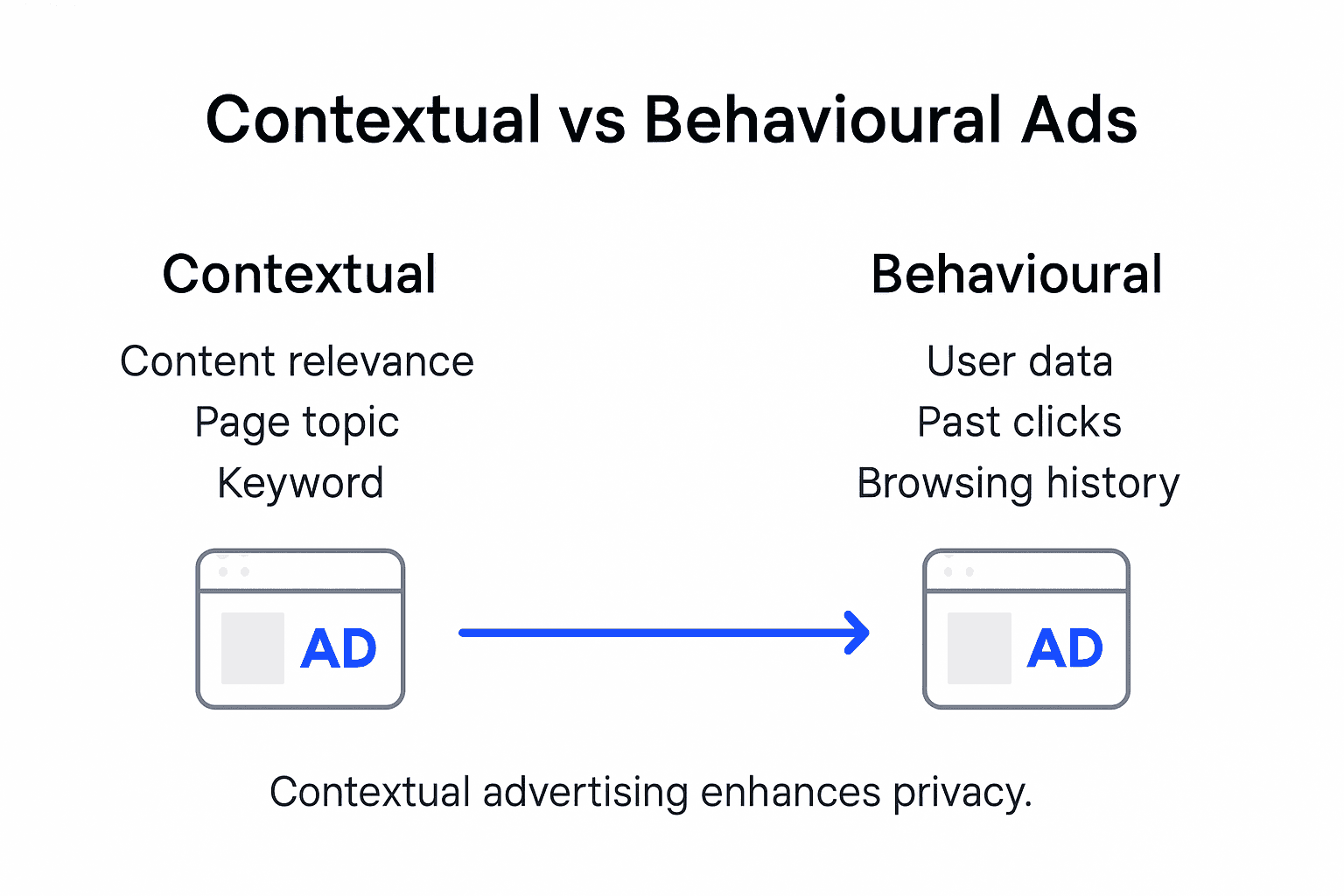
Contextual advertising represents a strategic approach to digital marketing that goes beyond traditional targeting methods. Unlike behavioural advertising which relies on personal data, this technique focuses on matching advertisements with relevant content environments. Semantic and affective alignment can dramatically increase ad impact while respecting user privacy and maintaining ethical advertising standards.
The core principles of contextual advertising revolve around understanding the nuanced relationship between content, audience perception, and advertising placement. Effective contextual ads seamlessly integrate with their surrounding media, creating a natural and non-intrusive user experience. This approach requires deep semantic understanding, allowing advertisers to analyse page content, tone, and thematic context to determine the most appropriate ad placement. Consumer attitudes toward advertising are significantly influenced by contextual relevance, making precise content matching crucial for engagement.
Key misconceptions about contextual advertising often stem from outdated assumptions about targeting effectiveness. Many marketers mistakenly believe that personal data tracking produces superior results, when in fact, contextually aligned advertisements can generate comparable or even superior engagement rates. The rising importance of privacy regulations and consumer data protection makes contextual advertising not just a strategic choice, but an increasingly necessary approach for responsible digital marketing.
Pro Marketing Insight: Always prioritise content relevance and semantic alignment over broad demographic targeting to create more meaningful and effective advertising experiences.
To clarify the differences between contextual and behavioural advertising, see the table below:
| Aspect | Contextual Advertising | Behavioural Advertising |
|---|---|---|
| Targeting Method | Content and semantic analysis | User behaviour and browsing history |
| Privacy Impact | Minimal personal data used | Extensive data collection involved |
| Regulation Risk | Lower, aligns with privacy laws | Higher, subject to restrictions |
| User Perception | Generally non-intrusive | Can feel invasive |
Types of contextual targeting for Facebook and Google
Contextual targeting on digital advertising platforms like Facebook and Google involves sophisticated techniques for matching advertisements with relevant online environments. Platforms leverage advanced natural language processing and machine learning to analyse content semantics, enabling precise ad placements that resonate with specific audience contexts.

Google offers multiple contextual targeting approaches, including keyword matching, topic targeting, and placement targeting. These programmatic targeting methods allow advertisers to select specific content categories and keywords where their advertisements will appear. For instance, a fitness equipment company could target pages discussing exercise, health, and wellness, ensuring their ads reach audiences with genuine interest in their products.
Facebook's contextual targeting strategies similarly emphasise content relevance and user engagement. The platform analyses page content, user interactions, and semantic signals to determine optimal ad placements. Advanced targeting options allow marketers to drill down into specific content themes, interests, and behavioural signals that align closely with their campaign objectives. This granular approach helps brands connect with audiences through highly relevant, contextually appropriate advertising experiences.
Pro Targeting Tip: Always combine multiple contextual signals like keywords, topics, and user interests to create a more nuanced and precise targeting strategy that maximises ad relevance and engagement.
How contextual ad placement works in practice
Contextual ad placement operates through a sophisticated, multi-stage process that transforms digital advertising into a precise, intelligent matching system. Each stage involves complex algorithmic assessments that evaluate content relevance, sentiment, and user engagement potential, ensuring advertisements appear in the most appropriate digital environments.
The initial phase begins with detailed keyword and theme selection, where advertisers define specific semantic parameters for their ad placements. Advanced machine learning algorithms then scan web pages in real-time, analysing textual content, metadata, and contextual signals to determine the most suitable advertising opportunities. This dynamic approach allows for nuanced matching beyond simple keyword targeting, considering factors like page tone, content quality, and semantic context.
Practical implementation involves continuous refinement of targeting strategies. Advertising platforms use natural language processing to understand page content's deeper meaning, not just surface-level keywords. For example, an ad for running shoes might appear on fitness blogs, health articles, or athletic performance websites, but would be carefully excluded from unrelated or potentially inappropriate content contexts. This intelligent filtering mechanism protects brand reputation while maximising potential audience engagement.
Pro Targeting Insight: Regularly audit and refresh your contextual targeting parameters to maintain alignment with evolving content landscapes and audience interests, ensuring your advertisements remain precisely targeted and relevant.
Legal compliance and privacy rules in Australia
Contextual advertising in Australia operates within a complex regulatory landscape that prioritises consumer privacy and ethical data practices. Recent privacy law developments have significantly transformed digital advertising compliance requirements, introducing stringent guidelines for how businesses collect, use, and manage digital identifiers and user information.
Key legal considerations for contextual advertising include mandatory transparency, explicit consent mechanisms, and strict limitations on data collection. The amended Privacy Act now requires businesses to provide clear, accessible information about their data practices, ensuring consumers understand how their digital interactions might inform advertising experiences. This means advertisers must develop robust consent frameworks that allow users to make informed choices about their data and advertising exposure.
Australian advertising regulatory frameworks combine industry self-regulation with legal mandates, creating a comprehensive compliance environment. Contextual advertising strategies must navigate these requirements carefully, prioritising user privacy while maintaining effective targeting. Businesses must maintain meticulous records of their advertising practices, demonstrating a commitment to ethical data use and consumer protection.
Pro Compliance Tip: Conduct regular privacy audits of your advertising practices, documenting consent mechanisms and data handling processes to ensure ongoing alignment with Australian regulatory standards.
Here is a summary of key compliance steps for contextual advertising in Australia:
| Compliance Area | Business Obligation | Example Action |
|---|---|---|
| Transparency | Provide clear data usage information | Publish privacy policy |
| Consent | Obtain explicit user consent | Use opt-in forms |
| Data Minimisation | Limit unnecessary data collection | Exclude personal identifiers |
| Ongoing Record-Keeping | Maintain documentation of practices | Archive consent records |
Common mistakes and what smart businesses avoid
Contextual advertising demands precision and strategic thinking, with numerous potential pitfalls that can derail marketing effectiveness. Smart businesses understand that avoiding common mistakes requires systematic review and proactive compliance management, particularly in a rapidly evolving digital landscape that demands nuanced targeting and cultural sensitivity.
One of the most significant errors businesses make involves inappropriate targeting and contextual misalignment. This occurs when advertisements appear in environments that contradict brand values or potentially offend audience segments. For instance, a family-friendly brand might inadvertently place ads next to content with mature themes, damaging reputation and audience trust. Rigorous content screening and sophisticated semantic analysis are crucial to preventing such missteps.
Advertising compliance frameworks emphasise the importance of comprehensive review procedures and ethical oversight, highlighting that mistakes often stem from inadequate preparation and lack of systematic checks. Successful contextual advertising requires multiple layers of validation, including creative content assessment, audience relevance verification, and ongoing performance monitoring. Businesses must develop robust internal processes that continuously evaluate ad placements against evolving community standards and regulatory requirements.
Pro Prevention Tip: Implement a multi-stage review process with mandatory compliance checkpoints, ensuring every contextual advertising campaign undergoes thorough semantic, ethical, and regulatory assessment before launch.
Maximise Your Advertising Impact with Expert Contextual Targeting
Understanding the power of contextual advertising is essential for any business wanting to connect authentically with their audience while respecting privacy regulations in Australia. If your challenge is achieving precise ad placements that align semantically with your brand values and target market, you are not alone. Many businesses struggle with avoiding contextual misalignment, inappropriate targeting, and navigating the complex legal landscape described in the article.
At AdsDaddy.com, we specialise in creating, managing, and optimising campaigns across platforms like Facebook, Google, and LinkedIn, using advanced contextual targeting techniques that go beyond simple keyword matching. Our data-driven approach and continuous strategy refinement ensure your ads appear where your ideal customers engage most, boosting visibility, trust, and sales while complying with strict privacy standards.
Ready to transform your advertising with intelligent, context-aware campaigns that deliver results and protect your brand reputation?
Partner with AdsDaddy.com today and leverage our expertise in semantic ad placement and regulatory compliance to drive meaningful growth. Visit our landing page to get started and discover how precision targeting powered by deep content analysis can elevate your marketing strategy. Don’t let outdated assumptions or privacy concerns hold your business back from dominating your market.
Frequently Asked Questions
What is contextual advertising?
Contextual advertising is a digital marketing strategy that matches advertisements with relevant content environments, focusing on the surrounding media instead of relying on personal user data.
How does contextual advertising differ from behavioural advertising?
Contextual advertising targets users based on content and semantic analysis, while behavioural advertising relies on user behaviour and browsing history, resulting in different privacy implications and user perceptions.
Why is contextual relevance important in advertising?
Contextual relevance enhances user experience by delivering ads that align with the content users are engaging with, which can lead to higher engagement rates and more meaningful advertising interactions.
What are the legal considerations for contextual advertising?
Legal considerations include ensuring transparency in data usage, obtaining explicit user consent, adhering to data minimisation principles, and maintaining comprehensive documentation of advertising practices.
Recommended
- Complete Guide to Cross-Platform Advertising - Ads Daddy. Advertise on All Plattforms.
- What Is Cross-Platform Advertising? Complete Breakdown - Ads Daddy. Advertise on All Plattforms.
- SEO Insights and Strategies for 2025: Ads Daddy.
- What Is Video Advertising? Complete Guide Explained 2026 - Ads Daddy. Advertise on All Plattforms.
- Best practices for Shopify ads: 10 Powerful Tips for 2025