Carousel Ads For E-Commerce: Boosting Aussie Sales
. By Ads Daddy.

Most carousel ads in the australian e-commerce space fail to deliver the expected conversion lift, even though interactive formats can drive up to 50 percent lower cost-per-click compared to single-image ads. For australian business owners, understanding how carousel ads work is crucial because a well-crafted sequence can transform passive browsers into active shoppers. This guide reveals the real mechanics and strategies behind carousel ads, helping you overcome common pitfalls and unlock more effective engagement for your australian brand.
Table of Contents
- What Are Carousel Ads And How They Work
- Types Of Carousel Ads Across Platforms
- Key Features And Engagement Benefits
- Real-World E-Commerce Applications In Australia
- Common Carousel Ad Mistakes To Avoid
Key Takeaways
| Point | Details |
|---|---|
| Carousel ads enhance user engagement | They enable interactive experiences by allowing users to swipe through multiple images or videos, increasing click-through rates and reducing cost-per-click. |
| Versatile across platforms | Carousel ads can be tailored to fit various platforms, such as Facebook, Instagram, LinkedIn, and TikTok, each with unique optimal features for different audiences. |
| Focus on cohesive storytelling | Each card in a carousel ad should contribute to a unified narrative, ensuring visual consistency and clarity to maintain viewer interest. |
| Track performance for optimisation | Regularly analyse engagement data to understand which cards perform best, allowing for strategic improvements and enhanced advertising effectiveness. |
What Are Carousel Ads And How They Work
Carousel ads are dynamic, multi-image advertising formats that allow businesses to showcase multiple products or tell a compelling visual story within a single ad unit. These interactive advertisements enable users to swipe through 2 to 10 distinct images or videos, each presenting unique content, headlines, and calls-to-action.
The core magic of carousel ads lies in their interactivity across platforms like Facebook, Instagram, and Messenger. Unlike traditional static advertisements, these ads encourage user engagement by letting viewers explore different visual cards, effectively transforming passive scrolling into an active, immersive experience. Each card can link to a different landing page, providing marketers with unprecedented flexibility in presenting product ranges or narrative sequences.
Unlike single-image ads, carousel ads deliver superior performance metrics. They typically generate lower cost-per-click rates and higher conversion potential by allowing businesses to display multiple products simultaneously. Retailers can use these ads to showcase entire clothing collections, tech brands can highlight product features, and service providers can break down complex offerings into digestible visual segments.
The technical mechanics are straightforward. Advertisers upload multiple visuals, craft unique headlines and descriptions for each card, and set individual destination URLs. The platform's algorithm then dynamically arranges these cards, optimising presentation based on user interaction patterns and likely engagement potential.
Pro tip: When creating carousel ads, prioritise high-quality, visually consistent imagery and ensure each card tells a coherent part of your brand's story.
Types Of Carousel Ads Across Platforms
Carousel ads have evolved into versatile advertising tools with unique characteristics across different social media and digital platforms. Each platform offers distinct carousel ad formats designed to meet specific marketing objectives and audience engagement strategies.
On Facebook and Instagram, carousel ads provide e-commerce businesses with a powerful storytelling canvas. These platforms allow marketers to showcase up to 10 images or videos, with each card potentially linking to a different product page or website. Retailers can create immersive product collections, walk customers through a brand narrative, or highlight multiple features of a single product line. The swipeable format encourages user interaction, transforming passive browsing into an engaging visual journey.
LinkedIn carousel ads take a more professional approach, particularly effective for B2B marketing. These ads typically feature static images optimised for business audiences, allowing companies to break down complex service offerings, share industry insights, or present case studies across multiple cards. Tech startups and consulting firms often leverage this format to communicate sophisticated value propositions that require more nuanced explanation.
TikTok's emerging carousel ad formats represent an exciting development for brands targeting younger demographics. These ads blend standard image sequences with innovative video shopping capabilities, enabling businesses to create dynamic, trend-driven content that resonates with the platform's highly engaged user base. The vertical video format and interactive elements make these carousel ads particularly compelling for fashion, lifestyle, and entertainment brands.
Pro tip: Experiment with different card sequences and carefully track which combination generates the highest engagement and conversion rates across your target platforms.
Here's a summary of carousel ad formats on popular platforms:
| Platform | Key Features | Best For | Unique Advantage |
|---|---|---|---|
| 2-10 images/videos, links | Retail, e-commerce | High product showcase capacity | |
| Swipeable visual cards | Lifestyle, fashion brands | Strong visual storytelling | |
| Static cards, professional | B2B, tech, consulting | Detailed service breakdown | |
| TikTok | Video/image blend, shopping | Youth, entertainment | Dynamic, engaging format |
Key Features And Engagement Benefits
Carousel ads represent a sophisticated advertising format that transforms traditional digital marketing strategies by offering unprecedented user interaction and visual storytelling. These innovative ad formats break creative fatigue by providing audiences with an immersive, swipeable experience that goes beyond static advertising approaches.
The key engagement features of carousel ads include multi-product showcasing, which allows businesses to display numerous products or highlight different aspects of a single offering within one consolidated ad unit. Each card can be uniquely designed with distinct headlines, descriptions, and call-to-action buttons, enabling marketers to craft nuanced narratives that capture audience attention more effectively than conventional single-image advertisements. This flexibility means e-commerce businesses can showcase entire product ranges, demonstrate product features, or tell a compelling brand story across multiple visual touchpoints.
From a technical perspective, carousel ads deliver superior performance metrics compared to traditional advertising formats. They typically generate higher click-through rates by giving users more control over their ad experience. Viewers can actively engage with content by swiping through cards, creating a more interactive and personalised browsing experience. This increased user agency translates directly into improved engagement rates, with studies showing carousel ads can generate up to 30-50% lower cost-per-click compared to standard display advertisements.
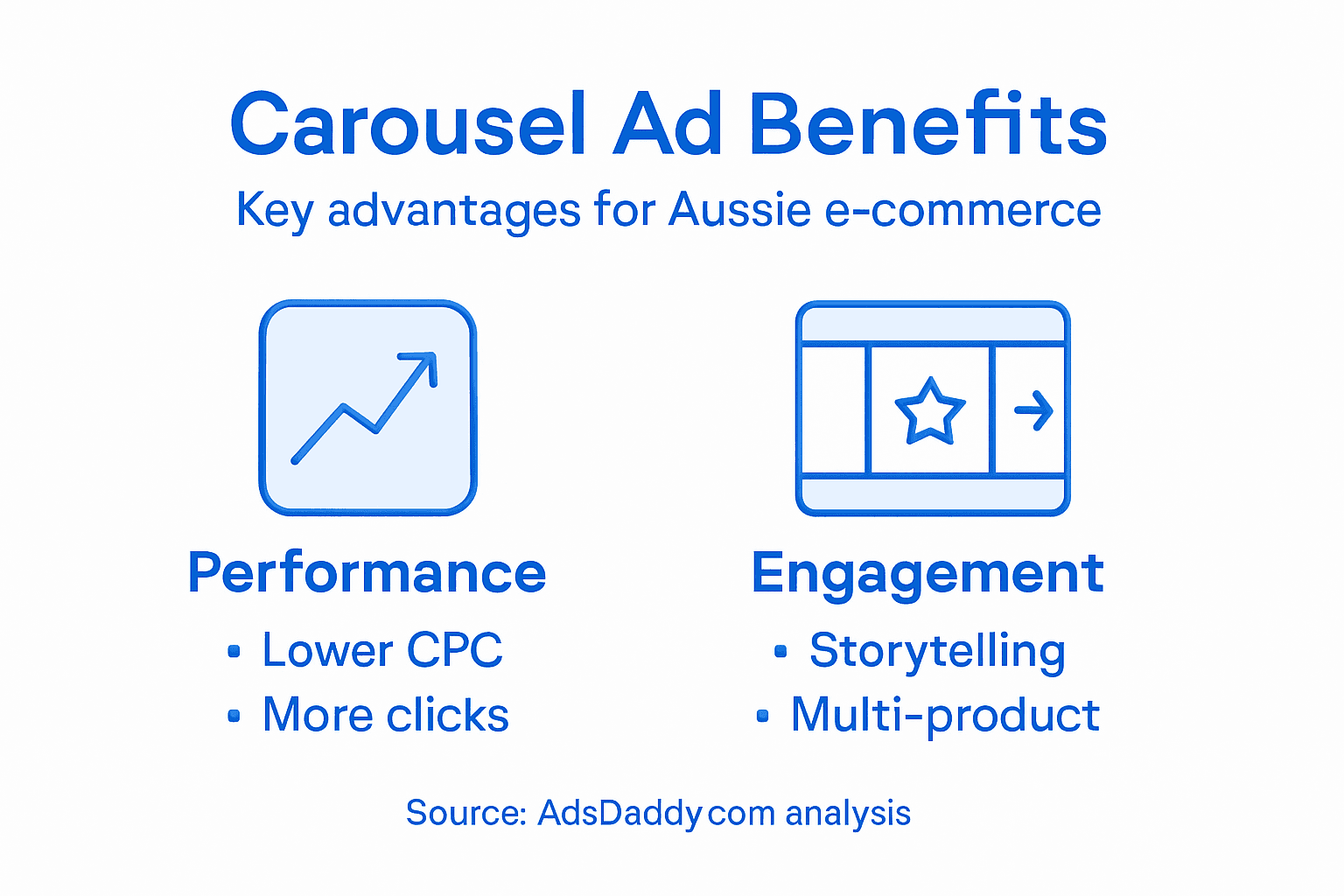
The versatility of carousel ads extends beyond mere visual appeal. They provide sophisticated tracking and optimization capabilities, allowing marketers to analyse which specific cards generate the most interaction, which product images drive conversions, and how different storytelling sequences influence customer behaviour. This data-driven approach enables continuous refinement of advertising strategies, making carousel ads a powerful tool for businesses seeking intelligent, responsive marketing solutions.
Pro tip: Design your carousel ad cards as a cohesive narrative, ensuring each card tells part of a compelling story while maintaining visual and messaging consistency across all elements.
Below is a comparison of performance and optimisation benefits between carousel and single-image ads:
| Ad Format | Engagement Rate | Optimisation Potential | Cost Efficiency |
|---|---|---|---|
| Carousel Ads | Higher (active swipe) | Card-level tracking and analysis | 30-50% reduced CPC |
| Single-Image Ads | Lower (passive view) | Limited analytics, basic metrics | Standard market rates |
Real-World E-Commerce Applications In Australia
Australian e-commerce businesses are rapidly adopting carousel ads as a dynamic marketing strategy to showcase diverse product ranges and tell compelling brand stories. From boutique fashion retailers in Melbourne to tech startups in Sydney, brands are leveraging these interactive ad formats to cut through the digital noise and engage potential customers more effectively.
In the fashion and lifestyle sector, local brands like Spell & The Gypsy Collective and Zimmermann have successfully used carousel ads to display entire clothing collections. These ads allow them to highlight different angles, styling options, and product variations within a single ad unit. By creating visually cohesive card sequences, these brands can showcase seasonal ranges, demonstrate versatility of individual pieces, and provide potential customers with a rich, immersive shopping experience that goes beyond traditional static imagery.
Tech and electronics retailers such as JB Hi-Fi and Harvey Norman have found significant value in carousel ads for showcasing complex product features. These ads enable them to break down technical specifications, compare product models, and highlight unique selling points across multiple cards. A smartphone carousel ad, for instance, can walk potential buyers through camera capabilities, battery performance, design features, and pricing options in an engaging, easily digestible format that mirrors the interactive browsing experience customers enjoy in physical stores.
For smaller Australian e-commerce businesses like niche skincare brands, artisan food producers, and specialty online retailers, carousel ads provide an affordable and powerful marketing tool. These businesses can use the format to tell their origin story, showcase product ingredients, demonstrate usage techniques, and build brand trust by presenting multiple touchpoints within a single advertisement. The ability to link each card to a different landing page also allows for precise targeting and more nuanced customer journey mapping.
Pro tip: Localise your carousel ad content by incorporating distinctly Australian visual cues, landscapes, or cultural references to create an immediate connection with your target audience.
Common Carousel Ad Mistakes To Avoid
Carousel ads can be a powerful marketing tool, but many Australian e-commerce businesses unknowingly undermine their effectiveness by falling into common design and strategic pitfalls. Carousel ad design mistakes can significantly impact engagement and ultimately reduce the potential return on advertising investment.
One of the most prevalent errors is overcrowding individual cards with excessive information. Aussie marketers often make the mistake of cramming too many details, technical specifications, or text into a single slide, which overwhelms viewers and diminishes the visual appeal. Each carousel card should communicate a single, clear message or highlight a specific product feature. Think of each card like a concise billboard that captures attention quickly and communicates value instantly. Successful carousel ads use clean, uncluttered designs with high-quality imagery and minimal but impactful text.
Another critical mistake is inconsistent branding across carousel cards. Many businesses fail to maintain a cohesive visual language, using different colour schemes, font styles, or image qualities that make the ad feel disjointed and unprofessional. Your carousel should tell a unified story, with each card feeling like a natural progression from the previous one. This means maintaining consistent colour palettes, using similar photographic styles, and ensuring that typography and graphic elements align seamlessly across all cards. A well-designed carousel should feel like a curated visual journey that guides the viewer effortlessly from one slide to the next.
Performance tracking and optimization represent another area where e-commerce businesses frequently fall short. Many marketers create carousel ads and then neglect to analyse their performance data, missing crucial insights that could improve future campaigns. It's essential to regularly review metrics like card engagement rates, click-through percentages, and conversion data. By understanding which cards resonate most with your audience, you can continuously refine your approach, replacing underperforming cards and doubling down on visual strategies that generate genuine customer interest.
Pro tip: Conduct A/B testing on your carousel ads by creating multiple versions with subtle design variations and systematically tracking which elements drive the highest engagement and conversion rates.
Maximise Your Aussie E-Commerce Sales With Expert Carousel Ad Campaigns
Carousel ads provide an immersive, interactive way to showcase multiple products and tell your brand story — but getting the perfect sequence, design, and targeting right can be a challenge. You may struggle to keep visuals consistent, avoid overcrowding information, or analyse which cards drive real conversions. These pain points can hold back your growth on platforms like Facebook, Instagram, and LinkedIn where carousel ad strategies truly shine.
At AdsDaddy.com, we specialise in building, managing, and optimising carousel ad campaigns designed specifically for Australian e-commerce businesses looking to boost sales and customer engagement. Our data-driven approach uses advanced tracking and split testing to refine your card content and maximise every dollar spent. Whether you want to highlight a seasonal collection, break down complex product features, or tell a compelling brand story, our team knows exactly how to create swipeable ads that convert.

Ready to transform passive scrolling into active buying? Explore how our expert team can craft targeted carousel ads that captivate Australian shoppers and deliver measurable results. Visit AdsDaddy today to get started and claim your spot at the forefront of e-commerce marketing innovation.
Frequently Asked Questions
What are carousel ads and how do they work?
Carousel ads are interactive multi-image advertising formats that allow users to swipe through 2 to 10 distinct images or videos. Each card can showcase different products or tell a part of a brand’s story, linking to various landing pages for higher engagement.
What are the advantages of using carousel ads for e-commerce?
Carousel ads offer lower cost-per-click rates, higher click-through rates, and allow businesses to display multiple products or features in one ad. They create a more engaging experience than traditional single-image ads, encouraging users to interact with multiple elements.
How should I design my carousel ads for maximum impact?
Design your carousel ads with high-quality, cohesive imagery that tells a consistent story across cards. Keep messages clear and concise on each card, avoiding overcrowding with information. This enhances visual appeal and improves user engagement.
What mistakes should I avoid when creating carousel ads?
Common mistakes include overcrowding cards with too much text or information, inconsistent branding across cards, and neglecting performance tracking. Each card should convey a clear message and maintain a unified visual style to optimize performance and engagement.
Recommended
- 7 Key Ad Formats Explained for Growing Businesses Online - Ads Daddy. Advertise on All Plattforms.
- 7 Key Ad Formats Explained for Growing Businesses Online - Ads Daddy. Advertise on All Plattforms.
- Role of Video Ads: Complete Guide for Australian SMEs - Ads Daddy. Advertise on All Plattforms.
- Facebook Ads Archives - Ads Daddy. Advertise on All Plattforms.