Behavioural Targeting: Boosting Aussie Ad Performance
. By Ads Daddy.

Most australian marketers know that data-driven ads feel almost too accurate at times. The rise of behavioural targeting means every click or search can shape the ads you see next, with over 80 percent of digital advertising spend now relying on these advanced techniques. Understanding how behavioural targeting reshapes the australian marketing landscape arms you with the knowledge to create smarter campaigns while respecting consumer privacy in a fast-changing digital world.
Table of Contents
- Defining Behavioural Targeting In Digital Marketing
- Major Types Of Behavioural Targeting Methods
- How Behavioural Targeting Works For Online Ads
- Privacy Regulations And Aussie Compliance Issues
- Common Pitfalls And How To Avoid Them
Key Takeaways
| Point | Details |
|---|---|
| Behavioural Targeting Enhances Relevance | Allows marketers to serve ads that align closely with user interests, improving engagement and conversion rates. |
| Compliance with Privacy Regulations is Essential | Businesses must adhere to Australian privacy laws, including obtaining user consent and providing opt-out mechanisms. |
| Continuous Data Management is Crucial | Regular updates to audience segments and targeting parameters are necessary to maintain the accuracy and relevance of campaigns. |
| User Trust Must be Prioritised | Ethical data collection practices and clear communication about targeting methods will help build and maintain consumer trust. |
Defining Behavioural Targeting In Digital Marketing
Behavioural targeting transforms digital advertising by enabling businesses to serve hyper-relevant ads based on users' online activities. According to the Australian Information Commissioner's guidelines on targeted online marketing, this sophisticated approach involves tracking browsing habits through cookies to match advertisements with individual user interests.
At its core, behavioural targeting operates by collecting anonymised data about users' digital interactions. These interactions might include websites visited, products searched, content consumed, and online purchase history. The Interactive Advertising Bureau defines this method as collecting web browsing activity data to serve ads within predefined interest categories, without necessarily capturing personal identifying information.
Key mechanisms of behavioural targeting include:
- Tracking user browsing patterns across websites
- Segmenting audiences based on demonstrated interests
- Creating dynamic audience profiles
- Delivering personalised ad experiences
This approach allows marketers to move beyond demographic guesswork, instead delivering advertisements that genuinely resonate with an individual's demonstrated online behaviour and preferences.
Pro Tip: Data Privacy Checkpoint: Always ensure your behavioural targeting strategies comply with Australian privacy regulations by obtaining clear user consent and providing transparent information about data collection practices.
Major Types Of Behavioural Targeting Methods
Behavioural targeting encompasses several sophisticated methods designed to deliver personalised advertising experiences. Behavioural retargeting, a primary technique, involves tracking users' internet behaviour to display targeted advertisements across different digital platforms.
The primary types of behavioural targeting methods include:
- Web Browsing History Targeting: Analysing websites visited to understand user interests
- Search Query Targeting: Using search terms to predict potential consumer needs
- Purchase History Targeting: Recommending products based on previous buying patterns
- Engagement-Based Targeting: Tracking interactions with previous advertisements and content
Advanced targeting strategies leverage complex algorithms and real-time bidding techniques to predict user responses and optimise ad placement. These methods enable marketers to create dynamic audience segments that evolve continuously based on users' digital interactions.

The sophistication of these targeting approaches means businesses can move beyond broad demographic classifications, instead delivering hyper-personalised advertising experiences that genuinely resonate with individual user preferences and behaviours.
Pro Tip: Precision Targeting Strategy: Regularly update your audience segments and refresh targeting parameters to ensure your behavioural targeting remains accurate and relevant to changing user interests.
Here's a quick comparison of major behavioural targeting methods and their typical business outcomes:
| Targeting Method | Data Analysed | Example Application | Business Impact |
|---|---|---|---|
| Web Browsing History | Visited websites | Show travel ads to site explorers | Increases relevance of offers |
| Search Query Targeting | Entered search phrases | Suggest products after specific search | Boosts conversion rates |
| Purchase History Targeting | Past purchase records | Recommend complementary products | Enhances customer value |
| Engagement-Based Targeting | Past ad/content interaction | Retarget users who click on banners | Improves retention and interest |
How Behavioural Targeting Works For Online Ads
Online advertising has transformed dramatically with the introduction of sophisticated behavioural targeting mechanisms. The Australian Information Commissioner explains that targeted advertising operates by strategically placing cookies on users' devices to collect detailed browsing data, creating comprehensive user interest profiles.
The operational process of behavioural targeting involves several critical stages:
- Data Collection: Tracking user interactions across websites
- Profile Building: Creating anonymised user segments based on observed behaviours
- Interest Categorisation: Mapping digital activities to potential consumer preferences
- Real-Time Ad Matching: Dynamically serving relevant advertisements
Advanced display advertising techniques utilise real-time bidding strategies to predict and optimise user engagement, enabling marketers to bid on ad impressions with unprecedented precision. This means advertisers can now target specific audience segments with laser-focused accuracy, moving far beyond traditional demographic constraints.
The technical infrastructure behind behavioural targeting relies on sophisticated algorithms that continuously analyse and update user profiles. These systems can track everything from search history and website visits to content interactions, creating a dynamic and evolving understanding of individual online behaviours.
Pro Tip: Privacy Protection Strategy: Always provide clear opt-out mechanisms and transparent information about data collection to maintain user trust while implementing behavioural targeting techniques.
Privacy Regulations And Aussie Compliance Issues
Digital advertising in Australia operates under stringent privacy regulations designed to protect consumer rights and personal information. The Australian Information Commissioner's guidelines on direct marketing establish critical compliance requirements for organisations using behavioural targeting, ensuring ethical and transparent data practices.
Key privacy compliance considerations for behavioural targeting include:
- Obtaining explicit user consent before data collection
- Providing clear opt-out mechanisms
- Maintaining transparent data usage policies
- Protecting sensitive personal information
- Limiting data retention periods
- Ensuring data is de-identified where possible
The Australian Government has signalled a commitment to fair and reasonable targeting practices, recognising the potential harm of overly intrusive advertising techniques. This approach emphasises protecting individual privacy while allowing businesses to develop sophisticated marketing strategies.
Navigating these regulations requires a nuanced understanding of the Australian Privacy Principles (APPs). Businesses must implement robust data governance frameworks that prioritise user privacy, implement secure data handling processes, and maintain comprehensive documentation of their targeting methodologies.
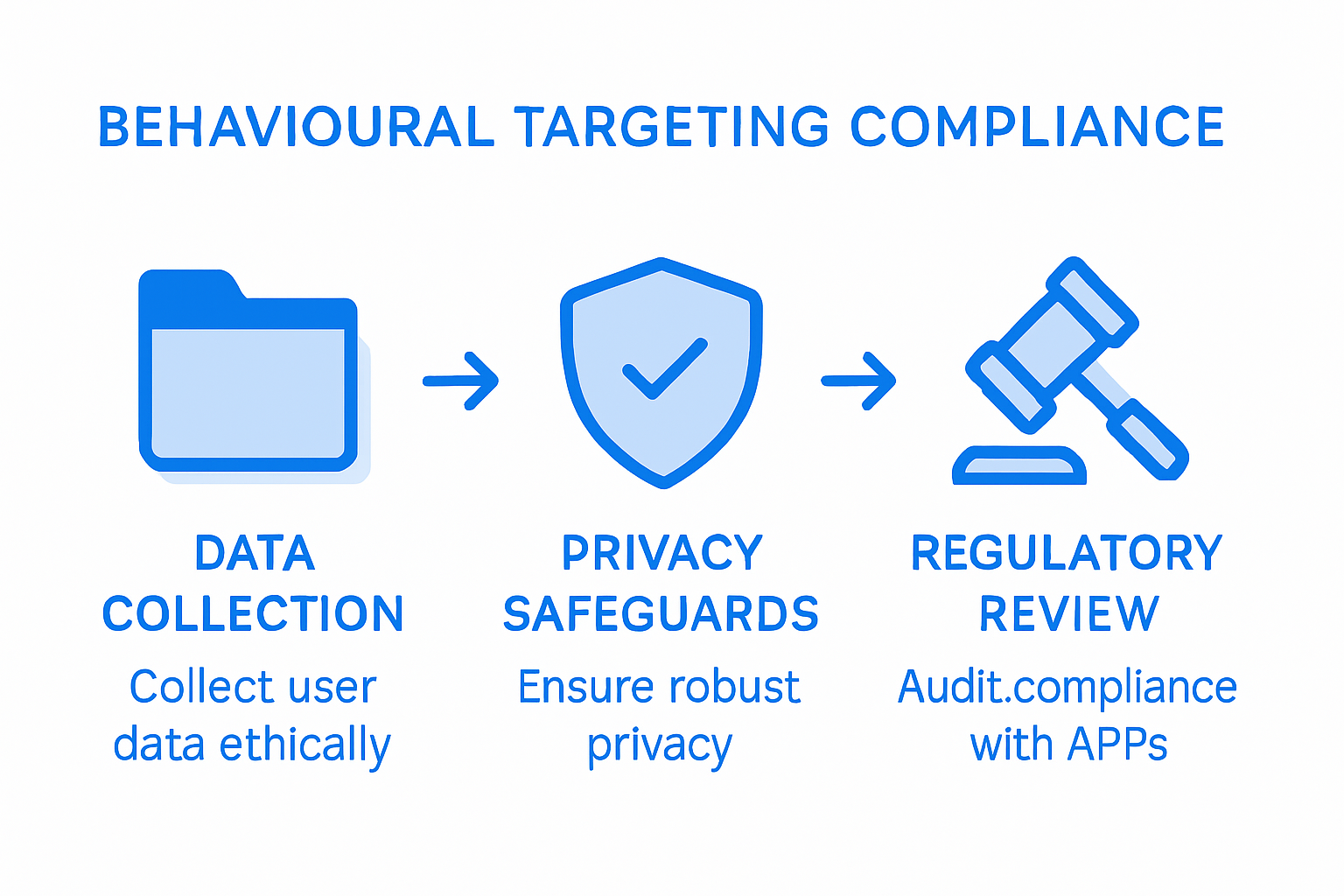
Pro Tip: Compliance Safeguard: Regularly audit your behavioural targeting practices against current Australian privacy regulations and seek legal counsel to ensure ongoing compliance with evolving data protection standards.
The following table summarises key Australian privacy requirements for behavioural targeting:
| Compliance Aspect | Description | Why It Matters |
|---|---|---|
| User Consent | Obtain clear, explicit permission | Builds trust, avoids legal breaches |
| Opt-Out Mechanisms | Provide easy ways for users to withdraw | Upholds user rights, increases transparency |
| Data Transparency | Disclose what data is collected and used | Reduces risk of misunderstanding |
| Data Minimisation | Limit data collection to business needs | Reduces exposure and liability |
Common Pitfalls And How To Avoid Them
Behavioural targeting offers powerful marketing opportunities, but numerous potential pitfalls can undermine campaign effectiveness and user trust. Understanding and avoiding deceptive design patterns remains crucial for maintaining ethical digital advertising practices, ensuring transparent and respectful user interactions.
Common behavioural targeting pitfalls include:
- Over-Targeting: Becoming too granular and potentially creeping out users
- Data Inaccuracy: Relying on outdated or incorrect user behaviour profiles
- Privacy Violations: Collecting excessive or unnecessary personal information
- Algorithmic Bias: Creating targeting segments that discriminate unintentionally
- Consent Complexity: Making opt-out mechanisms difficult to understand or use
Successful behavioural targeting requires a delicate balance between personalisation and user respect. Marketers must continuously refine their approaches, ensuring that data collection remains transparent, consent is genuinely informed, and user experience remains paramount.
Technical sophistication alone cannot compensate for poor strategic implementation. Businesses must develop robust frameworks that prioritise user privacy, maintain data integrity, and create meaningful, value-driven advertising experiences that build rather than erode consumer trust.
Pro Tip: Trust Engineering: Regularly conduct user experience audits of your targeting mechanisms, ensuring that your behavioural advertising strategies remain ethical, clear, and genuinely beneficial to your audience.
Unlock the Power of Behavioural Targeting with AdsDaddy
Many Australian businesses struggle to transform complex behavioural targeting data into effective advertising campaigns that truly connect with their audience. This article highlights challenges like over-targeting, data accuracy issues and strict privacy compliance. At AdsDaddy, we understand these hurdles and specialise in turning behavioural data into tailored ads across platforms such as Facebook, Google and LinkedIn that respect user privacy yet drive real growth.
Whether you need help refining audience segments or ensuring your campaigns obey Australian regulations, AdsDaddy combines data-driven strategies with expert hands-on management. Our approach ensures your ads reach the right people at the right time using formats like image, video and carousel ads to boost engagement and sales.
Are you ready to convert browsing behaviour into business results?
Explore how our team can elevate your digital marketing by visiting AdsDaddy today. Learn more about our expert campaign management and get started on optimising your advertising performance with proven behavioural targeting techniques.
Frequently Asked Questions
What is behavioural targeting in digital marketing?
Behavioural targeting refers to the practice of delivering tailored advertisements to users based on their online behaviours, such as browsing history, search queries, and purchase history. This method helps businesses serve relevant ads that match individual interests.
How does behavioural targeting improve ad performance?
Behavioural targeting enhances ad performance by allowing advertisers to reach users with highly relevant content, increasing engagement and conversion rates. By understanding user preferences, marketers can create personalised advertising experiences that resonate with potential customers.
What are the main methods of behavioural targeting?
The primary methods include web browsing history targeting, search query targeting, purchase history targeting, and engagement-based targeting. Each method relies on analysing user data to create specific audience segments for more effective advertising.
How can businesses ensure compliance with privacy regulations while using behavioural targeting?
Businesses can ensure compliance by obtaining explicit user consent before collecting data, providing clear opt-out mechanisms, maintaining transparency about data usage, and implementing secure data handling practices to protect personal information.
Recommended
- Why Use Targeted Ads: Complete Guide for Australia 2026 - Ads Daddy. Advertise on All Plattforms.
- Role of Video Ads: Complete Guide for Australian SMEs - Ads Daddy. Advertise on All Plattforms.
- Complete Guide to Why Target Specific Audiences - Ads Daddy. Advertise on All Plattforms.
- Role of Ad Targeting: Complete Guide for Businesses - Ads Daddy. Advertise on All Plattforms.