7 Proven Ad Targeting Strategies for Aussie Shopify Stores
. By Ads Daddy.
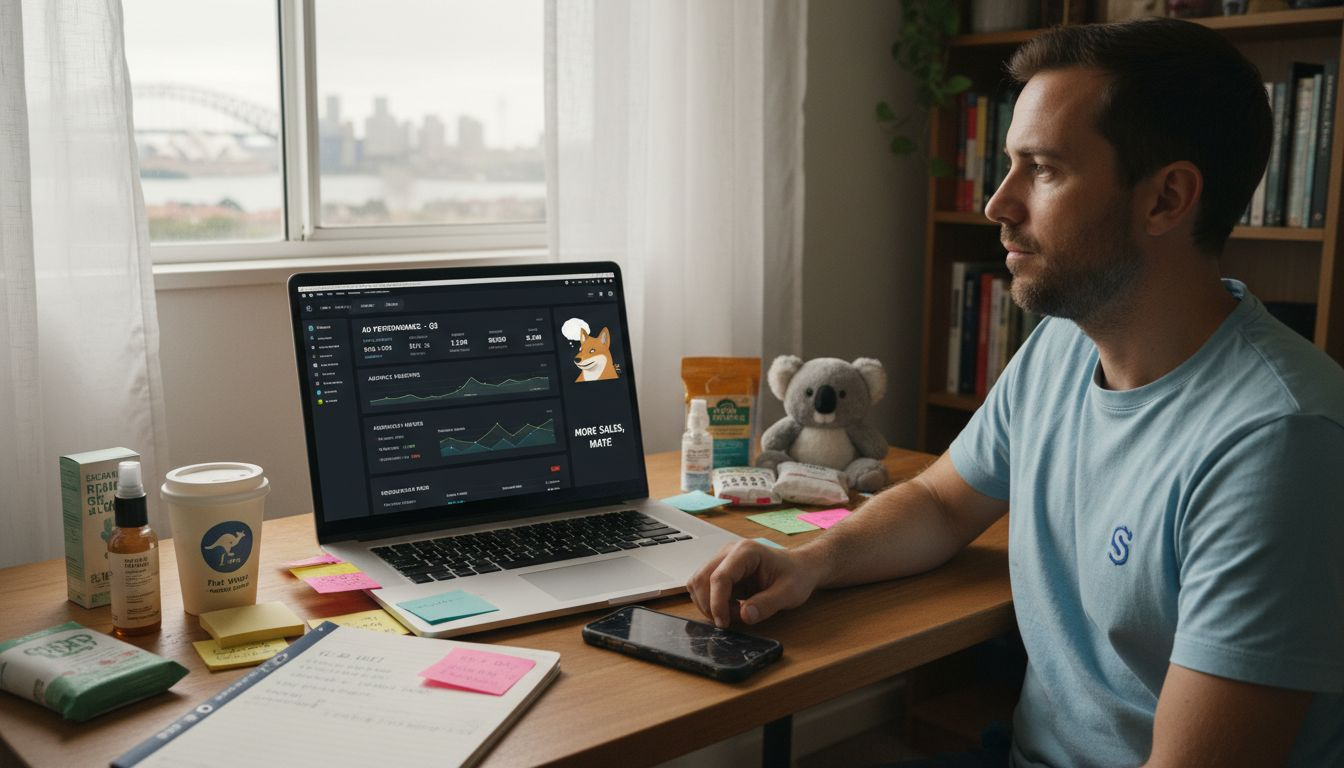
More than 60 percent of Australian Shopify stores miss out on sales because their ad targeting ignores customer profiles and local insights. If you run an online store, knowing the difference between generic marketing and strategic targeting can make all the difference. This guide breaks down proven tactics for Australian entrepreneurs to connect with the right people, analyse real customer data, and create ads that truly convert in a competitive market.
Table of Contents
- 1. Define Your Ideal Customer Profile
- 2. Leverage Shopify Data for Custom Audiences
- 3. Use Geo-Targeting to Reach Aussie Shoppers
- 4. Apply Retargeting to Boost Conversions
- 5. Optimise Ad Creatives for Local Appeal
- 6. Segment Audiences by Shopping Behaviour
- 7. Track and Refine Campaigns for Ongoing Growth
Quick Summary
| Key Message | Explanation |
|---|---|
| 1. Define Your Ideal Customer Profile | Create a detailed blueprint of your ideal customer to improve targeting and conversion rates. |
| 2. Leverage Shopify Data for Audience Creation | Use Shopify's tools to segment customers based on behaviour and demographics for more effective advertising. |
| 3. Implement Geo-Targeting Strategies | Tailor marketing messages to specific locations to resonate with diverse Australian communities. |
| 4. Retarget Visitors for Higher Conversions | Use targeted ads to encourage previous visitors to return and complete purchases. |
| 5. Optimise Ad Creatives for Local Appeal | Ensure ad content reflects Australian culture and regional preferences to enhance engagement. |
1. Define Your Ideal Customer Profile
Building a profitable Aussie Shopify store starts with knowing exactly who you're selling to. Your Ideal Customer Profile (ICP) isn't just another marketing buzzword it's your roadmap to targeted success.
Think of your ICP like drafting your ultimate customer blueprint. You're not just collecting random demographic data you're creating a crystal clear picture of the specific customer most likely to buy from you. Shopify's customer profiling resources reveal that businesses with precise customer profiles see significantly higher conversion rates.
To craft your ICP, dive deep into three key dimensions demographic, behavioral, and psychographic data. This means understanding not just who your customers are age, income, location but why they buy and what motivates their purchasing decisions.
Start by analysing your current best customers. Look for patterns track their purchasing behaviour, examine their engagement levels, and identify common characteristics. Are they young professionals in Sydney? Small business owners in Melbourne? Corporate executives who love premium products?
Your goal is to build a comprehensive profile that goes beyond surface level details. Create a narrative about your ideal customer that includes their challenges, aspirations, online behaviours, and purchasing triggers. The CMO's guide to ideal customer profiles suggests mapping out detailed insights that transform generic data into actionable marketing strategies.
Key Profile Components: • Age range • Income bracket • Geographic location • Professional background • Online behaviour patterns • Purchasing motivations • Potential pain points
Pro tip: Update your Ideal Customer Profile every six months to ensure your marketing stays razor sharp and aligned with evolving customer dynamics.
2. Leverage Shopify Data for Custom Audiences
Shopify provides powerful audience targeting tools that turn your store's raw data into marketing gold. Shopify's official documentation reveals how merchants can generate precise audience segments that dramatically improve ad performance.
Custom audiences are your secret weapon for hyper targeted marketing. By analysing your existing customer data purchase history, browsing behaviour, and demographic information you can create incredibly specific audience groups for your digital advertising campaigns.
Why Custom Audiences Matter: • Higher conversion rates • More efficient ad spend • Reduced marketing waste • Improved customer engagement
Dive into your Shopify Analytics and start segmenting customers based on key metrics like total spend, frequency of purchases, product preferences, and geographical location. Australian businesses can particularly benefit from understanding regional customer trends to craft laser focused marketing strategies.
Practical steps include exporting customer lists directly from Shopify creating lookalike audiences on platforms like Facebook and Google Ads and targeting people with similar characteristics to your best existing customers.
Pro tip: Regularly refresh your custom audience segments every 90 days to ensure your targeting remains current and reflects your most recent customer behaviour patterns.
3. Use Geo-Targeting to Reach Aussie Shoppers
Geo targeting is your secret weapon for connecting with the right customers in the right locations. Shopify's retail geo-targeting guide reveals how precise location based advertising can transform your marketing strategy across Australia.
Aussie online shoppers aren't a monolithic group they're diverse communities with unique regional preferences. From bustling Sydney suburbs to quiet country towns geo targeting lets you craft messages that resonate locally. Imagine creating ads that speak directly to Melbourne coffee lovers or Brisbane weekend warriors each with tailored messaging.
Key Geo Targeting Strategies: • Target capital cities • Focus on specific postcodes • Match ads to regional interests • Consider local economic conditions • Adapt language to regional dialects
By segmenting your audience geographically you can dramatically improve ad relevance. A surfboard shop in Perth might target West Australian beach communities differently from how they'd approach inland rural regions. The magic is in understanding local nuances and consumer behaviours.
Practical implementation means using platform tools like Facebook Ads Manager or Google Ads location targeting to narrow your audience. Set radius targeting around specific cities, exclude irrelevant regions, and customise creative to match local sensibilities.
Pro tip: Test multiple geo targeted campaigns simultaneously and analyse performance metrics to refine your location based advertising strategy.
4. Apply Retargeting to Boost Conversions
Retargeting is like a digital boomerang bringing potential customers back to your Shopify store. Shopify's Australian enterprise resource reveals how powerful this strategy can be for converting window shoppers into paying customers.
What is Retargeting? It is the art of showing targeted ads to people who have previously interacted with your online store but didn't complete a purchase. Think of it as a gentle reminder that says "Hey mate those awesome shoes you were checking out are still waiting for you!"
Key Retargeting Strategies: • Track website visitors using pixel technology • Segment audiences by browsing behaviour • Create personalised ad experiences • Match ad creative to customer journey stage • Use time sensitive offers
Implementing retargeting requires understanding customer interaction points. Someone who abandoned their cart needs a different ad approach compared to someone who merely browsed your product pages. Your goal is crafting a message that feels personalised not pushy.
Technically this means installing tracking pixels on your Shopify store creating custom audience segments and designing ads that speak directly to different customer behaviours. A Perth surfboard shop might retarget customers who viewed boards with a special discount or free shipping offer.
Pro tip: Rotate your retargeting ad creative every two weeks to prevent audience ad fatigue and maintain engagement levels.
5. Optimise Ad Creatives for Local Appeal
Making your ad creatives feel uniquely Australian isn't just smart marketing it's essential for connecting with local audiences. Local advertising strategies demonstrate how tailoring visual and messaging elements can dramatically improve engagement.
Aussie consumers have a razor sharp ability to spot inauthentic content. Your ad creative needs to speak their language both literally and metaphorically. This means understanding cultural nuances regional references and the subtle art of aussie humour.
Local Creative Optimisation Elements: • Use authentic Australian imagery • Incorporate local slang • Reference recognisable landmarks • Match colour palettes to regional vibes • Reflect local lifestyle contexts
For instance a surfboard brand targeting Western Australian audiences might feature Margaret River waves instead of generic beach scenes. A Melbourne coffee shop could use laneways and street art in their visuals capturing the city's distinctive aesthetic.
Beyond visuals your messaging should resonate with local sensibilities. Aussies appreciate directness irreverence and a bit of cheek. Avoid overly formal corporate language opt for conversational tones that feel like a chat with a mate.
Pro tip: Test multiple creative variations with small audience segments to understand which local elements genuinely spark connection and drive engagement.
6. Segment Audiences by Shopping Behaviour
Understanding your customers' shopping behaviour is like having a secret map to their purchasing motivations. Australian commerce insights reveal that segmentation goes far beyond basic demographics.
Shopping behaviour segmentation means categorising customers based on how they interact with your online store. Are they impulsive buyers who make quick decisions? Careful researchers who compare every detail? Bargain hunters always seeking discounts?
Key Shopping Behaviour Segments: • Impulse purchasers • Discount hunters • Detailed researchers • Brand loyalists • Occasional shoppers • Seasonal buyers
Each segment requires a different marketing approach. An impulse buyer needs quick compelling visuals and urgent messaging. A detailed researcher wants comprehensive product information comparisons and social proof.
Practical implementation means tracking metrics like average order value browsing time cart abandonment rates and repeat purchase frequency. These data points help you understand not just what customers buy but how they buy.
For example a fitness equipment store might create different ad strategies for someone who quickly adds protein powder to cart versus a customer who spends 15 minutes comparing workout equipment specifications.
Pro tip: Update your behavioural segments quarterly to ensure your targeting remains precise and responsive to changing consumer patterns.
7. Track and Refine Campaigns for Ongoing Growth
Successful digital advertising isn't a set and forget strategy it's an ongoing process of measurement and refinement. Shopify's marketing optimization guide demonstrates how continuous tracking can transform your ad performance.
Think of your ad campaigns like training for a marathon. You wouldn't just run once and expect peak performance you constantly adjust pace technique and strategy. The same applies to digital advertising.
Key Campaign Tracking Metrics: • Conversion rate • Return on ad spend (ROAS) • Customer acquisition cost • Average order value • Click through rate • Engagement levels
Start by establishing clear benchmarks and key performance indicators. Use Shopify's built in analytics tools to track granular performance data. Compare how different audience segments respond to your ads look for patterns in purchasing behaviour and identify which creative approaches generate the most engagement.
A/B testing becomes your best friend in this process. Test one variable at a time whether that's ad copy imagery audience targeting or call to action. Small incremental improvements compound into significant performance gains.
Pro tip: Schedule monthly campaign audits where you forensically analyse your ad performance data and make strategic adjustments based on concrete insights.
Below is a comprehensive table summarising the main strategies and recommendations discussed in the article for optimising an Aussie Shopify store's marketing efforts.
| Section | Key Actions | Benefits |
|---|---|---|
| Defining Ideal Customer Profile | Develop a detailed profile of target customers considering demographic, behavioural, and psychographic data. | Gain better targeting and higher conversion rates. |
| Leveraging Shopify Data | Utilize Shopify's analytics tools to create custom audience segments based on customer data. | Improve ad performance with precise audience targeting. |
| Geo-Targeting | Craft locally relevant ads addressing unique regional preferences and behaviours. | Enhance ad effectiveness by improving relevance and engagement. |
| Retargeting Strategies | Show personalised ads to reconnect with customers who have interacted with your store. | Increase conversions by bringing back potential buyers. |
| Optimising Ad Creatives | Tailor visuals and messaging to resonate with Australian audiences. | Strengthen connections through authentic and relatable content. |
| Shopping Behaviour Segmentation | Categorise customers based on shopping habits and preferences for more effective engagement. | Customise marketing approaches to match shopping patterns and motivations. |
| Campaign Performance Refinement | Continuously monitor metrics and implement changes based on data insights. | Achieve progressively better advertising outcomes. |
Unlock the Full Potential of Your Aussie Shopify Store with Expert Ad Targeting
The challenge of precisely defining your Ideal Customer Profile and leveraging Shopify data to create custom audiences can be overwhelming. Many Australian Shopify store owners struggle to implement effective geo-targeting and retargeting strategies that truly boost conversions and resonate locally. AdsDaddy.com understands these pain points and specialises in transforming your raw data into powerful, targeted ad campaigns across platforms like Facebook, Google, and Instagram. We handle the complexities of audience segmentation, creative optimisation, and continuous campaign refinement so you can focus on growing your business.
With proven expertise in utilising shopper behaviour insights and tailoring ads for authentic Aussie appeal, we help you cut through the noise and connect with customers where it matters most. Whether you're aiming to reach specific regions or retarget cart abandoners with compelling offers, our data-driven strategies deliver measurable results.
Ready to elevate your marketing game and see real growth? Discover how Ads Daddy’s digital marketing solutions transform the strategies from this article into profitable campaigns.
Take the first step now by visiting Ads Daddy to explore our expert ad management services. Harness the power of targeted advertising and watch your Aussie Shopify store thrive like never before.
Frequently Asked Questions
How do I define my Ideal Customer Profile for my Shopify store?
Your Ideal Customer Profile (ICP) is the detailed picture of your target customer based on demographics, behaviours, and psychographics. Start by analysing your best current customers to identify common characteristics, motivations, and purchasing patterns, which can help you tailor your marketing strategies effectively.
What are the steps to create custom audiences using Shopify data?
To create custom audiences, begin by exporting customer lists from Shopify and segmenting them based on purchase history and browsing behaviour. This allows you to target highly specific groups, potentially improving your ad performance by focusing on those most likely to convert.
How can geo-targeting enhance my advertising efforts?
Geo-targeting allows you to tailor your ads to specific locations, making them more relevant to local audiences. Implement this by using location targeting features in your advertising platforms, adjusting your messaging to cater to regional preferences, and testing different audiences based on their geographical characteristics.
What retargeting strategies should I use to convert more customers?
Implement retargeting by tracking website visitors with pixel technology and creating segmented audiences based on their browsing behaviour. Develop personalised ad experiences that remind potential customers of products they showed interest in, which can significantly boost your conversion rates.
How can I optimise my ad creatives for a local audience?
To optimise your ad creatives, use authentic Australian imagery and incorporate local slang and cultural references. This makes your ads feel more relatable and engaging; test different variations to determine which local elements resonate best with your audience.
What key metrics should I track to refine my ad campaigns?
Focus on metrics like conversion rates, return on ad spend, and click-through rates to measure your ad performance. Regularly analyse this data to identify patterns and make incremental adjustments; aim for monthly audits to stay attuned to customer behaviours.