What is trending in digital marketing right now?
. By Ads Daddy.

Four trends are eating everyone's marketing budget in 2026: AI-driven discovery (think AI overviews and answer engines), short-form video with built-in shopping, first-party data replacing the cookie, and a measurement shake-up that finally admits clicks aren't the whole story. HubSpot's State of Marketing survey found that a large majority of marketers now use AI somewhere in their workflow, and a significant share rate AI-enabled personalisation as a top priority. Ahrefs has watched search volume for terms like "Generative Engine Optimisation" spike as brands scramble to get quoted inside AI answers instead of just ranked underneath them.
Here's the blunt bit: none of this is optional anymore. If your content doesn't get mentioned by AI tools, your product doesn't get cited to shoppers who never click through. If your video isn't built for TikTok's feed logic, it dies in the scroll. If you're still buying third-party audiences, you're renting data that's about to evaporate.
- AI discovery & AEO/GEO — visibility now happens inside the answer, not just below it
- Short-form video & social commerce — attention and purchase now live in the same feed
- Personalisation on first-party data — the only data you'll be allowed to keep
- Measurement & CRO — clicks are down, so conversion on what you've got matters more
- Creator economy — trust travels through people, not brand accounts
Quick stat: Nearly half of marketers surveyed by HubSpot now rank AI-enabled personalisation among their top three priorities for the year. That's not a niche tactic. That's the mainstream play.
Key Takeaways
The trends reshaping digital marketing in 2026 all point to one outcome: brands that get mentioned by AI, convert existing traffic better and own their customer data will outperform those still chasing rankings and clicks alone.
| Point | Details |
|---|---|
| AI visibility beats rankings | Get cited inside AI overviews and answer engines through schema markup and clear entity definitions. |
| Platform-native video wins | Short-form content built for the specific platform consistently outperforms repurposed assets. |
| First-party data is the new asset | Connect your CDP/CRM and prioritise consent-first data capture before cookies disappear further. |
| Measure influence, not just clicks | Track AI mentions, revenue per visitor and lifetime value alongside traditional conversion metrics. |
| Ads Daddy runs the execution | Ads Daddy manages paid campaigns across five major platforms with data activation via Klaviyo and newCustomer.io. |
Key reports worth bookmarking
- HubSpot State of Marketing — the broadest survey of marketer priorities and AI adoption, good for benchmarking your own AI usage against peers
- Ahrefs marketing trends analysis — sharp, data-backed detail on GEO and AI-mention correlation, useful for technical AEO planning
- Gartner CMO spend survey — budget allocation and AI-readiness figures, handy for justifying pilot budgets internally
- Google Think insights — consumer discovery behaviour shifts, useful context for content format decisions
- Digital Marketing Institute — practical roundup of community, authenticity and creator trends, good for creative strategy
Table of Contents
- What are the top current trends in digital marketing?
- How does AI change discovery and search visibility?
- Why is short-form video driving social commerce?
- Why does first-party data matter more than ever?
- How should you measure marketing in a zero-click world?
- Are creators replacing traditional influencer marketing?
- Is agentic marketing automation ready for prime time?
- Why does brand trust matter more as AI content scales?
- Your 30/60/90 day trend-testing playbook
- Get execution help without the agency overwhelm
- FAQ
What are the top current trends in digital marketing?
Think of this as your cheat sheet. Ten trends, one action to test for each, zero fluff.
- AI overviews & AEO — Get your brand mentioned in AI answers, not just ranked. Test: add structured data and FAQ schema to your top three pages this month.
- Short-form video — Platform-native beats repurposed. Test: run the same offer as a native TikTok/Reels cut vs a repurposed YouTube clip.
- Social commerce — Buy without leaving the app. Test: enable shoppable tags on your best-performing organic post.
- First-party data capture — Cookies are dying, your list isn't. Test: add a progressive profiling field to one high-traffic form.
- Zero-click measurement — Clicks are shrinking, intent isn't. Test: track brand mention volume alongside conversions for 30 days.
- Creator partnerships — Micro beats mega for trust. Test: run one nano-creator collab against one paid ad, same budget.
- Agentic automation — Let AI handle reporting, not brand voice. Test: automate one weekly report you currently build by hand.
- Voice & conversational search — People ask questions in full sentences now. Test: rewrite one landing page headline as a spoken question.
- Sustainability signalling — Vague claims get punished. Test: replace one generic "eco-friendly" line with a specific, provable fact.
- Omnichannel consistency — Same offer, every touchpoint. Test: audit your last campaign across three channels for message drift.
Ahrefs' industry analysis backs the AI-visibility shift specifically: brand mentions correlate strongly with showing up inside AI overviews.
How does AI change discovery and search visibility?
Here's the mindset shift nobody's told you plainly enough: SEO used to be a beauty contest for rankings. Now it's a casting call for mentions.

AI Overviews, Google's AI Mode, and tools like ChatGPT and Perplexity don't send someone to your site to decide if you're legit. They decide for the searcher, using whatever sources they trust enough to summarise. That's Generative Engine Optimisation, or GEO (some call it Answer Engine Optimisation, AEO). Same idea: get cited inside the answer, not buried under it.
Google's Think insights point to the same pattern: generative AI is reshaping how consumers discover brands, and the winners are supplying richer, more "answerable" content, not just more content.
What do AI systems actually favour when deciding who gets quoted?
- Entity clarity — Google and AI crawlers need to know exactly who you are and what you do, unambiguously
- Structured data — schema markup that spells out products, FAQs, reviews and pricing in machine-readable form
- Authoritative, citable assets — original data, named experts, clear definitions AI can lift cleanly
- Existing mentions — being talked about elsewhere is the strongest trust signal there is
Your AEO starter checklist, this week, not "someday":
- Audit your top ten pages for schema markup gaps
- Build an internal "entity library": one clear paragraph per product/service an AI could quote verbatim
- Publish one genuinely original data point or stat nobody else has
- Set up a monthly mention-tracking check (branded search + AI citation spot-checks)
Pro Tip: Write one paragraph per key page that answers "what is this, in one sentence, with no jargon." That's the exact format AI engines lift and quote. Bury the answer in paragraph four and you've lost the casting call.
If you want the full technical rundown, Ads Daddy's guide to optimising your website for AI search engines walks through the schema and content-format specifics step by step. Ahrefs has also documented the sharp rise in search demand for GEO-related terms, which tells you this isn't a fringe concern dreamed up by SEO nerds. It's where the traffic is going.
Why is short-form video driving social commerce?
Because attention spans didn't shrink. They got pickier. Feed algorithms now reward the first two seconds like a bouncer checking IDs, and if you don't hook fast, you're not getting in.
Short-form video wins because it matches how the platform's algorithm actually distributes content: native, fast, vertical, sound-on. HubSpot's own research states that platform-specific creative tends to perform better than repurposed, one-size-fits-all assets. Cutting a horizontal ad down to fit a Reels frame is like turning up to a nightclub in a business suit. Technically dressed. Definitely not fitting in.
Social commerce is the next logical step: platforms are collapsing the gap between "I saw it" and "I bought it" into one scroll, one tap. Shoppable tags, in-app checkout, live shopping events. No detour to a slow-loading landing page required.
Tactical tests worth running this quarter:
- Build three creative templates (hook, problem, solution) and test them platform-native, not repurposed
- Set a repurposing cadence: one hero video, three native cuts, one week
- Track watch-through rate and saves, not just views. Views are vanity. Saves are intent.
- Enable shoppable tags on your single best-performing organic post before spending a dollar on paid
Digital social marketing done right isn't a nice-to-have side project anymore. Ads Daddy's breakdown of social marketing trends and conversion lift shows just how much conversion is on the table when creative actually fits the platform it's running on.
Why does first-party data matter more than ever?
Because the cookie is basically dead and third-party data was always a rental, not an asset. When Google or a browser update kills a tracking method, you lose whatever you built on top of it. First-party data is the one thing you actually own.
Priority one: connect your CDP or CRM properly so every channel talks to the same customer record. Priority two: fix consent capture so it's compliant and usable, not a checkbox nobody reads. Priority three: build segmentation that's granular enough to personalise without being creepy about it.
Starter projects that don't require a six-month IT roadmap:
- Gated content — swap a generic ebook for something genuinely useful, in exchange for an email and one qualifying question
- Progressive profiling — ask one new question per interaction instead of a 12-field form nobody finishes
- Email segmentation by behaviour — not just demographics, but what someone actually clicked, watched or bought
HubSpot's data backs this up directly: AI-enabled personalisation is one of the most-cited priorities among marketers surveyed, and personalisation is only as good as the data feeding it.
Pro Tip: Start segmentation with behaviour, not demographics. A 45-year-old and a 25-year-old who both abandoned the same cart at checkout have more in common right now than two 25-year-olds who behave completely differently.
How should you measure marketing in a zero-click world?
Clicks are down. Intent isn't. That's the whole story of 2026 measurement, and if your dashboard still treats click-through rate as the north star, you're steering by a compass that's stopped pointing north.
Ahrefs' analysis makes the case plainly: AI answers reduce clicks but don't reduce purchase intent, which means you need to measure the influence you're having even when nobody visited your site. That's uncomfortable for anyone who built their career on last-click attribution.
Three things to start tracking properly this quarter:
- Outcome metrics over vanity metrics — customer lifetime value and revenue per visitor tell you more than impressions ever will
- AI-visibility tracking — branded search volume, mention frequency and whether your name shows up in AI-generated answers
- CRO on the traffic you've already got — micro-conversion funnels (email signup before purchase, not just purchase) and landing pages matched precisely to search intent, not generic template pages
Quick stat: Huble's mid-year trend analysis describes measurement shifting from a pure click model toward tracking visibility and influence, a direct response to AI answers absorbing traffic upstream of your website.
Prioritise CRO tests by expected impact versus effort, always. Ads Daddy's guide on using ad analytics to boost ROI and the deeper conversion rate optimisation playbook both cover how to squeeze more revenue from traffic you're already paying for, before chasing more of it.
Are creators replacing traditional influencer marketing?
Not replacing. Evolving. The mega-influencer with a million followers and zero relationship with their audience is losing ground to smaller, sharper voices people actually trust.
The Digital Marketing Institute's 2026 roundup calls out community-first platforms and authentic content as central themes, and that tracks with what every marketer's gut has been telling them: audiences can smell a scripted testimonial from a mile off.
- Creator tiers matter — nano and micro-creators often convert better per dollar than celebrity names, because their audience is smaller but stickier
- UGC pipelines beat one-off campaigns — build a repeatable system for sourcing, rights-clearing and repurposing customer content, not a single hero shoot
- Governance can't be an afterthought — set authenticity checks and clear reuse rights before content goes live, not after legal calls
Treat creators as a channel with its own testing cadence, not a one-time PR stunt.
Is agentic marketing automation ready for prime time?
Some of it, yes. All of it, no. Here's the split.
Ready now: reporting agents that pull and summarise performance data, campaign orchestration across ad platforms, and generating creative variants for testing. These are low-risk, high-repetition tasks. Perfect for automation.
Not ready to run unsupervised: anything touching brand voice, sensitive customer segments or public-facing copy without a human sign-off.
- Set an approval gate before any AI-generated asset goes live
- Build brand guardrails into the prompt or tool itself, not just a style guide nobody reads
- Log every automated decision so it's auditable when something goes sideways
Gartner's 2026 CMO spend survey found CMOs are pouring meaningful budget into AI, yet only a minority feel genuinely ready to scale it. That gap is exactly why pilots beat full rollouts.
Pro Tip: Pilot agentic automation on your lowest-risk, highest-frequency task first, like weekly reporting. If it breaks, nobody's brand reputation is on the line.
Why does brand trust matter more as AI content scales?
Because everyone now has access to the same AI tools, which means average content is about to get a lot more average, a lot faster. Trust becomes the differentiator, not the content itself.
MarTechDepot's analysis frames it well: AI adoption, fragmented discovery and data problems are all converging, and trust is the factor that decides whether that convergence converts or repels.
- Label AI-assisted content honestly rather than pretending every asset was hand-crafted
- Build consent-first data flows so customers know exactly what you're doing with their information
- Feature real employee voices occasionally instead of only polished brand accounts
- Say what you actually do differently, skip the vague sustainability slogans nobody can verify
Communicate values through specifics, not ritual. "We reduced packaging waste by switching supplier X" beats "we care about the planet" every single time.
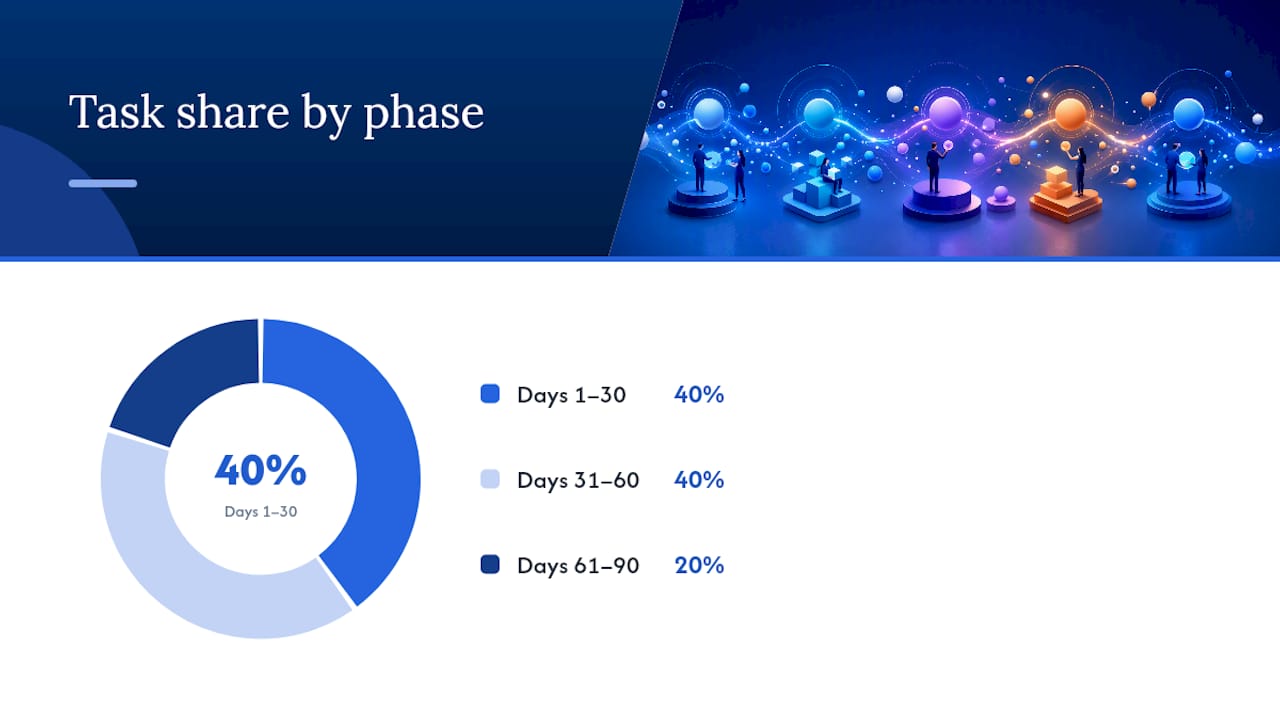
Your 30/60/90 day trend-testing playbook
Stop trying to do everything at once. That's how you end up with twelve half-finished pilots and zero results to show the board. Prioritise using impact times effort, divided by risk, then move.
Days 1 to 30 (diagnose and test small):
- Audit top pages for schema and entity clarity gaps
- Run one native short-form video test against one repurposed asset
- Add progressive profiling to your highest-traffic form
- Set up baseline AI-mention and branded search tracking
Days 31 to 60 (build the system): 5. Roll out structured data across your top 20 pages 6. Launch a repeatable UGC/creator sourcing pipeline 7. Connect CDP/CRM data across at least two channels 8. Pilot one agentic reporting automation with human sign-off
Days 61 to 90 (scale what worked): 9. Double down on whichever short-form format outperformed 10. Expand personalisation segments based on real behaviour data, not guesses
Resourcing doesn't need to be scary. One marketer, one analyst and a modest test budget can run this entire sequence. The lead generation strategy guide is a solid companion for structuring the prioritisation stage properly.
Pro Tip: Kill anything that doesn't show a measurable signal by day 30. Sunk cost is a trap, not a strategy.
Where Ads Daddy fits into this playbook
Ads Daddy runs paid campaigns across Facebook, Instagram, Google, YouTube, Microsoft Bing and LinkedIn, with creative built for each platform, not repurposed leftovers.
- Diagnostic first: audit your current data, creative and measurement gaps
- Test small: one platform, one creative format, one CRO experiment
- Scale what works, using tools like Klaviyo and newCustomer.io to connect data across the funnel
Where marketers waste money, and where the real ROI sits
Most teams blow their AI budget on shiny new tools before fixing the boring stuff: data hygiene, measurement, attribution. That's like buying a Ferrari before you've got a licence.
The highest-leverage bets right now are boring on paper: platform-native short-form creative paired with genuine CRO, plus first-party data capture done properly. Start one small experiment this week. Not next quarter.
— Adrian
Get execution help without the agency overwhelm
There's a real gap between knowing these trends and actually shipping them across five ad platforms while your day job keeps happening. Ads Daddy closes that gap by running the paid media, creative and data activation work directly, so the trends in this article turn into campaigns instead of another open browser tab.

Ads Daddy builds and manages campaigns across Facebook, Instagram, Google, YouTube, Microsoft Bing and LinkedIn, with creative developed per platform rather than one asset stretched across five. On the data side, Klaviyo and newCustomer.io connect the personalisation and lead capture pieces this article covers, so first-party data actually gets used, not just collected. If you want a diagnostic on where your current campaigns are leaking budget and a test plan for the trends that matter most to your business, get in touch with Ads Daddy and start with one platform, one test, one clear metric.
FAQ
What is the latest trend in digital marketing?
AI-driven discovery, being cited inside AI overviews and answer engines rather than just ranked below them, is the trend reshaping strategy fastest right now, with GEO and AEO practices becoming standard alongside traditional SEO.
What are the top three trends in marketing?
The three trends with the clearest business impact are AI-powered discovery and personalisation, short-form video paired with social commerce, and a measurement shift toward tracking visibility and influence rather than clicks alone.
What are the current digital marketing trends businesses should watch?
Businesses should prioritise AI search visibility, first-party data infrastructure, platform-native short-form video and creator partnerships, all backed by tighter CRO on existing traffic rather than simply chasing more of it.
What are the top five digital marketing trends for 2026?
The top five are AI discovery and AEO/GEO, short-form video and social commerce, first-party data and personalisation, outcome-focused measurement, and evolving creator and UGC models. Ads Daddy builds paid campaigns and creative around exactly these shifts for clients testing them now.