What Is Multichannel Marketing and Why It Matters
. By Ads Daddy.

Nearly 80 percent of australian shoppers expect brands to offer the same experience whether online or in store. The pressure is mounting for small and medium-sized e-commerce businesses to meet these demands by adopting smarter multichannel marketing. For marketing managers aiming to drive more leads and sales, understanding how platforms like social media, email, and physical retail work together is critical. This article explains the fundamentals of australian multichannel marketing and reveals proven tactics for creating coordinated brand experiences across every touchpoint.
Table of Contents
- Defining Multichannel Marketing in Australia
- Types of Channels and Key Distinctions
- How Multichannel Strategies Actually Work
- Examples and Real-World Applications
- Risks, Pitfalls, and How to Avoid Them
Key Takeaways
| Point | Details |
|---|---|
| Multichannel Marketing Importance | Businesses must engage consumers via multiple channels to create a consistent brand experience in Australia. |
| Data-Driven Approach | Implementing comprehensive audience analysis and using data to personalise communications enhances engagement effectiveness. |
| Channel Diversity | Utilising both above-the-line and below-the-line strategies helps reach a wider range of consumer segments. |
| Risk Management | Developing a robust risk management plan is essential to mitigate threats such as data breaches and brand messaging inconsistencies. |
Defining Multichannel Marketing in Australia
Multichannel marketing represents a sophisticated strategic approach where businesses engage consumers through multiple communication platforms simultaneously. According to the University of Sydney's marketing department, this approach involves integrating various marketing channels to create cohesive consumer experiences tailored to Australian market dynamics.
At its core, multichannel marketing recognises that modern consumers interact with brands across diverse touchpoints. These might include social media platforms, websites, email campaigns, physical stores, mobile applications, and traditional advertising mediums. The primary goal is to provide a seamless, consistent brand experience regardless of how or where a customer chooses to engage.
Key characteristics of effective multichannel marketing in the Australian context include:
- Personalised communication strategies
- Consistent brand messaging across platforms
- Responsive and integrated customer journey mapping
- Data-driven channel selection based on audience preferences
The Australian Marketing Institute emphasises that successful multichannel marketing demands a customer-centered approach. This means understanding consumer behaviors, preferences, and pain points across digital and offline environments.
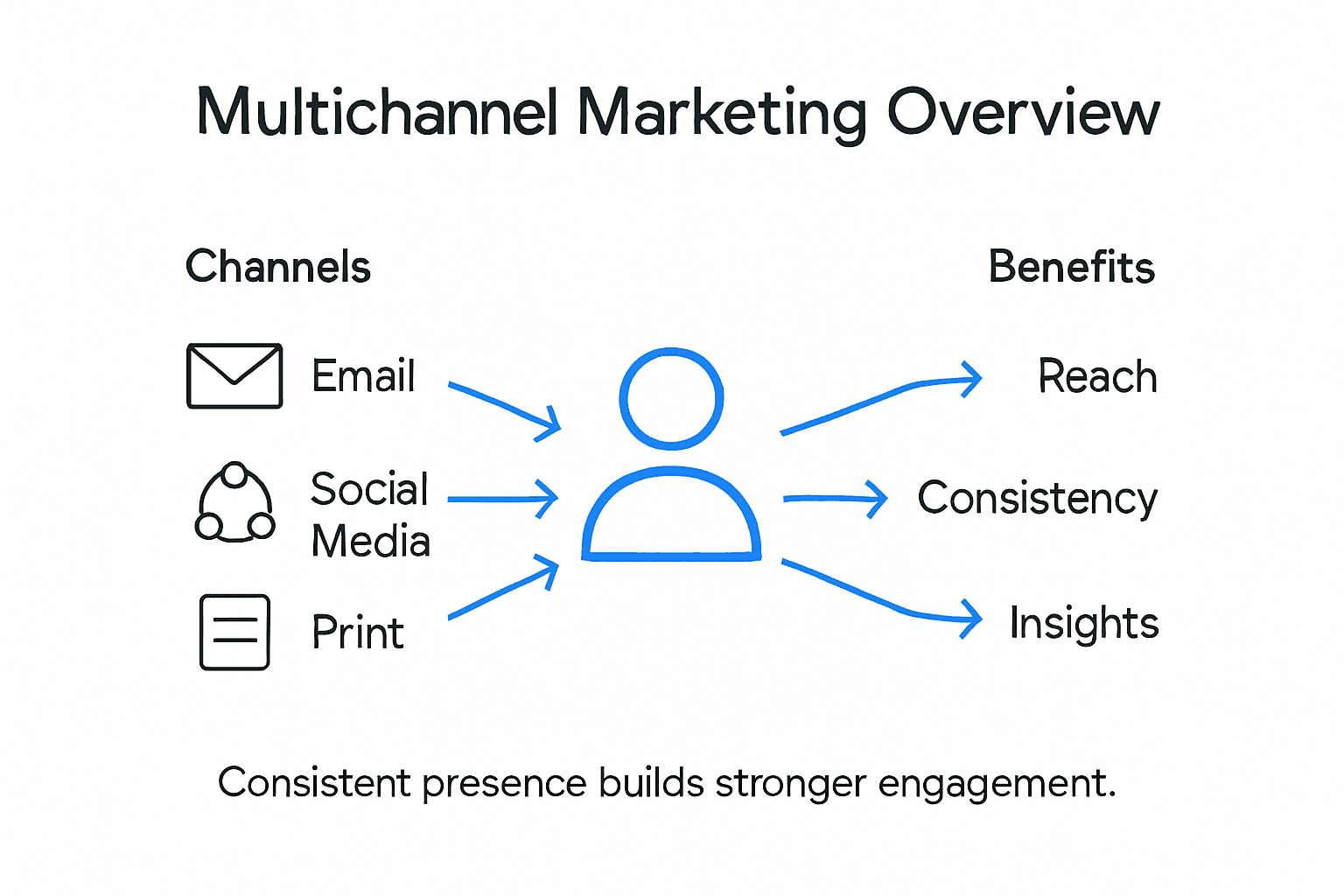
Pro tip: Conduct regular audience research to understand which channels your specific customer segments prefer and prioritise seamless integration between these platforms.
Types of Channels and Key Distinctions
Multichannel marketing encompasses a wide range of communication platforms, each offering unique advantages and targeting specific consumer segments. According to Australian Government business resources, these channels can be broadly categorised into two primary types: above-the-line and below-the-line marketing strategies.
Above-the-line channels are mass communication methods designed to reach broader audiences. These include traditional broadcast media like television, radio, print newspapers and magazines, and large-scale outdoor advertising such as billboards and public transit displays. In contrast, below-the-line channels focus on more targeted, personalised interactions including direct email marketing, social media campaigns, search engine advertising, and one-to-one customer engagement techniques.

Here's a comparison of above-the-line and below-the-line marketing channels in Australia:
| Channel Type | Target Audience | Main Benefits | Typical Examples |
|---|---|---|---|
| Above-the-line | Broad, mass population | High reach, brand awareness | TV, radio, print, outdoor billboards |
| Below-the-line | Specific segments | Personalisation, engagement | Social media, email, direct offers |
The Queensland Government's Business strategy framework recommends understanding the 7 Ps of marketing when selecting channels:
- Product: Channel suitability for product presentation
- Price: Cost-effectiveness of channel deployment
- Place: Geographic and digital reach
- Promotion: Message communication potential
- People: Audience demographic alignment
- Process: Ease of customer interaction
- Physical Evidence: Tangible brand representation
Digital channels have dramatically transformed multichannel marketing, offering unprecedented targeting capabilities. These include social media platforms, websites, mobile applications, email marketing, search engine advertising, and programmatic ad networks that enable precise audience segmentation and personalised messaging.
Pro tip: Continuously analyse your channel performance metrics and be prepared to dynamically adjust your marketing mix based on real-time customer engagement data.
How Multichannel Strategies Actually Work
Multichannel marketing strategies operate through a sophisticated, data-driven approach that orchestrates communication across multiple platforms. According to Australian Jobs and Skills data, marketing specialists implement coordinated plans that strategically align pricing, promotion, selling, and distribution techniques to maximise audience engagement.
The core mechanism involves comprehensive audience mapping and segmentation. By collecting and analysing consumer interaction data, businesses can create highly personalised communication streams that adapt to individual preferences. This means tracking customer behaviors across digital and traditional channels, understanding their unique journey, and delivering targeted messages that resonate at precisely the right moment.
Key operational components of multichannel strategies include:
- Real-time data collection and analysis
- Integrated customer relationship management (CRM) systems
- Automated marketing technology platforms
- Cross-channel tracking and attribution models
- Dynamic content personalisation
The Australian Communications and Media Authority (ACMA) emphasises that successful multichannel strategies require continuous monitoring of media usage patterns. This involves leveraging advanced analytics to understand how consumers interact with different platforms, enabling businesses to refine their approach and optimize communication effectiveness.
Pro tip: Invest in robust analytics tools that provide cross-channel insights and enable you to track customer interactions seamlessly across different marketing platforms.
Examples and Real-World Applications
Australian government business resources highlight how small and medium enterprises effectively implement multichannel marketing strategies across diverse industries. These strategies typically combine online advertising, social media campaigns, email marketing, and physical storefront promotions to create comprehensive customer engagement approaches.
In the retail sector, brands are pioneering sophisticated multichannel approaches. A clothing retailer might use Instagram for visual product showcasing, Facebook for targeted advertisements, email for personalised promotions, and in-store experiences that complement digital interactions. This creates a seamless customer journey where each touchpoint reinforces brand messaging and purchasing opportunities.
Key real-world multichannel applications include:
- Telecommunications companies synchronising mobile app notifications with TV advertisements
- E-commerce platforms integrating social media shopping with email remarketing
- Hospitality businesses using location-based mobile marketing alongside traditional print promotions
- Financial services providing consistent messaging across web, mobile, and branch interactions
The Australian Communications and Media Authority emphasises that successful multichannel strategies reflect contemporary consumer media consumption habits. Modern Australian consumers expect brands to provide consistent, personalised experiences across multiple platforms, seamlessly transitioning between digital and physical interactions.
Pro tip: Map your customer's entire journey across different platforms and identify potential friction points where communication can be more cohesive and integrated.
Risks, Pitfalls, and How to Avoid Them
Small business resources in New South Wales highlight critical risks that businesses must navigate when implementing multichannel marketing strategies. These risks range from cyber security threats to potential data breaches and over-dependence on specific digital platforms that can compromise overall marketing effectiveness.
One of the most significant challenges is maintaining consistent brand messaging across multiple channels while protecting sensitive customer information. Inconsistent communication can lead to customer confusion, reduced trust, and potential reputation damage. Businesses must develop robust strategies that ensure uniform brand voice, data protection, and seamless customer experiences across all marketing touchpoints.
Key risks and mitigation strategies include:
Below is a summary of key risks in multichannel marketing and recommended actions for Australian businesses:
| Risk Area | Example Threat | Recommended Action |
|---|---|---|
| Cyber security | Hacking, data breaches | Implement strong data protection |
| Brand message inconsistency | Customer confusion | Develop centralised communication |
| Over-reliance on platforms | Algorithm changes | Diversify marketing channel mix |
| Technology integration | System failures | Schedule regular technology audits |
- Cyber security vulnerabilities
- Platform algorithm changes disrupting marketing reach
- Data privacy and compliance challenges
- Inconsistent brand messaging across channels
- Potential technology integration failures
Australian government business guidelines recommend developing comprehensive risk management plans that proactively identify and address potential marketing disruptions. This involves regular audits, diversifying marketing channels, implementing strong data protection protocols, and maintaining flexible strategy adaptations.
Pro tip: Conduct quarterly comprehensive risk assessments of your multichannel marketing strategy, focusing on technological vulnerabilities, data security, and platform diversification.
Take Control of Your Multichannel Marketing Success Today
Multichannel marketing presents complex challenges such as delivering consistent brand messaging while effectively engaging your audience across diverse channels. If you want to overcome risks like platform algorithm changes and data security concerns while maximising personalised customer journeys, targeted data-driven advertising is essential. AdsDaddy.com specialises in managing and optimising campaigns on platforms like Facebook, Instagram, Google, YouTube, Microsoft Bing, and LinkedIn to precisely reach your ideal Australian customers and boost your sales with expert guidance and proven strategies.

Don't let inconsistent messaging or channel complexity hold your business back. Visit Ads Daddy to discover how our tailored multichannel advertising solutions can simplify your marketing, protect your brand reputation, and increase your leads now. Explore our services and client success stories to start transforming your advertising today with Ads Daddy's expert campaign management. Your next level of marketing efficiency and growth is only a click away.
Frequently Asked Questions
What is multichannel marketing?
Multichannel marketing is a strategic approach that engages consumers through multiple communication platforms simultaneously, providing a cohesive brand experience across various touchpoints such as social media, websites, email campaigns, and physical stores.
Why does multichannel marketing matter?
Multichannel marketing matters because it enables businesses to reach customers more effectively by meeting them where they are. It enhances customer engagement, improves brand consistency, and ultimately increases sales opportunities by providing a seamless experience across different channels.
What are the key characteristics of effective multichannel marketing?
Key characteristics include personalised communication strategies, consistent brand messaging across platforms, integrated customer journeys, and data-driven channel selection that aligns with audience preferences.
How can businesses avoid risks in multichannel marketing?
Businesses can avoid risks by conducting regular technology audits, implementing strong data protection measures, ensuring consistency in brand messaging, and diversifying their marketing channel mix to mitigate over-reliance on specific platforms.
Recommended
- Complete Guide to Cross-Platform Advertising - Ads Daddy. Advertise on All Plattforms.
- Why Use Multi-Platform Campaigns: Complete Guide 2026 - Ads Daddy. Advertise on All Plattforms.
- What Is Cross-Platform Advertising? Complete Breakdown - Ads Daddy. Advertise on All Plattforms.
- Role of Digital Marketing: Complete Expert Guide 2026 - Ads Daddy. Advertise on All Plattforms.