Online Marketing Tutorials for Growing Aussie Businesses
. By Ads Daddy.

Over 90% of australian businesses struggle to identify their true target audience before launching digital campaigns. Without clear marketing goals and deep audience insights, even the best ad creative can fall flat. Learning how to define your objectives and use the right digital tools can set your brand apart. This guide reveals how australian companies can build a solid foundation for digital success, from audience research to campaign optimization.
Table of Contents
- Stage 1: Define Clear Marketing Goals And Target Audience
- Stage 2: Set Up Essential Digital Marketing Platforms And Tools
- Stage 3: Create Compelling Ad Content Across Multiple Channels
- Stage 4: Launch And Manage Targeted Advertising Campaigns
- Stage 5: Monitor Performance And Refine Strategies For Better Results
Quick Summary
| Key Point | Explanation |
|---|---|
| 1. Define Marketing Goals Clearly | Establish specific, measurable objectives to guide your marketing efforts effectively and create actionable plans for growth. |
| 2. Identify Your Target Audience | Conduct thorough research to create detailed customer personas that reflect your ideal customers’ needs and preferences. |
| 3. Utilize the Right Marketing Tools | Select essential digital marketing platforms aligned with your goals, ensuring they can track key performance indicators effectively. |
| 4. Craft Engaging Ad Content | Develop a consistent brand message tailored to each platform's audience, maximising engagement and effectiveness through strategic content adaptation. |
| 5. Monitor and Adjust Campaigns | Regularly review performance metrics and refine your strategies based on data insights to optimise ongoing advertising effectiveness and success. |
Stage 1: Define clear marketing goals and target audience
Defining clear marketing goals and understanding your target audience are fundamental steps for any business wanting to grow their digital presence. When you map out precise marketing objectives, you create a strategic roadmap that transforms vague intentions into actionable plans.
Start by identifying specific, measurable outcomes for your marketing efforts. Ask yourself: What do you want to achieve? Are you looking to increase website traffic, generate more leads, boost sales, or improve brand awareness? Each goal requires a different approach. For instance, generating leads demands a different strategy compared to increasing online sales. Break down your primary objective into quantifiable targets like increasing monthly website visitors by 30%, converting 10% of website traffic into leads, or growing online revenue by 25% within six months.
To pinpoint your target audience, conduct comprehensive research into your ideal customer's demographics, interests, behaviours, and pain points. Develop detailed customer personas that go beyond basic age and gender data. Consider factors like income levels, professional backgrounds, online browsing habits, purchasing motivations, and specific challenges your product or service can solve. Understanding precise ad targeting principles will help you craft messages that resonate directly with your potential customers, dramatically improving your marketing effectiveness.
Pro tip: Always validate your target audience assumptions through real data. Use analytics tools, customer surveys, and market research to refine your understanding continuously. The more precisely you can define who you're talking to, the more successful your marketing campaigns will become.
Stage 2: Set up essential digital marketing platforms and tools
Setting up the right digital marketing platforms and tools is crucial for transforming your business's online strategy. Developing a comprehensive digital strategy requires careful selection of technologies that align with your specific business goals and marketing objectives.

Start by identifying the core platforms that match your target audience and marketing needs. Essential tools typically include a robust customer relationship management (CRM) system, email marketing platform, social media management tools, and analytics software. Google Analytics, Mailchimp, Hootsuite, and Facebook Business Manager are popular choices for small to medium businesses. When selecting platforms, consider factors like user interface, integration capabilities, scalability, and pricing. Ensure the tools you choose can track key performance indicators that directly relate to your marketing goals such as conversion rates, engagement metrics, and return on investment.
Implement your chosen platforms strategically by setting up comprehensive tracking and reporting mechanisms. Connect your various digital tools to create a seamless ecosystem that provides holistic insights into your marketing performance. This might involve linking your website analytics with social media management platforms or integrating your CRM with email marketing software. Pro tip: Always conduct a trial period with new tools and use their free versions or short term subscriptions to test compatibility and effectiveness before making long term commitments.
As you build your digital marketing infrastructure, remember that the goal is not just to have tools but to use them effectively to drive meaningful business results. Regularly review and refine your platform selection to ensure they continue meeting your evolving marketing objectives.
Stage 3: Create compelling ad content across multiple channels
Crafting engaging advertising content that resonates across different digital platforms is a critical skill for modern businesses. Understanding cross platform advertising strategies will help you develop messaging that connects with your audience regardless of where they encounter your brand.
Begin by developing a consistent brand narrative that can be subtly adapted for each digital channel. This means creating core messaging that maintains your brand identity while being flexible enough to suit different platform formats and audience expectations. For example, your LinkedIn content might be more professional and detailed, while Instagram ads could be more visually dynamic and concise. Focus on creating adaptable content pillars that communicate your key value proposition effectively whether you are writing a Facebook post, designing a Google Display ad, or creating a video for YouTube.
Tailor your content format and tone to match each platform's unique audience and engagement style. Visual platforms like Instagram and TikTok require high impact imagery and quick compelling narratives, while LinkedIn demands more substantive professional insights. Ensure your ad copy is crisp, clear, and includes a strong call to action that speaks directly to your target audience's needs and desires. Use platform specific features like Instagram Stories, Facebook carousel ads, or YouTube short form content to maximise your creative potential.
Pro tip: Always test and measure your content performance across different channels. Create variations of your ads and track which versions generate the most engagement, clicks, and conversions. This data driven approach will help you continuously refine your multi channel marketing strategy and improve your overall advertising effectiveness.
Stage 4: Launch and manage targeted advertising campaigns
Launching and managing targeted advertising campaigns requires a strategic approach that goes beyond simple ad placement. Understanding comprehensive ad campaign management will help you create precise targeting strategies that maximise your marketing investment.
Begin by defining clear campaign objectives that align with your broader business goals. Determine specific metrics you want to track such as click through rates, conversion rates, or return on ad spend. Set up your advertising platforms with granular targeting options that match your ideal customer profile. This means leveraging demographic filters, interest based segmentation, behavioural targeting, and custom audience creation. Focus on creating multiple ad variations that speak directly to different audience segments within your target market.
Implement a robust tracking and optimisation framework to continuously refine your campaign performance. Use platform analytics tools to monitor key performance indicators in real time, allowing you to make data driven adjustments quickly. Allocate your budget strategically across different channels, starting with smaller test budgets to identify which platforms and ad formats generate the most effective results. Be prepared to redistribute your spending based on actual campaign performance rather than preconceived assumptions.
Pro tip: Always maintain a test and learn approach. Create at least three variations of each ad with subtle differences in messaging, imagery, or call to action. This allows you to systematically identify which elements resonate most strongly with your target audience and continuously improve your advertising effectiveness.
Stage 5: Monitor performance and refine strategies for better results
Tracking and improving your digital marketing performance requires a systematic approach that goes beyond basic metric tracking. Implementing comprehensive ad optimization strategies will help you transform raw data into actionable insights that drive meaningful business growth.
Establish a robust performance monitoring framework by identifying key performance indicators (KPIs) that directly align with your business objectives. These might include conversion rates, cost per acquisition, click through rates, engagement metrics, and return on ad spend. Use advanced analytics tools like Google Analytics, Facebook Ads Manager, and platform specific dashboards to gather comprehensive data. Compare your performance against initial benchmarks and industry standards, looking for patterns that reveal which strategies are generating the most effective results.
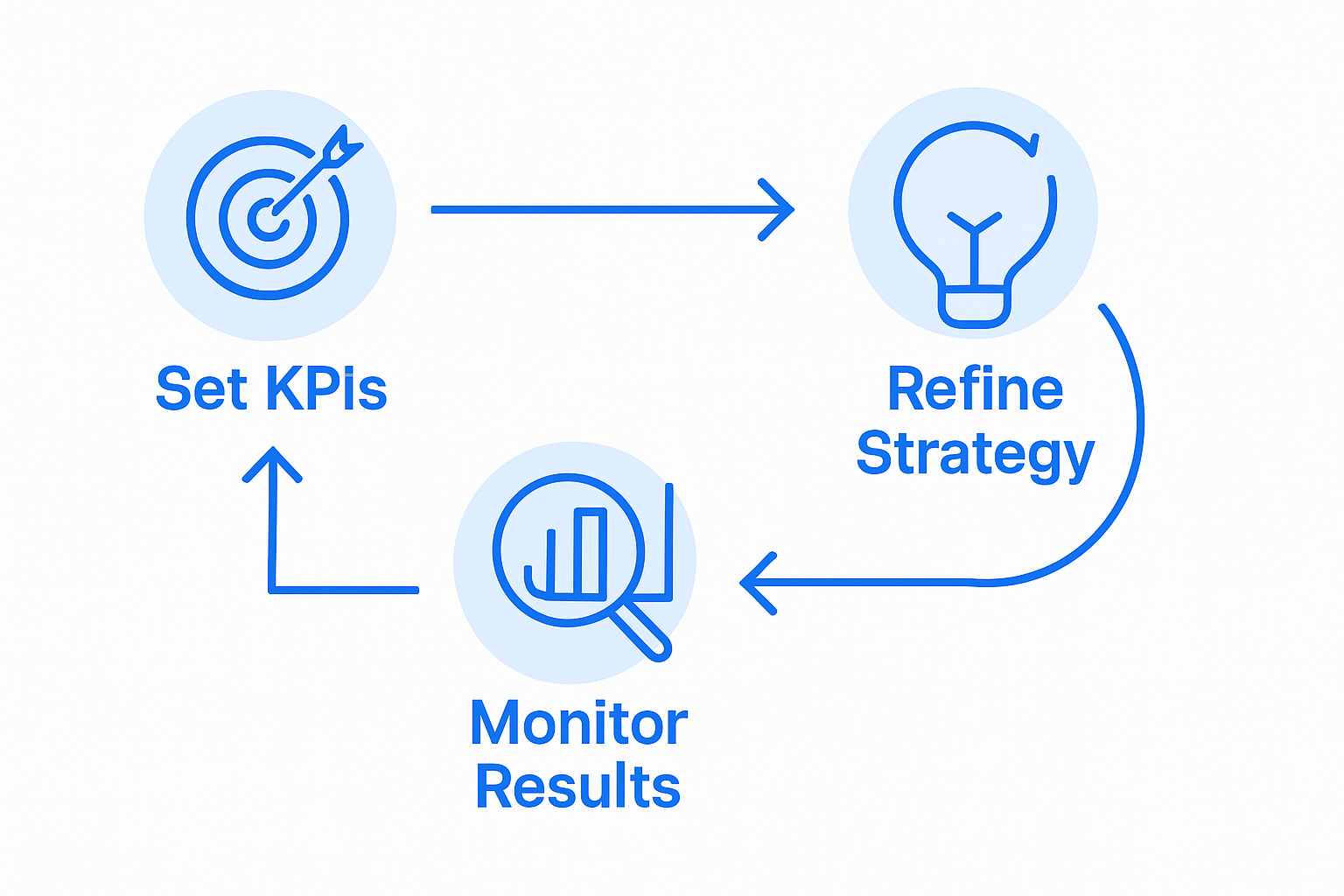
Develop a continuous improvement cycle where you systematically analyse performance data and make incremental adjustments. This means conducting regular performance reviews typically every two weeks or monthly, depending on your campaign volume. Create a structured process for evaluating ad performance where you pause underperforming ads, reallocate budgets towards high performing segments, and experiment with subtle variations in targeting, messaging, and creative elements. Remember that marketing optimization is an ongoing process of experimentation and refinement.
Pro tip: Implement a disciplined approach to data analysis by creating a standardised reporting template. This will help you track changes over time, identify long term trends, and make more informed strategic decisions about your marketing investments.
Accelerate Your Aussie Business Growth with Expert Digital Marketing Support
Navigating the complexities of online marketing tutorials can be overwhelming when you face challenges like defining precise marketing goals, setting up efficient digital tools, and crafting compelling multi-channel ads. This article highlights the critical need to transform marketing intentions into measurable results while continuously optimising campaigns for better ROI. If you are striving to boost your business visibility, attract qualified leads, and increase sales through targeted advertising, AdsDaddy offers tailored solutions designed specifically for Australian small and medium-sized businesses.

Unlock the full potential of your marketing efforts with AdsDaddy's expert campaign management and strategic ad placements across platforms including Facebook, Instagram, Google, YouTube, Microsoft Bing, and LinkedIn. Visit AdsDaddy homepage to discover how our data-driven strategies and integrated tools like Meta for Business and Klaviyo can simplify your digital marketing journey. Ready to move beyond tutorials and see real growth? Learn more about creating and managing your advertising campaigns today and turn insights into impactful business outcomes.
Frequently Asked Questions
What are the first steps to defining marketing goals for my business?
Start by identifying specific and measurable outcomes you wish to achieve, such as increasing website traffic or boosting sales. Break these primary objectives into quantifiable targets to create a focused action plan, like aiming for a 30% increase in monthly website visitors within three months.
How can I effectively identify my target audience?
Conduct thorough research into your ideal customer’s demographics, behaviours, and pain points to create detailed customer personas. Leverage analytics tools and surveys to validate your assumptions about your audience and continuously refine your targeting strategies.
What digital marketing platforms should I consider for my business?
Begin by selecting essential platforms that align with your marketing goals, such as a customer relationship management (CRM) system or social media management tools. Evaluate options based on user experience and how well they integrate with your existing systems before implementing them into your strategy.
How do I create engaging ad content across multiple channels?
Develop a consistent brand narrative that can be adapted for different platforms, ensuring that each piece of content matches the unique style and audience of that channel. Focus on creating clear, compelling messaging while including a strong call to action that resonates with your target audience’s needs.
What are the best practices for launching targeted advertising campaigns?
Define clear campaign objectives and use granular targeting options to reach your ideal customers effectively. Set up a robust tracking system to monitor key performance metrics in real time, allowing you to make quick adjustments based on actual campaign performance.
How can I improve my marketing performance over time?
Establish a performance monitoring framework to identify key performance indicators (KPIs) that reflect your business goals. Regularly analyse this data to refine your strategies, making adjustments according to what is working best, and ensure a continuous improvement cycle.
Recommended
- Meta Ads (Facebook & Instagram) Archives - Ads Daddy. Advertise on All Plattforms.
- Growth Hacking Archives - Ads Daddy. Advertise on All Plattforms.
- Customer Acquisition & Funnels Archives - Ads Daddy. Advertise on All Plattforms.
- Lead Generation Archives - Ads Daddy. Advertise on All Plattforms.
- 7 Key Digital Marketing Trends 2025 for Malaysian Buyers - Projector Display