Omnichannel Marketing: Boosting Sales for Aussie Brands
. By Ads Daddy.

Over 80 percent of Australian consumers now expect brands to remember their preferences across every channel. For digital marketing managers aiming to stand out in the crowded Australian e-commerce space, omnichannel strategy is no longer optional. A strong omnichannel foundation can transform scattered touchpoints into connected journeys that maximise both lead generation and sales, allowing each campaign to feel personal and relevant at every step.
Table of Contents
- Defining Omnichannel Marketing For Australia
- Omnichannel Vs Multichannel: Key Differences
- Essential Elements Of Successful Integration
- Strategies For Seamless Cross-Channel Campaigns
- Common Mistakes And How To Avoid Them
Key Takeaways
| Point | Details |
|---|---|
| Understanding Omnichannel Marketing | Omnichannel marketing creates a unified customer experience by integrating all channels, ensuring consistent messaging and personalised interactions across both digital and physical environments. |
| Technological Infrastructure | Robust technological systems, including advanced CRM platforms, are essential for real-time tracking of customer interactions and for delivering hyper-personalised experiences. |
| Cross-Functional Collaboration | Breaking down departmental silos through cross-functional teams enhances strategy alignment and ensures a seamless customer journey. |
| Avoid Common Mistakes | Avoid the pitfalls of maintaining siloed departments and underinvesting in technology by conducting regular audits to identify integration gaps and opportunities for unification. |
Defining Omnichannel Marketing for Australia
Omnichannel marketing represents a strategic approach transforming how Australian brands connect with customers across multiple platforms and touchpoints. Unlike traditional multichannel strategies, omnichannel marketing creates a unified, seamless experience where interactions flow smoothly between digital and physical environments. Integrated customer engagement becomes the core objective, prioritising personalised interactions that adapt to consumer preferences.
At its essence, omnichannel marketing breaks down barriers between online and offline channels. Retailers can track customer journeys across websites, mobile apps, social media, physical stores, and call centres, ensuring consistent messaging and personalised experiences. This approach recognises that modern Australian consumers expect sophisticated, interconnected interactions where their preferences and purchase history inform every touchpoint.
The technological infrastructure supporting omnichannel strategies has dramatically evolved. Advanced data integration platforms enable real-time tracking of customer interactions, allowing brands to deliver hyper-personalised experiences. Machine learning algorithms analyse consumer behaviour patterns, helping businesses anticipate needs and create targeted marketing interventions across different channels.
Pro tip: Start by mapping your current customer touchpoints and identify potential friction areas where digital and physical experiences can be more seamlessly integrated.
Omnichannel vs Multichannel: Key Differences
Multichannel and omnichannel marketing might sound similar, but they represent fundamentally different strategic approaches to customer engagement. Channel integration strategies reveal critical distinctions that Australian businesses must understand to optimise their marketing efforts.
In a multichannel approach, businesses operate multiple communication channels independently. Each channel functions as a separate entity with its own strategy, metrics, and customer experience. For instance, a retailer might have a physical store, an online website, and a mobile app that don't necessarily communicate or share customer data seamlessly. This siloed approach can create fragmented and inconsistent customer experiences where interactions feel disconnected and impersonal.
Omnichannel marketing, by contrast, creates a unified, integrated ecosystem where all channels work together harmoniously. Customer data flows seamlessly across platforms, enabling personalised interactions that adapt in real-time. An Australian customer might start browsing products on a mobile app, receive a personalised recommendation via email, and complete the purchase in-store without losing context or experiencing friction. This integrated approach requires sophisticated technological infrastructure and a holistic view of customer journeys.
Here's a clear comparison of multichannel and omnichannel marketing approaches for Australian businesses:
| Aspect | Multichannel Approach | Omnichannel Approach |
|---|---|---|
| Channel Coordination | Channels operate independently | All channels work in unison |
| Customer Experience | Often fragmented and inconsistent | Seamless and unified |
| Data Sharing | Limited or siloed | Real-time and interconnected |
| Personalisation | Basic and channel-specific | Advanced, holistic across platforms |
Pro tip: Conduct a comprehensive audit of your current marketing channels to identify integration opportunities and potential data synchronisation gaps.
Essential Elements of Successful Integration
Omnichannel retail technologies require a sophisticated blend of strategic planning, technological infrastructure, and organisational commitment. Successful integration is not simply about connecting channels, but creating a seamless, intelligent ecosystem that anticipates and responds to customer needs dynamically.
At the core of effective omnichannel integration lies robust data management and synchronisation. Businesses must develop comprehensive data collection and analysis systems that track customer interactions across all touchpoints. This means implementing advanced customer relationship management (CRM) platforms, analytics tools, and integration software that can consolidate information from websites, mobile apps, physical stores, social media, and customer service channels into a unified customer profile.
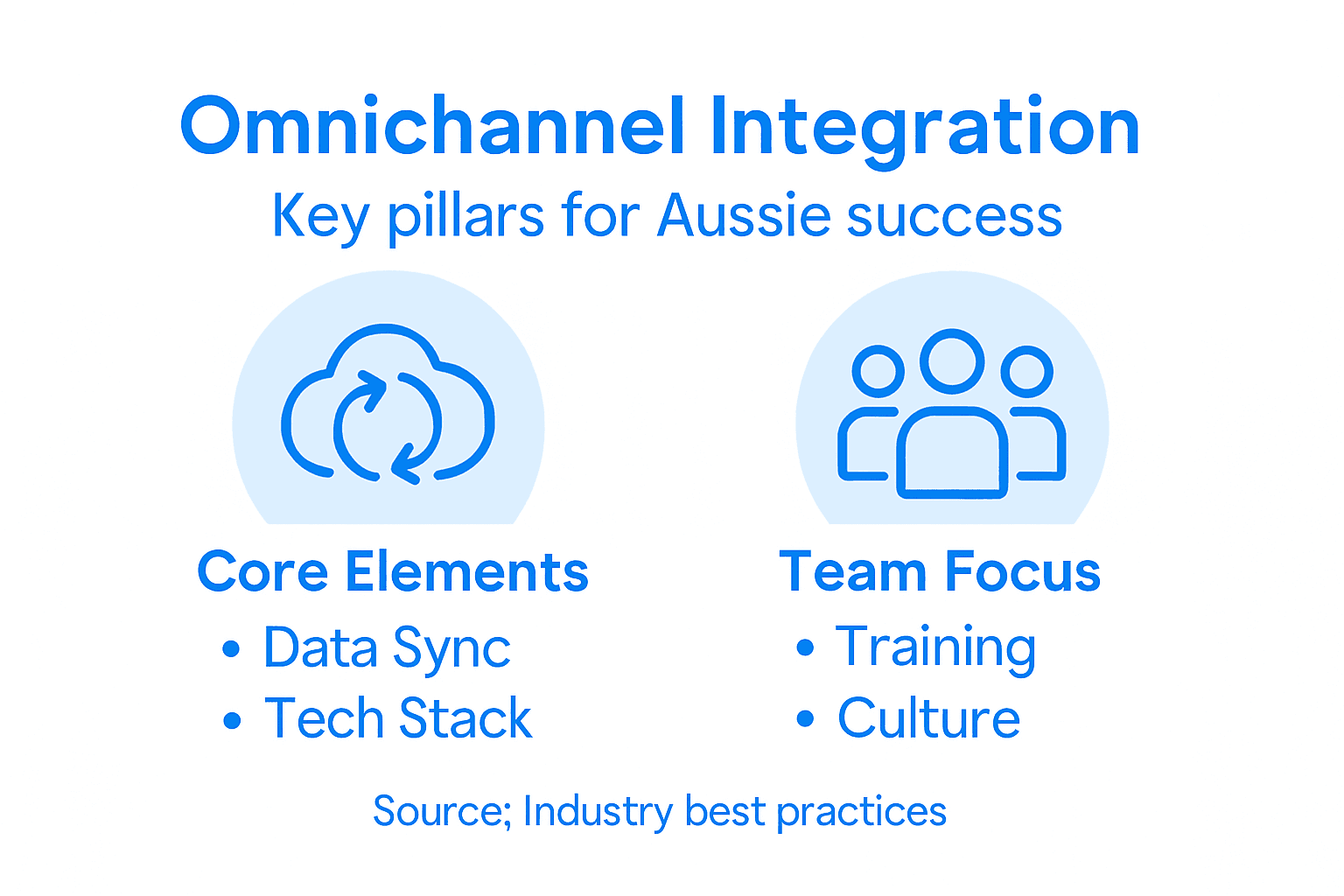
Organisational culture plays a critical role in driving successful omnichannel strategies. Breaking down departmental silos is essential, requiring cross-functional collaboration between marketing, sales, customer service, and technology teams. Australian businesses need to foster a customer-centric mindset where every team understands the importance of consistent, personalised experiences. This involves ongoing training, shared performance metrics, and a commitment to continuous improvement and technological adaptation.
The table below highlights crucial elements for successful omnichannel integration in Australia:
| Integration Element | Role in Strategy | Impact on Customer Experience |
|---|---|---|
| Data Management | Enables unified profiles | Drives personalisation and relevance |
| Technological Infrastructure | Powers real-time engagement | Supports seamless cross-channel journeys |
| Cross-functional Teams | Aligns strategy and goals | Enhances consistency and innovation |
| Staff Training | Builds channel expertise | Elevates service quality |
Pro tip: Invest in comprehensive staff training programs that emphasise the importance of integrated customer experiences and provide practical skills for leveraging cross-channel data and technologies.
Strategies for Seamless Cross-Channel Campaigns
Integrated marketing strategies demand a sophisticated approach that synchronises messaging, customer data, and engagement across multiple platforms. Australian brands must develop a holistic framework that allows seamless communication and personalised experiences regardless of the customer's chosen interaction channel.

Successful cross-channel campaigns require comprehensive technological infrastructure. This involves implementing advanced customer relationship management (CRM) systems that can track and analyse customer interactions in real-time. Businesses should focus on creating unified customer profiles that aggregate data from websites, mobile apps, social media, physical stores, and call centres. By developing a 360-degree view of customer behaviour, brands can craft targeted messages that feel contextually relevant and personally tailored.
Consistent messaging and visual branding are critical components of effective cross-channel campaigns. Each touchpoint should feel like a natural extension of the brand experience, maintaining identical tone, visual identity, and core messaging. This means developing comprehensive brand guidelines that transcend individual channel limitations and creating flexible content strategies that can be adapted across different platforms while maintaining core communication principles.
Pro tip: Conduct regular cross-functional workshops that bring together marketing, sales, and technology teams to align campaign strategies and ensure seamless customer journey mapping.
Common Mistakes and How to Avoid Them
Omnichannel operational challenges can derail even the most well-intentioned marketing strategies. Australian brands frequently stumble into predictable traps that compromise their cross-channel performance, often without realising the long-term implications of these strategic missteps.
One of the most persistent mistakes is maintaining departmental silos that prevent seamless information sharing. Marketing, sales, customer service, and technology teams often operate as independent units, creating fragmented customer experiences. This disconnection leads to inconsistent messaging, redundant data collection, and missed opportunities for personalisation. Businesses must break down these internal barriers by implementing cross-functional collaboration frameworks, shared performance metrics, and integrated communication platforms that encourage holistic thinking.
Another critical error involves underinvesting in technological infrastructure and data integration capabilities. Many Australian businesses treat their digital channels as separate entities rather than interconnected touchpoints. This approach results in disjointed customer journeys, where information fails to transfer smoothly between platforms. Brands need robust customer relationship management (CRM) systems that can aggregate data across websites, mobile apps, social media, physical stores, and call centres, creating a comprehensive view of customer interactions and preferences.
Pro tip: Conduct a comprehensive audit of your current marketing technology stack, identifying integration gaps and potential opportunities for creating more unified customer experiences.
Elevate Your Omnichannel Marketing with Ads Daddy
Australian brands aiming to overcome the challenges of fragmented customer experiences and disconnected channels need a partner that understands the power of seamless integration. The article highlights key pain points such as siloed data, inconsistent messaging, and underinvestment in technological infrastructure. Ads Daddy specialises in crafting and optimising advertising campaigns across multiple platforms like Facebook, Instagram, Google, and LinkedIn, ensuring your brand delivers unified, personalised messages that move customers effortlessly along their journey.
With Ads Daddy's data-driven strategies and expertise in diverse ad formats, you can transform your marketing approach to match the expectations of the modern Australian consumer. From building fully integrated campaigns that align with your omnichannel goals to leveraging platforms like Meta for Business and Klaviyo for enriched customer engagement, Ads Daddy is your one-stop solution to break down silos and drive real sales growth.
Unlock the full potential of your cross-channel marketing. Discover how Ads Daddy can help you achieve a seamless customer journey today.

Ready to boost your sales with a truly integrated marketing strategy That starts with Ads Daddy. Visit https://adsdaddy.com now and take the first step toward mastering omnichannel marketing for your Aussie brand.
Frequently Asked Questions
What is omnichannel marketing?
Omnichannel marketing is a strategic approach that creates a unified and seamless customer experience across multiple channels, both online and offline. It ensures that interactions flow smoothly between platforms such as websites, mobile apps, social media, and physical stores, providing personalised and interconnected experiences.
How does omnichannel marketing differ from multichannel marketing?
The main difference is that in multichannel marketing, channels operate independently with separate strategies, while omnichannel marketing integrates all channels to work harmoniously. This leads to a more cohesive customer experience with consistent messaging and data sharing across all touchpoints.
What are the key elements required for successful omnichannel integration?
Successful omnichannel integration requires robust data management, advanced technological infrastructure, cross-functional teamwork among departments, and ongoing staff training. These elements help create a seamless environment that anticipates and responds to customer needs effectively.
What are common mistakes to avoid in omnichannel marketing?
Common mistakes include maintaining departmental silos that hinder information sharing, and underinvesting in technological infrastructure, which can lead to fragmented customer journeys. It is crucial to foster cross-functional collaboration and ensure that customer data is integrated across all channels.
Recommended
- What Is Cross-Platform Advertising? Complete Breakdown - Ads Daddy. Advertise on All Plattforms.
- Digital Marketing Archives - Ads Daddy. Advertise on All Plattforms.
- Facebook Ads Archives - Ads Daddy. Advertise on All Plattforms.
- business growth Archives - Ads Daddy. Advertise on All Plattforms.
- Cum optimizez un magazin online pentru Google? | e Timpul SEO