Brand Awareness – Why It Matters for Aussie SMEs
. By Ads Daddy.

Most australian SMEs miss out on up to 80% more customer engagement by underestimating the power of brand awareness. In a crowded digital space, gaining recognition is the difference between being a consumer’s first choice or fading into obscurity. Building brand awareness helps australian companies connect emotionally with shoppers, improve trust, and turn casual visitors into loyal customers. You’ll discover how strategic brand visibility shapes lasting growth and gives small businesses a genuine edge over bigger competitors.
Table of Contents
- Brand Awareness Fundamentals For Australians
- Key Types: Recall, Recognition, Top-of-Mind
- How Brand Awareness Shapes Business Growth
- Common Pitfalls In Building Brand Awareness
- Effective Ways To Measure And Track Success
Key Takeaways
| Point | Details |
|---|---|
| Brand Awareness is Essential | For Australian SMEs, establishing brand awareness is crucial for fostering connections with consumers and driving business growth. |
| Different Levels of Awareness | Understanding and targeting brand recognition, category-cued recall, and top-of-mind awareness allows SMEs to tailor effective marketing strategies. |
| Strategic Measurement | Consistently tracking brand awareness through various metrics enables SMEs to evaluate performance and adapt strategies for improved outcomes. |
| Avoiding Common Pitfalls | SMEs should focus on creating genuine connections rather than generic advertising to avoid wasting resources and maximise brand impact. |
Brand Awareness Fundamentals for Australians
Building brand awareness is the strategic cornerstone for Australian small and medium enterprises (SMEs) looking to establish meaningful connections with their target market. Understanding how consumers perceive and recognise your brand is crucial in today's competitive business landscape.
At its core, brand awareness represents the extent to which customers can identify and recall your business when considering products or services in your industry. University of Wollongong research explains that brand awareness consists of three critical dimensions: brand recognition, recall, and top-of-mind awareness. These layers help businesses understand how deeply their brand resonates within consumer consciousness.
Australian SMEs must recognise that brand awareness goes beyond simple name recognition. It involves creating memorable experiences, consistent messaging, and emotional connections that differentiate your business from competitors. University of South Australia's research suggests that brand awareness measures should adapt based on your brand's history, market position, and consumer interactions.
Pro tip: Start building brand awareness by consistently using your visual identity across all marketing channels and focusing on creating genuine, memorable interactions with your target audience.
Key Types: Recall, Recognition, Top-of-Mind
Brand awareness isn't a one-dimensional concept, but a nuanced framework with distinct levels of consumer recognition. Understanding these different types helps Australian SMEs craft more strategic marketing approaches that resonate with their target audience.
University of Wollongong research highlights three critical dimensions of brand awareness:
- Brand Recognition: The most basic level where consumers can identify your brand when exposed to its visual or auditory cues
- Category-Cued Recall: Consumers can remember your brand when prompted within a specific product category
- Top-of-Mind Awareness: The pinnacle of brand awareness where your brand is the first one consumers think about in a particular product space
University of South Australia's analysis suggests these awareness types are not static but dynamic measures that shift with market conditions. Top-of-mind awareness represents the ultimate goal for businesses, where your brand becomes synonymous with the product or service category.
Each awareness type requires different marketing strategies. Recognition demands consistent visual branding, recall needs memorable messaging, and top-of-mind status demands repeated, meaningful consumer interactions that build strong brand associations.
Here’s how the main types of brand awareness differ for Australian SMEs:
| Awareness Type | Key Focus | Typical Outcome |
|---|---|---|
| Brand Recognition | Visual/auditory cues | Initial brand familiarity |
| Category-Cued Recall | Memory prompts | Consideration in category |
| Top-of-Mind Awareness | Immediate recall | First choice preference |
Pro tip: Develop a strategic brand communication plan that progressively moves consumers from basic recognition through to top-of-mind status by creating memorable, differentiated brand experiences.
How Brand Awareness Shapes Business Growth
Brand awareness isn't just a marketing buzzword it's a critical driver of business expansion and financial success for Australian SMEs. The connection between brand recognition and business growth is more than theoretical it's a tangible competitive advantage that can transform a small enterprise into a market leader.
Macquarie University researchers highlight how entrepreneurial marketing directly influences brand awareness and business scaling. By strategically building brand visibility, SMEs can:
- Attract more potential customers
- Increase customer trust and loyalty
- Command premium pricing
- Reduce marketing acquisition costs
- Create barriers to competitor entry
University of Tasmania's strategic brand management research emphasises that brand awareness creates meaningful differentiation in crowded markets. When consumers consistently recognise and prefer your brand, you're no longer competing solely on price but on perceived value and emotional connection.
Successful brand growth requires a deliberate, multifaceted approach. It's about creating memorable experiences, maintaining consistent messaging, and continuously reinforcing your unique value proposition across all customer touchpoints.

Pro tip: Invest 10% of your marketing budget specifically in brand awareness activities that tell your unique story and build emotional connections with your target audience.
Common Pitfalls in Building Brand Awareness
Building brand awareness sounds simple, but for Australian SMEs, it's a minefield of potential strategic mistakes that can derail marketing efforts and waste precious resources. Understanding these common pitfalls is crucial to developing a robust brand strategy that actually delivers results.
Macquarie University researchers reveal critical challenges that Australian businesses frequently encounter:
- Inconsistent brand messaging across different platforms
- Neglecting deep consumer insights and market research
- Failing to differentiate from competitors
- Using generic, forgettable marketing approaches
- Avoiding genuine emotional connection with audiences
University of South Australia's research highlights the most dangerous pitfall: blindly investing in advertising without measuring its actual impact. Many SMEs spend significant marketing budgets on campaigns that generate minimal brand recognition, essentially throwing money into a black hole.
Successful brand awareness requires a strategic, data-driven approach. It's not about shouting the loudest, but about creating meaningful, targeted communication that resonates with your specific audience and builds genuine brand loyalty.
Pro tip: Develop a comprehensive brand tracking system that measures awareness metrics monthly, allowing you to quickly adjust strategies and investment based on real performance data.
Effective Ways to Measure and Track Success
Measuring brand awareness isn't about guesswork it's a strategic science that provides actionable insights for Australian SMEs. Understanding which metrics truly matter can transform your marketing approach from shooting in the dark to precision targeting.
University of Wollongong research highlights several key measurement techniques that SMEs can leverage:
- Social Media Engagement Rates
- Likes, shares, comments
- Follower growth trajectory
- Reach and impressions
- Website Traffic Metrics
- Direct traffic volume
- Brand name search queries
- Time spent on site
- Customer Survey Data
- Aided and unaided brand recall
- Brand perception scores
- Recommendation likelihood
University of South Australia's insights reveal that sophisticated brand tracking goes beyond vanity metrics. It's about understanding the depth of consumer connection and how awareness translates into tangible business outcomes.
Effective brand awareness measurement requires a holistic approach combining quantitative data with qualitative insights. This means looking beyond surface numbers to understand the emotional resonance and genuine recognition your brand generates.
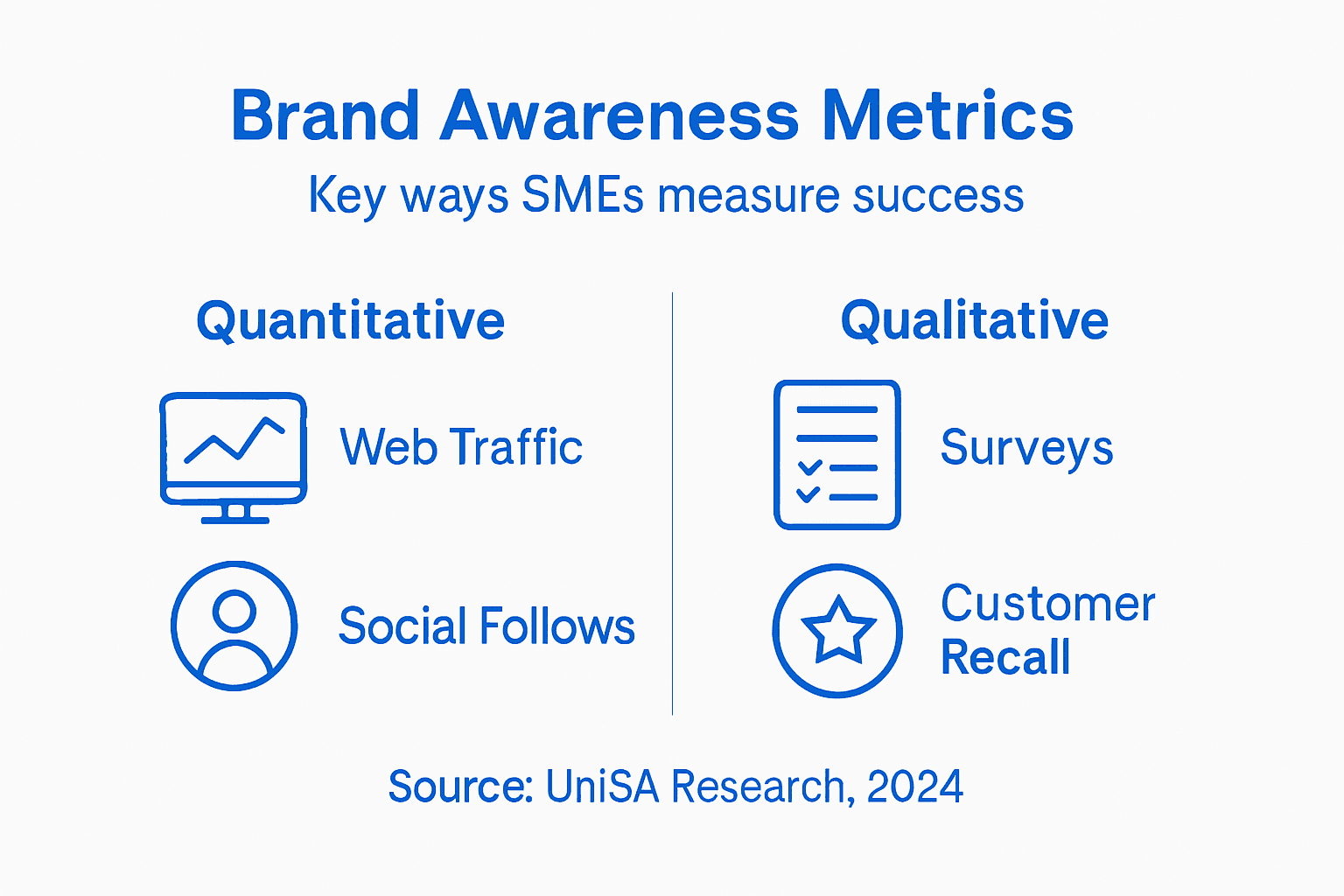
A strategic approach to measuring brand awareness ensures consistent SME growth:
| Measurement Method | Strength | Best Used For |
|---|---|---|
| Social Media Engagement | Real-time interaction | Tracking campaign buzz |
| Website Traffic Metrics | Insightful web activity | Analysing branded searches |
| Customer Survey Data | Direct consumer input | Assessing brand perception |
Pro tip: Create a monthly brand awareness dashboard that tracks at least five key metrics, comparing current performance against baseline measurements to identify trends and opportunities.
Elevate Your Brand Awareness with Expert Digital Marketing
Recognising the critical role of brand awareness in growing an Australian SME is the first step towards success. The article highlights common challenges such as inconsistent messaging and the need for genuine emotional connection with your audience. At AdsDaddy.com, we specialise in overcoming these exact pain points by delivering strategic, data-driven advertising campaigns that boost your brand recognition and top-of-mind awareness across key platforms like Facebook, Instagram, Google, and LinkedIn.
Our approach focuses on crafting visually consistent and memorable ads using powerful formats such as video and carousel ads to build genuine engagement. By partnering with AdsDaddy.com, you gain access to expert campaign management that helps you measure real impact—not just vanity metrics—ensuring every dollar spent drives your business growth. Experience firsthand how targeted ads can transform your brand awareness into increased customer trust, loyalty, and premium positioning.
Ready to move beyond basic recognition and position your brand as the first choice in your category?

Explore how our specialised strategies can grow your business today by visiting Ads Daddy. Take control of your brand’s future with proven digital marketing solutions designed specifically for Australian SMEs seeking to dominate their market.
Frequently Asked Questions
What is brand awareness and why is it important for SMEs?
Brand awareness is the extent to which consumers can recognize and recall your brand when considering products or services. It's crucial for SMEs as it helps establish a connection with the target market, increases trust, and enhances customer loyalty, all of which contribute to business growth.
What are the different types of brand awareness?
The main types of brand awareness are brand recognition, category-cued recall, and top-of-mind awareness. Brand recognition involves identifying a brand through visual or auditory cues, category-cued recall occurs when consumers remember a brand when prompted, and top-of-mind awareness is when a brand is the first to come to mind in a product category.
How can SMEs effectively measure brand awareness?
SMEs can measure brand awareness using social media engagement rates, website traffic metrics, and customer survey data. Key indicators include follower growth, direct traffic volume, and brand recall scores, which help assess the effectiveness of marketing efforts.
What common mistakes should SMEs avoid when building brand awareness?
Common pitfalls include inconsistent brand messaging, neglecting consumer insights, failing to differentiate from competitors, using generic marketing approaches, and not measuring the impact of advertising. Addressing these issues can improve the effectiveness of brand awareness efforts.
Recommended
- Role of Video Ads: Complete Guide for Australian SMEs - Ads Daddy. Advertise on All Plattforms.
- Why Use Targeted Ads: Complete Guide for Australia 2026 - Ads Daddy. Advertise on All Plattforms.
- Dr. Squatch: Viral Marketing and Brand Building - Ads Daddy.
- Facebook Ads Archives - Ads Daddy. Advertise on All Plattforms.